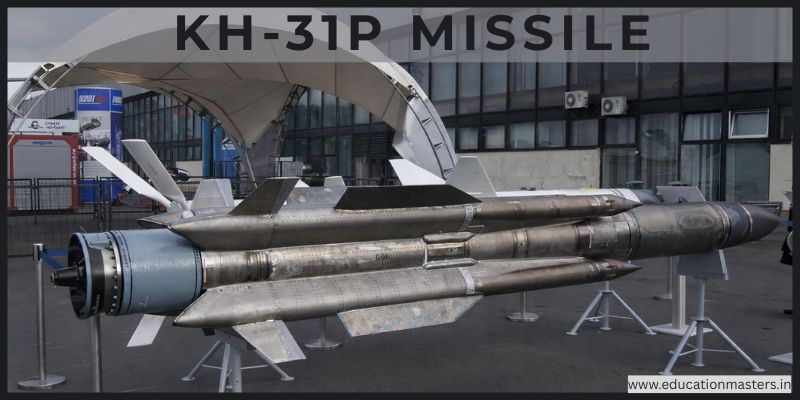
Agni-1 Missile is a battle-proven, nuclear-capable short-to-intermediate range ballistic missile, developed by India’s Defence Research and Development Organisation (DRDO) to meet the immediate strategic requirements of the Indian Armed Forces. Introduced in the early 2000s, Agni-1 Missile was designed as a rapid-deployment, high-mobility missile system capable of delivering decisive strikes against high-value targets within a range of 700–900 km.The missile was specifically conceptualized to address India’s need for a compact, accurate, and quick-reaction ballistic missile that could operate effectively in the complex and dynamic security landscape of the region. Agni-1 Missile combines a solid-fuel propulsion system, robust single-stage configuration, and advanced navigation technologies to achieve high accuracy and reliability, even during high-speed terminal phases.
Its ability to carry both nuclear and conventional warheads up to 1,000 kg gives India flexible response options across tactical and strategic missions. Agni-1 Missile has undergone numerous successful test flights under the Strategic Forces Command (SFC), proving its consistency, precision, and readiness for real-world operational scenarios. Over two decades of service, it has evolved into a trusted and indispensable pillar of India’s credible minimum deterrence, bridging the gap between battlefield-range systems and longer-range strategic Agni variants. Its compact structure, quick launch capability, and strong technological foundation continue to make it a vital component of India’s nuclear triad support infrastructure.
Overview of Agni-1 Missile
|
Parameter
|
Details
|
|
Name
|
Agni-1 missile
|
|
Developer
|
DRDO, India
|
|
Category
|
Short-to-Intermediate Range Ballistic Missile (SRBM/IRBM-class)
|
|
Range
|
700–900 km
|
|
Stages
|
Single-stage
|
|
Propulsion
|
Solid-fuel rocket motor
|
|
Launch Platforms
|
Road-mobile TEL; Rail-mobile launch platforms
|
|
Warhead Types
|
Conventional or nuclear (up to 1,000 kg)
|
|
Accuracy
|
High accuracy using advanced INS & modern guidance
|
|
Speed
|
Hypersonic (during re-entry)
|
|
Navigation System
|
INS with optional satellite updates
|
|
Key Features
|
Quick-reaction capability, high mobility, compact design, reliable performance
|
|
Operational Role
|
Strategic deterrence & tactical counterforce missions
|
|
User
|
Strategic Forces Command (SFC)
|
|
Status
|
Fully operational
|
Development Background of Agni-1 Missile
-
Developed in the early 2000s following the need for a compact, responsive, and accurate missile for short-to-medium range missions.
-
Built as an India-specific deterrence asset, capable of countering threats in the western and northern theatres.
-
Borrowed technological experience from Agni-1 Missile and Prithvi programs.
-
Underwent extensive flight-testing under the Strategic Forces Command (SFC) to validate reliability, precision, and operational readiness.
Design Features of Agni-1 Missile
-
Single-stage, solid-fuel propulsion offering fast reaction and high stability.
-
Compact structure, enabling mobility and easier deployment.
-
Designed to withstand extreme temperatures and aerodynamic stress during high-speed re-entry.
-
Features heat-shielding and optimized aerodynamics for stability during mid-flight and terminal phases.
Launch Platforms of Agni-1 Missile
-
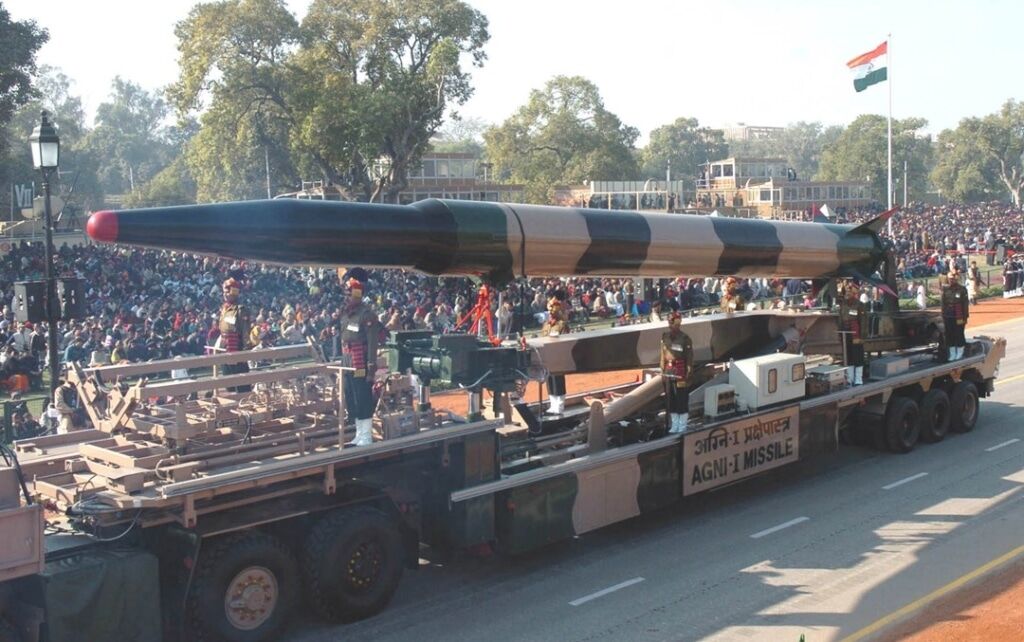
Fully compatible with road-mobile Transporter Erector Launchers (TELs).
-
Can also be launched from rail-mobile platforms, boosting mobility and survivability.
-
Canister-free design but highly mobile and rapidly relocatable.
Guidance & Navigation of Agni-1 Missile
-
Equipped with an advanced Inertial Navigation System (INS) for high-precision trajectory management.
-
Incorporates modern avionics and digital control systems for improved accuracy.
-
Some upgraded variants are believed to include satellite navigation support for enhanced targeting.
Operational Role of Agni-1 Missile
-
Designed for quick-reaction strikes against high-value strategic targets.
-
Acts as an important deterrent asset within the short-to-intermediate range segment.
-
Bridges the capability gap between battlefield missiles and longer-range Agni variants.
-
Suitable for counterforce strikes, deterrence missions, and precision targeting within regional theatres.
Warhead & Payload Capacity of Agni-1 Missile
Capable of carrying conventional or nuclear payloads, offering flexible mission profiles.
Testing & Operational Status of Agni-1 Missile
-
Successfully tested multiple times, proving its reliability and accuracy.
-
Fully inducted and operational under the Strategic Forces Command (SFC).
-
Continues to remain a core missile in India’s short-range strategic arsenal.
Key Advantages of Agni-1 Missile
-
High mobility and quick-launch capability.
-
Strong accuracy and reliability due to advanced navigation systems.
-
Suitable for both tactical and strategic missions.
-
Proven, mature technology with decades of operational experience.
Limitations of Agni-1 Missile
-
Limited range compared to newer systems like Agni-P or Agni-2 Missile.
-
Non-canister zed design means slightly slower reload and protection compared to new-generation missiles.
-
Being an older system, some components are less advanced than modern Agni variants.
Conclusion
Agni-1 missile stands as one of India’s most reliable and time-tested ballistic missile systems, providing a crucial foundation for the country’s regional deterrence capability. Its compact design, high mobility, and proven accuracy have made it a dependable asset within the Strategic Forces Command for over two decades. Despite being an older system compared to modern variants, Agni-1 Missile continues to fulfil essential tactical and strategic roles, bridging the gap between short-range battlefield weapons and longer-range ballistic missiles. Its long record of successful deployments and tests reinforces its importance as a stable, mature, and effective pillar of India’s credible minimum deterrence doctrine. For more information about Missiles visit Education masters
सरकारी नौकरियों, जीके अपडेट्स और करेंट अफेयर्स की ताज़ा जानकारी सबसे पहले पाने के लिए:

.jpg)





.png)
.jpg)
.jpg)