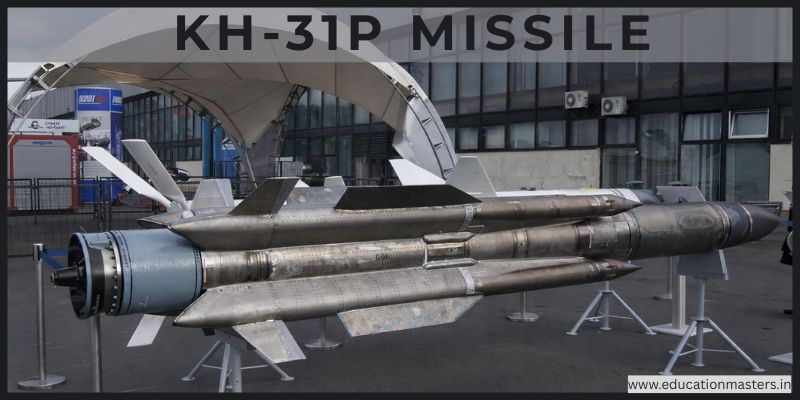
Agni-2 Missile is a medium-range, nuclear-capable ballistic missile developed by DRDO to strengthen India’s strategic strike capability beyond the short-range Agni-1. With an operational range of 2,000–3,000 km, it allows India to engage a broader set of regional targets with high accuracy. The missile uses a two-stage solid-fuel propulsion system, ensuring fast launch readiness, simplified logistics, and reliable performance.
Designed for use from road-mobile and rail-mobile platforms, Agni-2 Missile offers excellent mobility and survivability, enabling flexible deployment across different terrains. Equipped with advanced guidance and control technologies, it delivers precise targeting essential for both strategic deterrence and counterforce missions. Fully operational under the Strategic Forces Command, Agni-2 Missile remains a crucial element of India’s credible minimum deterrence posture.
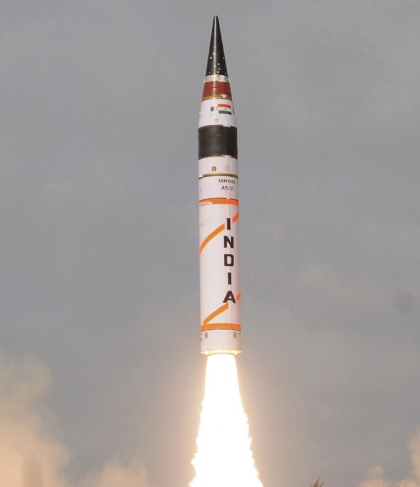
Overview of Agni-2 Missile
|
Category
|
Details
|
|
Name
|
Agni-2 Missile
|
|
Type
|
Medium-Range Ballistic Missile (MRBM)
|
|
Developer
|
Defence Research and Development Organisation (DRDO), India
|
|
Range
|
2,000–3,000 km
|
|
Propulsion
|
Two-stage, solid-fuel propulsion system
|
|
Warhead Capacity
|
1,000 kg (nuclear or conventional)
|
|
Guidance System
|
Advanced Inertial Navigation System (INS) with improved accuracy
|
|
Launch Platforms
|
Road-mobile launcher; Rail-mobile launcher
|
|
Fuel Type
|
Solid propellant (both stages)
|
|
Purpose
|
Strategic and counterforce strike missions
|
|
Key Features
|
High mobility, fast reaction time, reliable performance
|
|
Operational Status
|
Inducted and operational under Strategic Forces Command (SFC)
|
|
Strategic Role
|
Strengthens India’s credible minimum deterrence; mid-range strike capability
|
Design Features of Agni-2 Missile
-
Two-stage, solid-fuel propulsion
-
Composite motor casings for lightweight and high strength
-
Ring-laser gyroscope and advanced navigation suite
-
Capable of road-mobile operations via rail or road launchers
Purpose & Role of Agni-2 Missile
-
Designed for credible minimum deterrence
-
Acts as a medium-range ballistic missile (MRBM)
-
Provides strike capability against targets deeper inside the adversary’s territory
-
Integral component of India’s nuclear delivery systems
Accuracy & Guidance of Agni-2 Missile
-
Inertial navigation system
-
Supported by micro-navigation systems for improved accuracy
-
Designed for reliable and precise strike capability.
Testing History of Agni-2 Missile
-
First test: April 1999
-
Multiple successful trials validating range, mobility, and reliability
-
Continually upgraded for improved performance.
Strategic Importance of Agni-2 Missile
-
Extends India’s strike envelope
-
Strengthens second-strike capability under the No First Use doctrine
-
Reinforces deterrence against regional threats
Introduction to Agni-P
Agni-P (Agni-Prime Missile) is a new-generation, advanced ballistic missile developed by DRDO to replace older variants such as Agni-1 and Agni-2 Missile. It is lighter, more accurate, and incorporates cutting-edge composite materials and modern avionics. Agni-P (Agni-Prime Missile) features a two-stage solid-fuel propulsion system, canister zed, and is designed for launch from road or rail mobile platforms.
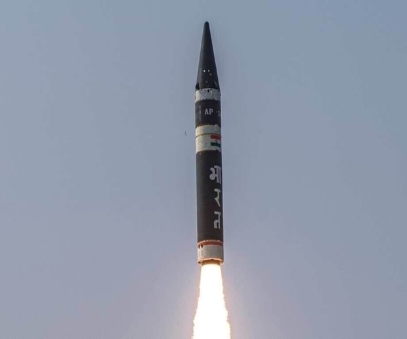
Its improved manoeuvrability, high accuracy, and reduced radar signature make it harder to intercept. The missile also supports multiple payload types, enhancing operational flexibility. Agni-P (Agni-Prime Missile) is considered a key step in modernizing India’s missile arsenal with a focus on agility, precision, and faster deployment. It is expected to replace older ballistic missiles and complement longer-range Agni-series systems.
Overview of Agni-P (Agni-Prime Missile)
|
Parameter
|
Details
|
|
Name
|
Agni-P (Agni-Prime missile)
|
|
Developed By
|
DRDO, India
|
|
Category
|
New-generation Medium-Range Ballistic Missile (MRBM)
|
|
Range
|
1,000–2,000 km
|
|
Stages
|
Two-stage
|
|
Fuel Type
|
Solid fuel (composite motor)
|
|
Launch Platform
|
Canister zed Road-mobile & Rail-mobile launchers
|
|
Warhead
|
Conventional / Nuclear; Multiple payload options
|
|
Accuracy
|
Very high accuracy with advanced navigation & guidance
|
|
Key Features
|
Lighter weight, improved composites, canister launch, MIRV-capable potential, low radar signature
|
|
Role
|
Replaces Agni-1 & Agni-2 Missile; precision medium-range strike
|
|
Users
|
Strategic Forces Command (post induction)
|
|
Status
|
Successfully tested; nearing induction
|
Design & Construction of Agni-P (Agni-Prime Missile)
-
Composite Materials
-
Provides significant weight reduction, increasing range and payload capability.
-
Improves thermal resistance and manoeuvrability.
-
Canister zed Design
-
Ensures quick reaction time, easy handling, and long-term storage.
-
Offers all-weather, all-terrain operability.
-
Reduced Radar Signature
Guidance & Accuracy of Agni-P (Agni-Prime Missile)
-
Advanced ring laser gyroscope (RLG) based INS
-
Micro-Navigation System (MINGS) for dual guidance
-
Enhanced accuracy due to modern digital control systems
-
Designed to be far more precise than Agni-1 and Agni-2 Missile
Modernization and Replacement Operations of Agni-P (Agni-Prime Missile)
Agni-P (Agni-Prime Missile) is intended to replace older systems like:
-
Agni-1 Missile
-
Agni-2 Missile
Thus, performing the operational role of:
-
Reducing maintenance load
-
Standardizing new-generation missile systems
-
Enhancing overall readiness and efficiency of India’s missile forces
Test & Development Timeline of Agni-P (Agni-Prime Missile)
-
First Test: June 2021 — successful
-
Second Test: December 2021 — validated stability and accuracy
-
Subsequent tests confirmed performance and production-readiness
-
Entering induction phase with the Strategic Forces Command (SFC)
Conclusion
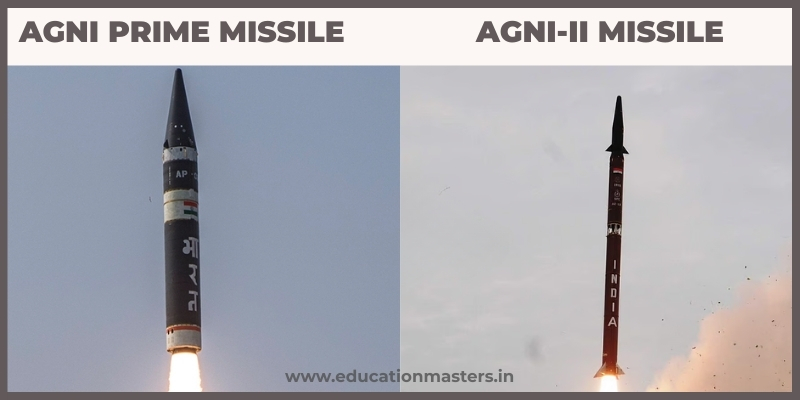
Agni-2 Missile and Agni-P (Agni-Prime Missile) collectively highlight India’s steady progression toward a modern, flexible, and robust ballistic missile force. Agni-2 Missile continues to provide a reliable and battle-proven backbone for medium-range deterrence, offering solid-fuel readiness, high mobility, and dependable performance against regional threats. In parallel, Agni-P (Agni-Prime Missile) represents the next phase of advancement, featuring lightweight composite structures, improved accuracy, advanced guidance, and fully canister zed launch capability for rapid, all-weather operation.
Together, these missiles complement each other— Agni-2 Missile delivering established strategic stability and Agni-P (Agni-Prime Missile) introducing enhanced precision, survivability, and operational agility. This combination strengthens India’s credible minimum deterrence posture and ensures a more responsive and resilient missile capability for future security challenges. For more Such information About missiles visit Education Masters.
सरकारी नौकरियों, जीके अपडेट्स और करेंट अफेयर्स की ताज़ा जानकारी सबसे पहले पाने के लिए:




.png)
.jpg)
.jpg)