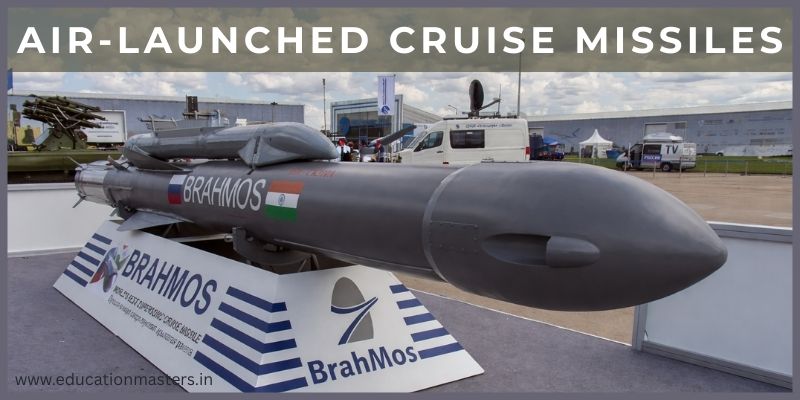
Air-Launched Cruise Missiles (ALCMs) represent a major leap in the country’s air-to-surface missile (ASM) warfare capabilities, providing the ability to conduct long-range, precision-guided strikes with high survivability. Launched from combat aircraft of the Indian Air Force, these missiles allow India to neutralize high-value strategic targets, including enemy command centers, air bases, radar installations, and critical infrastructure, without exposing pilots to dense air-defense networks. Designed with advanced inertial navigation systems, satellite guidance, and low-altitude terrain-following flight, Indian air-launched cruise missiles deliver exceptional accuracy, making them a core component of modern network-centric and stand-off warfare doctrines.
At the forefront of this capability is BrahMos-A, a supersonic air-launched cruise missile capable of striking both land and maritime targets with extreme speed and kinetic impact. Its integration with frontline fighter jets significantly enhances India’s offensive air power, maritime strike role, and rapid response capability. Complementing this is the indigenous Nirbhay program, which emphasizes long endurance, deep-penetration range, and modular payload options. Together, these air-launched cruise missiles strengthen India’s credible conventional deterrence, improve strategic flexibility, and position the country among the leading nations with advanced air-launched precision strike missile technology.
Overview of ALCMs of India
|
Category
|
Details
|
|
Missile Name
|
BrahMos-A
|
|
Missile Type
|
Supersonic Air-Launched Cruise Missile (ALCM / ASM)
|
|
Purpose
|
Destroy high-value strategic targets from stand-off range
|
|
Country of Origin
|
Russia and India (Joint Development)
|
|
Operator (India)
|
Indian Air Force
|
|
Launch Mode
|
Air-launched
|
|
Launch Platforms (India)
|
Fighter aircraft su-30MKI
|
|
Guidance System
|
INS + Satellite Guidance with terminal active radar seeker
|
|
Attack Capability
|
High-speed penetration; sea-skimming & terrain-hugging flight
|
|
Engagement Type
|
Stand-off air-to-surface precision strike
|
|
Target Types
|
Warships, airbases, bunkers, command centers, infrastructure
|
|
Speed Class
|
Supersonic (Mach 2.8+)
|
|
Operational Range
|
~400 km
|
|
Countermeasure Resistance
|
High resistance to electronic warfare and interception
|
|
Combat Advantage
|
Extremely short enemy reaction time
|
|
Operational Role
|
Maritime strike missions and deep-strike
|
|
Strategic Importance
|
Enhances deterrence and air-dominance capability
|
|
Status in India
|
Operational
|
Key Features of ALCMs of India
India’s Air-Launched Cruise Missiles (ALCMs) provide the Indian Air Force with long-range, precision strike capability against high-value and well-defended targets. India’s ALCM capability is centered on BrahMos-A, with the subsonic Nirbhay planned to expand mission flexibility. These missiles are designed for deep strike, deterrence, and suppression of enemy air-defense and command infrastructure.
1. Supersonic strike capability – BrahMos-A flies at sustained supersonic speed, sharply reducing enemy reaction time.
2. Precision guidance system – Uses inertial navigation with satellite updates (GPS/IRNSS) and an advanced terminal seeker for high-accuracy strikes on fixed and semi-mobile targets.
3. Long standoff launch range – Enables launch aircraft to engage strategic targets while remaining outside dense SAM and fighter threat zones.
4. Multi-role strike capability – Effective against air-defense sites, command-and-control centers, hardened infrastructure, logistics hubs, and high-value maritime or coastal targets.
5. Low-altitude penetration profile – Capable of terrain-hugging and sea-skimming flight to minimize radar detection and delay enemy response.
6. High-speed terminal attack phase – Retains very high kinetic energy in the terminal phase, making interception by point-defense systems extremely difficult.
Development Background ALCMs of India
India’s air-launched cruise missile development began with the need for stand-off precision strike capability, allowing fighter aircraft to engage high-value targets without entering hostile air-defense zones. As air warfare evolved toward long-range, high-speed, and precision-guided weapons, India focused on integrating advanced cruise missiles into its air power doctrine, emphasizing survivability, accuracy, and deterrence.
This effort culminated in the development and induction of the BrahMos-A, achieved through Indo-Russian collaboration and extensive flight. The program established India’s operational ALCM capability and laid the technological groundwork for future air-launched cruise missile systems.
Operational Roles of ALCMs of India
India’s Air-Launched Cruise Missiles (ALCMs), led by BrahMos-A and supported by Nirbhay, are designed to perform a wide spectrum of operational roles across conventional conflict scenarios. These roles enhance the Indian Air Force’s ability to strike decisively while maintaining escalation control.
1. Deep strike against strategic targets – Enables precision attacks on enemy command centers, logistics hubs, airbases, and critical infrastructure located deep inside hostile territory.
2. Standoff precision strike – Allows launch aircraft to engage heavily defended targets from long ranges without entering enemy air-defense envelopes.
3. Suppression of Enemy Air Defenses (SEAD) – Used to degrade or neutralize radar sites, SAM batteries, and air-defense command nodes, easing follow-on air operations.
4. Destruction of Enemy Air Defenses (DEAD) – Conducts physical destruction of key air-defense assets during high-intensity conflict phases.
5. Counter–command and control operations – Targets enemy C2 nodes, communication hubs, and data centers to disrupt battlefield coordination.
6. Maritime strike and sea-denial – Engages enemy surface combatants, high-value naval assets, and coastal installations, particularly in littoral regions.
7. Anti-access / Area-denial (A2/AD) missions – Supports denial of airspace and sea lanes by threatening high-value targets within contested zones.
8. First-day-of-war strike operations – Plays a critical role in opening phases of conflict by neutralizing key defenses and strategic assets.
Types of ALCMs of India
|
Missile
|
Type
|
Notes
|
|
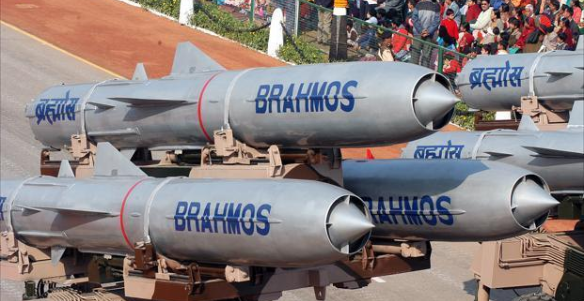
BrahMos-A
|
Supersonic Air-Launched Cruise Missile (ALCM)
|
India’s only operational ALCM; air-launched variant of BrahMos; Mach 2.8+ speed; precision strike against land and maritime targets; integrated with Su-30MKI; provides long-range stand-off strike capability
|
|
BrahMos-NG
|
Next-Generation Air-Launched Cruise Missile (Planned)
|
Under development; lighter and more compact than BrahMos-A; designed for wider fighter aircraft integration (Tejas, Rafale, Mirage 2000); supersonic; enhanced flexibility, payload efficiency, and operational reach
|
Advantages of ALCMs of India
India’s Air-Launched Cruise Missiles (ALCMs), led by BrahMos-A and complemented by Nirbhay, provide the Indian Air Force with major operational and strategic advantages in modern warfare by combining speed, precision, survivability, and flexibility.
1. Reduced enemy reaction time – The very high speed of BrahMos-A drastically compresses the enemy’s detection, tracking, and interception window, increasing the probability of successful penetration against modern air-defense systems.
2. True standoff strike capability – ALCMs allow launch aircraft to strike deep and well-defended targets from outside hostile airspace, significantly reducing risk to pilots and high-value fighter platforms.
3. High survivability against air defenses – The combination of low-altitude flight profiles, high speed, and terminal maneuverability makes interception by integrated air defense systems extremely difficult.
4. Precision engagement of high-value targets – Advanced guidance and terminal seekers enable accurate strikes on command centers, airbases, radar sites, infrastructure, and naval assets with minimal collateral damage.
5. Flexible mission employment – Indian ALCMs can be used for land attack, maritime strike, SEAD/DEAD support, and counter–command-and-control roles, offering multi-mission capability from a single weapon type.
6. Conventional deterrence without uncontrolled escalation – They provide India with a powerful conventional strike option below the nuclear threshold.
7. Force multiplier for fighter aircraft – By extending strike range and lethality, ALCMs significantly enhance the combat effectiveness of aircraft like the Su-30MKI without exposing them to frontline threats.
8. Network-centric warfare compatibility – Integration with real-time ISR, space-based assets, and battlefield networks allows dynamic retargeting and coordinated joint-force strike operations.
Limitations of ALCMs of India
Despite their strong operational value, India’s Air-Launched Cruise Missiles (ALCMs), led by BrahMos-A and supported by Nirbhay, also face certain technical, operational, and strategic limitations that influence their employment in combat.
1. Dependence on launch aircraft survivability – ALCMs rely on fighter aircraft to deliver them into launch positions; if air superiority is contested, the survivability and availability of launch platforms can become a constraint.
2. Limited payload and warhead size – Compared to ballistic missiles, air-launched cruise missiles carry smaller warheads, which may limit effectiveness against very deeply buried or heavily hardened targets.
3. High integration and platform costs – Modifying aircraft for carriage, avionics integration, and certification adds complexity, cost, and time, especially for heavy missiles like BrahMos-A.
4. Restricted carriage numbers per aircraft – Due to size and weight, fighters can carry only a limited number of ALCMs, reducing salvo size compared to ground- or sea-launched alternatives.
5. Vulnerability to advanced air-defense evolution – Future improvements in radar, sensors, and interceptor missiles could reduce effectiveness, requiring constant upgrades to seekers and countermeasures.
6. Intelligence and targeting dependence – Successful employment depends heavily on accurate, timely intelligence; outdated or incorrect target data can significantly reduce mission effectiveness.
7. Subsonic vulnerability (Nirbhay) – Subsonic ALCMs are more vulnerable to interception if detected early, especially against layered air-defense networks.
8. Logistics and maintenance burden – Advanced seekers, propulsion systems, and precision guidance require sophisticated maintenance, testing infrastructure, and trained personnel.
CONCLUSION
Air-Launched Cruise Missile (ALCM) capability has become a cornerstone of its modern air-to-surface strike and deterrence framework, significantly enhancing the nation’s ability to conduct long-range, stand-off precision attacks in contested airspace. The operational deployment of the BrahMos-A has provided the Indian Air Force with a powerful supersonic strike option capable of neutralizing high-value land and maritime targets with exceptional speed, accuracy, and survivability. By enabling fighter aircraft to launch attacks from beyond enemy air-defense zones, India has strengthened its first-day-of-war capability, rapid response readiness, and conventional deterrence posture, making ALCMs a decisive force multiplier in modern aerial warfare.
In the future, India’s focus on expanding its ALCM portfolio is expected to drive the development of lighter, longer-range, and more versatile air-launched cruise missiles, improving integration across multiple combat aircraft and mission profiles. These advancements will enhance air dominance, operational flexibility, and strategic reach, ensuring India remains competitive among global military powers with advanced air-launched precision strike capabilities. For more information about missiles you can visit our sites Education Masters.
सरकारी नौकरियों, जीके अपडेट्स और करेंट अफेयर्स की ताज़ा जानकारी सबसे पहले पाने के लिए:




.png)
.png)
.png)
.png)
.jpg)
.jpg)