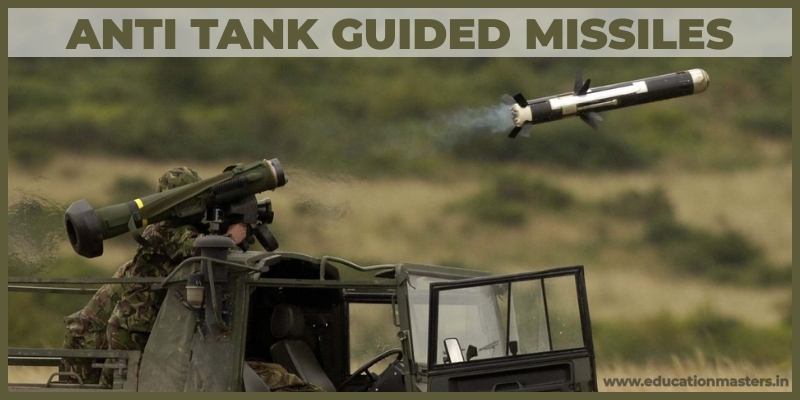
Anti-Tank Guided Missiles (ATGMs) are advanced precision-guided weapon systems specifically developed to detect, track, and destroy heavily armored targets such as main battle tanks, armored personnel carriers, and fortified enemy positions. They play a decisive role in modern ground warfare by providing infantry, mechanized units, and special forces with a highly effective capability to counter enemy armored formations across short, medium, and long engagement ranges. ATGMs are designed to overcome the increasing protection levels of modern tanks, including composite and reactive armor, through the use of powerful high-explosive anti-tank (HEAT) or tandem warheads. These warheads are capable of penetrating thick armor by exploiting vulnerabilities in tank design, particularly when employed in top-attack modes that strike the relatively weaker upper surfaces of armored vehicles.
Modern ATGMs are equipped with sophisticated guidance systems such as semi-automatic command to line of sight (SACLOS) and advanced fire-and-forget technologies, allowing missiles to accurately engage targets with minimal operator exposure. This enhances battlefield survivability and enables rapid repositioning after launch. The integration of thermal imaging seekers, laser guidance, and imaging infrared sensors further improves target acquisition and effectiveness in adverse weather and low-visibility conditions.Operationally, ATGMs provide armed forces with a flexible and cost-effective solution to neutralize armored threats without relying solely on tanks or air power. They are deployable from a wide range of platforms, including man-portable launchers, infantry fighting vehicles, helicopters, and naval platforms, making them suitable for diverse combat environments such as plains, deserts, mountains, and urban terrain.
In modern conflicts, ATGMs have proven their effectiveness by altering battlefield dynamics and limiting the dominance of armored units. Their precision, lethality, and adaptability allow forces to conduct defensive ambushes, halt armored breakthroughs, and support offensive operations with minimal collateral damage. As armor protection and battlefield technologies continue to evolve, ATGMs remain a critical element of combined arms warfare, ensuring that infantry and mechanized forces retain a decisive edge against armored adversaries.
Anti-Tank Guided Missile (ATGM)-Overview
|
Aspect
|
Details
|
|
Full Form
|
ATGM: Anti-Tank Guided Missile
|
|
Weapon Type
|
Anti-armor missile with Precision-guided
|
|
Primary Role
|
Destruction of tanks, armored vehicles, and fortified targets
|
|
Target Types
|
Main battle tanks, APCs, IFVs, bunkers
|
|
Guidance Methods
|
MCLOS, SACLOS, Fire-and-Forget
|
|
Modes of Attack
|
Top and direct attack
|
|
Warhead Type
|
HEAT/ Thermobaric / Tandem HEAT
|
|
Armor Defeat Capability
|
reactive and Composite armor
|
|
Launch Platforms
|
Man-portable, vehicles, helicopters, naval platforms
|
|
Engagement Range
|
Short to long range (varies by system)
|
|
Accuracy
|
Very high
|
|
Operational Use
|
Defensive and offensive anti-armor warfare
|
|
Battlefield Role
|
Ambush, area denial, infantry support
|
|
Key Advantage
|
High lethality with low operator risk
|
|
Key Limitation
|
Vulnerable to APS and line-of-sight dependency
|
Key Features of Anti-Tank Guided Missiles (ATGMs)
-
Precision-Guided Weapon:
ATGMs are engineered with advanced guidance systems that enable highly accurate engagement of armored targets, ensuring a high hit probability even at extended ranges and in challenging battlefield conditions.
-
Penetration Capability of High Armor:
Equipped with powerful high-explosive anti-tank (HEAT) or tandem warheads, ATGMs are capable of defeating modern composite, spaced, and reactive armor used by contemporary main battle tanks.
-
Launch Flexibility with Multi-Platform:
ATGMs can be launched from a wide range of platforms, including man-portable infantry systems, armored vehicles, attack helicopters, unmanned platforms, and naval vessels, providing exceptional operational flexibility across different combat environments.
-
Anti-Armor Solution is Cost-Effective:
Compared to deploying main battle tanks or close air support, ATGMs offer a more economical and flexible means of neutralizing armored threats, making them highly effective in both conventional and asymmetric warfare scenarios.
Guidance Systems of Anti-Tank Guided Missiles (ATGMs)
ATGMs use different guidance methods depending on generation and design:
-
MCLOS (Manual Command to Line of Sight) – Operator manually guides the missile.
-
SACLOS (Semi-Automatic Command to Line of Sight) – Operator keeps sight on target; system guides missile.
-
Fire-and-Forget – Missile autonomously tracks and destroys the target after launch.
-
Top-Attack Mode – Attacks the weaker upper armor of tanks.
Warhead Types of Anti-Tank Guided Missiles (ATGMs)
-
High-Explosive Anti-Tank - HEAT
-
To defeat reactive armor Tandem HEAT Warheads
-
For bunkers and fortifications Thermobaric Warheads
Importance of ATGMs in Modern Warfare
ATGMs have transformed land warfare by neutralizing the dominance of heavy armor. With advancements such as fire-and-forget guidance, top-attack capability, and integration with drones and helicopters, ATGMs decisive weapons on the modern battlefield remain.
Examples of Anti-Tank Guided Missiles (ATGMs) – India
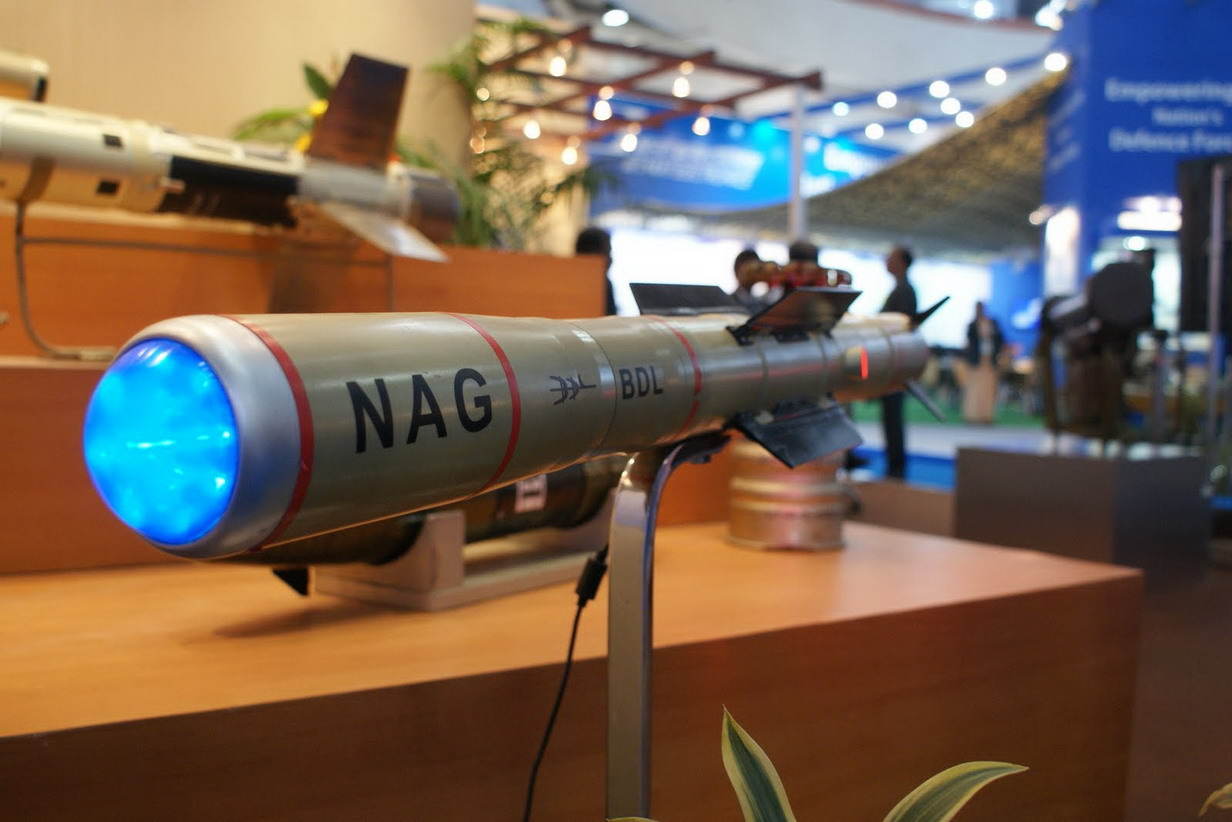
1. Nag Missile
Nag is an indigenously developed third-generation, fire-and-forget Anti-Tank Guided Missile (ATGM) designed by DRDO to counter modern armored threats. It is equipped with an imaging infrared (IIR) seeker that allows autonomous target tracking after launch. Nag features top-attack capability, enabling it to strike the thinner upper armor of main battle tanks, making it highly effective against tanks protected with composite and reactive armor. The missile provides high accuracy, strong penetration capability, and improved survivability for operators.
2. HELINA
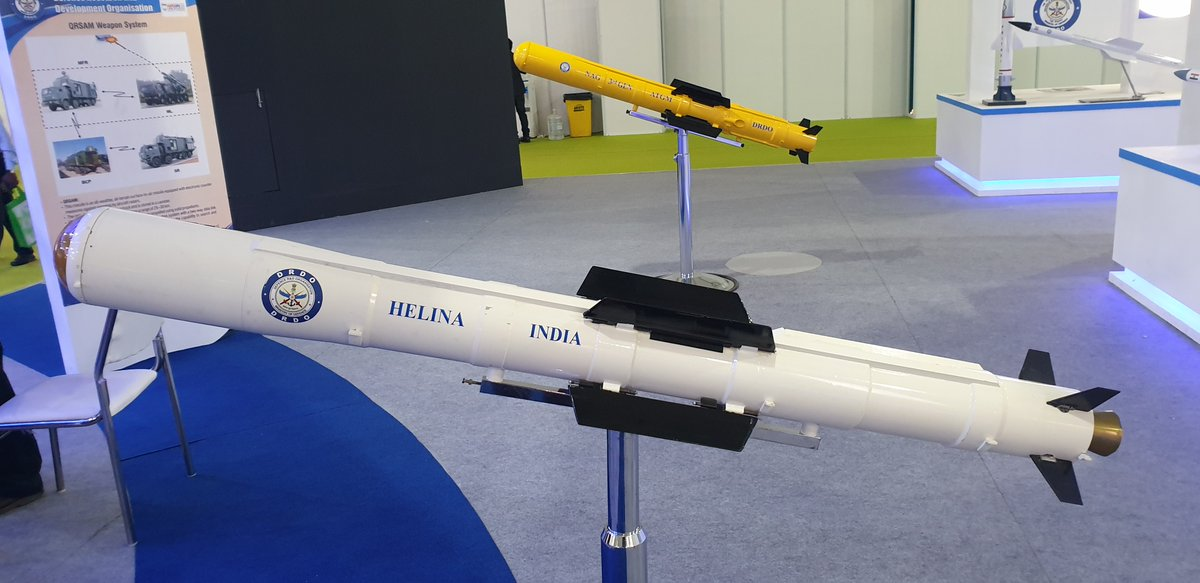
HELINA (Helicopter-Launched Nag) is the air-launched variant of the Nag missile, developed to be fired from attack helicopters. It offers a longer engagement range compared to ground-launched variants and allows helicopters to engage enemy armor from safe stand-off distances. With fire-and-forget guidance and high armor penetration, HELINA significantly enhances the Indian Army’s and Air Force’s ability to neutralize armored formations during offensive and defensive operations.
3. Dhruvastra
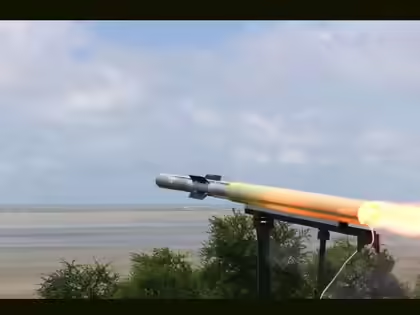
Dhruvastra is an advanced helicopter-launched anti-tank guided missile derived from the Nag program and optimized for Indian attack helicopters. It combines precision guidance, top-attack capability, and high lethality, enabling accurate engagement of tanks, bunkers, and armored vehicles. Dhruvastra strengthens India’s aerial anti-armor strike capability and improves battlefield dominance in both conventional and high-intensity conflicts.
4. MPATGM
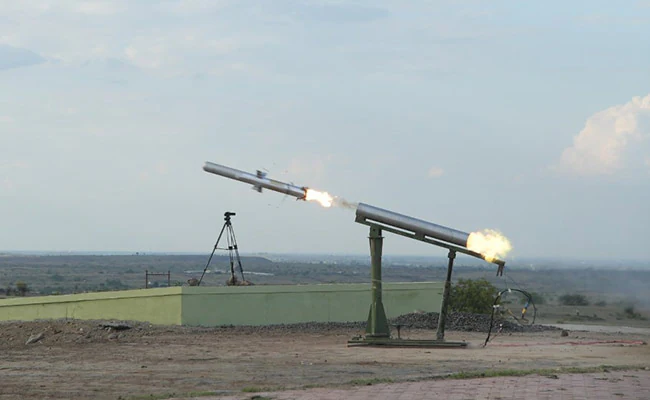
The Man-Portable Anti-Tank Guided Missile (MPATGM) is a lightweight, third-generation fire-and-forget missile designed for infantry use. It provides foot soldiers with a highly mobile and effective weapon system to counter armored threats without requiring heavy platforms. MPATGM is particularly suitable for mountain, urban, and close-combat environments, where quick deployment and rapid engagement are crucial.
Operational Role of Anti-Tank Guided Missiles (ATGMs)
-
Destruction of Armored Vehicles and Enemy Tanks:
ATGMs are primarily employed to accurately engage and destroy main battle tanks, armored personnel carriers, and other armored platforms, neutralizing the enemy’s armored combat capability.
-
Protection Against Armored Breakthroughs:
They play a critical defensive role by halting or slowing enemy armored advances, protecting key terrain, supply routes, and defensive positions from mechanized assaults.
-
Support to armored and Infantry Forces:
ATGMs provide direct fire support to infantry and mechanized forces, enhancing their ability to counter armored threats during offensive and defensive operations.
-
Area Denial and Ambush Operations:
Due to their precision and stand-off range, ATGMs are highly effective in ambush roles, enabling forces to deny or control critical battlefield areas and chokepoints.
-
Effectiveness in Urban and Mountain Warfare:
ATGMs are particularly valuable in complex environments such as urban areas and mountainous terrain, where restricted movement and line-of-sight conditions favor precision anti-armor engagements.
Advantages of Anti-Tank Guided Missiles (ATGMs)
-
Superior Accuracy and Lethality:
ATGMs are designed with advanced guidance systems that ensure precise target engagement and high kill probability, making them highly lethal against armored threats.
-
Effective Against Contemporary Armored Threats:
Equipped with powerful HEAT or tandem warheads, ATGMs can defeat modern tanks fitted with composite and reactive armor, maintaining effectiveness against evolving armor technologies.
-
Flexible Launch Options:
ATGMs can be deployed from multiple platforms including infantry launchers, armored vehicles, helicopters, and naval platforms, allowing adaptability across diverse combat scenarios.
-
Reducing the Danger to Friendly Forces:
Stand-off engagement capability enables operators to strike armored targets from a safe distance, minimizing exposure to direct enemy fire and enhancing survivability.
-
Ideal for both Asymmetric and Conventional Warfare:
ATGMs are equally effective in conventional battlefield engagements and asymmetric conflicts, providing smaller or lightly equipped forces the heavily armored adversaries counter ability.
Anti-Tank Guided Missiles (ATGMs) Limitations
-
Limited Engagement Range:
Compared to artillery systems or combat aircraft, ATGMs have a relatively shorter engagement range, which may restrict their effectiveness against distant or fast-moving armored formations.
-
Active Protection Systems (APS) Vulnerability:
Modern tanks equipped with Active Protection Systems can detect and intercept incoming ATGMs, reducing their effectiveness unless countered by advanced tactics or missile upgrades.
-
Line-of-Sight Requirement:
Many ATGM variants require continuous line-of-sight between the operator and the target throughout missile flight, which can limit use in complex terrain or under battlefield obscuration.
-
Operator Exposure in Older-Generation Systems:
Earlier-generation ATGMs require operators to remain exposed while guiding the missile, increasing vulnerability to enemy fire and countermeasures during engagement.
Conclusion
Anti-Tank Guided Missiles are indispensable components of modern armed forces, delivering precise, flexible, and highly lethal anti-armor capabilities on the battlefield. Their ability to accurately engage and destroy heavily armored targets from stand-off distances significantly reduces risk to friendly forces. With continuous advancements in seeker technology, guidance systems, top-attack profiles, and warhead design, ATGMs remain effective against increasingly sophisticated armored vehicles. As a result, they play a critical role in both conventional and asymmetric warfare, ensuring that infantry and mechanized forces can counter modern armored threats and maintain battlefield superiority. For more information about missiles visit Education Masters.
सरकारी नौकरियों, जीके अपडेट्स और करेंट अफेयर्स की ताज़ा जानकारी सबसे पहले पाने के लिए:





.png)
.png)
.png)
.jpg)
.jpg)