

Lalita Bhauryal
I am Lalita, a content creator at Education Masters. I create simple, well-researched, and engaging educational content to help students understand concepts easily and succeed in their academic journey.
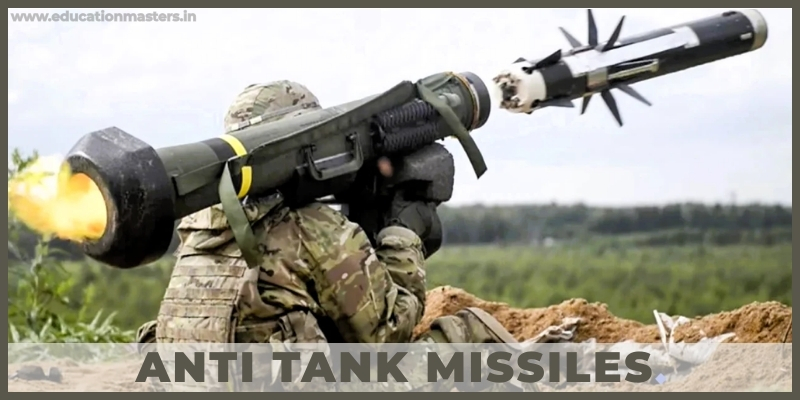
An Anti-Tank Missile (ATM), commonly referred to as an Anti-Tank Guided Missile (ATGM), is a precision-guided weapon system specifically engineered to destroy or disable enemy tanks and armored vehicles. These missiles form a critical pillar of modern land warfare, developed to counter advanced main battle tanks protected by composite armor, Explosive Reactive Armor (ERA), and Active Protection Systems (APS). Equipped with sophisticated guidance, top-attack profiles, and high-penetration warheads, ATGMs ensure effective neutralization of heavily armored threats.
ATGMs are deployed across multiple platforms—including infantry units, mechanized forces, attack helicopters, armored vehicles, and naval platforms—providing commanders with a highly flexible, accurate, and lethal anti-armor solution in diverse combat environments.
|
Parameter |
Details |
|
Full Form |
(ATGM) Anti-Tank Guided Missile |
|
Primary Role |
Destructing tanks and armored vehicles |
|
Operational Domain |
Limited naval operations, Land and air |
|
Target Types |
MBTs, AFVs, APCs, fortified positions |
|
Guidance Types |
MCLOS, SACLOS, Fire-and-Forget (IIR) |
|
Attack Mode |
Direct attack / Top-attack |
|
Warhead Type |
HEAT / Tandem HEAT |
|
Range |
Short to long range (2–10+ km, system dependent) |
|
Launch Platforms |
Infantry, vehicles, helicopters, naval platforms |
|
Key Features |
Precision, lethality, mobility, versatility |
|
Operational Use |
Offensive, defensive, ambush, joint operations |
|
Indian Examples |
MPATGM, Nag, HELINA, Dhruvastra, SANT |
|
Strategic Importance |
Countering armored superiority and battlefield dominance |
Anti-tank missiles are primarily designed to penetrate heavy armor and destroy modern main battle tanks, which pose a great threat to ground forces.
Beyond tanks, ATGMs effectively target armored personnel carriers and infantry fighting vehicles, reducing enemy mobility and firepower.
By targeting lead and support vehicles, anti-tank missiles disrupt enemy armored thrusts and prevent deep penetrations into defended areas.
ATGMs provide infantry and mechanized units with reliable anti-armor firepower, enhancing combined-arms operations and battlefield coordination.
Compared to the high cost of tanks, anti-tank missiles deliver an economical yet highly effective means of countering armored threats.
Carried as well as fired by infantry soldiers
Short to medium range
Ideal for urban combat and ambushes
Examples: MPATGM (India), Javelin, Spike
Mounted on armored vehicles or infantry combat vehicles
Greater range and payload
Examples: Nag, Kornet
Fired from attack helicopters
Offer mobility, aerial surveillance, and stand-off attacks
Examples (India): HELINA, Dhruvastra, SANT
Manual guidance (MCLOS)
Obsolete today
(SACLOS) Semi-Automatic Command to Line of Sight
Operator tracks target throughout flight
Fire-and-Forget capability
Imaging Infrared (IIR) or advanced seekers
High survivability
Network-enabled
Target update after launch
AI-assisted guidance
Anti-tank missiles are engineered for pinpoint accuracy, enabling precise engagement of armored targets while minimizing collateral damage in complex battlefield environments.
Most modern ATGMs employ a top-attack flight profile, striking tanks from above where armor protection is weakest, significantly increasing kill probability.
Equipped with tandem High-Explosive Anti-Tank (HEAT) warheads, these missiles can defeat Explosive Reactive Armor (ERA) and penetrate advanced composite armor systems.
Advanced guidance systems allow missiles to autonomously track and engage targets after launch, enabling operators to relocate immediately and enhancing under fire survivability.
Modern seekers, including imaging infrared systems, ensure effective performance in low visibility, darkness, smoke, dust, and adverse weather conditions.
Anti-tank missiles empower infantry units with the ability to independently engage and destroy enemy tanks and armored vehicles, reducing reliance on heavy armor or air support.
Their portability and precision make ATGMs ideal for ambush tactics and defensive deployments, allowing forces to halt or delay advancing armored columns from concealed positions.
ATGMs play a critical role in stopping or degrading enemy armored thrusts by targeting lead and support vehicles, disrupting momentum and command cohesion.
Integrated with tanks, artillery, air assets, and surveillance systems, anti-tank missiles enhance coordinated joint operations and overall battlefield effectiveness.
Highly effective in urban areas, forests, and mountainous terrain, ATGMs enable precise engagement of armored threats where maneuverability is limited and close combat is common.
India has developed a comprehensive and layered indigenous Anti-Tank Guided Missile (ATGM) ecosystem to counter armored threats across all levels of warfare. This multi-tiered approach ensures effective anti-armor capability for infantry, mechanized forces, and aerial platforms.
MPATGM (Man-Portable Anti-Tank Guided Missile) – A third-generation, infantry-carried fire-and-forget missile designed to provide frontline soldiers with a lightweight yet lethal anti-armor weapon.
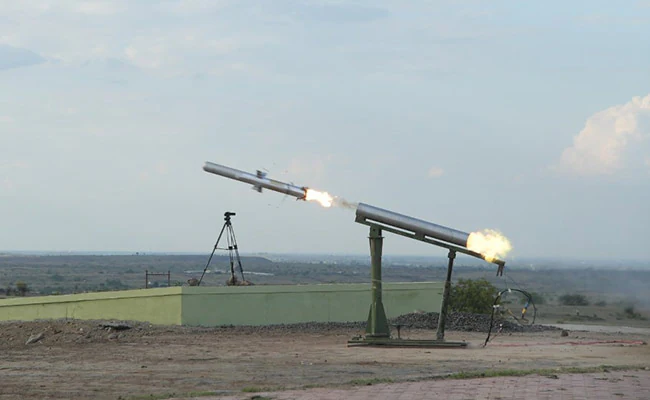
Nag – A vehicle-launched anti-tank guided missile equipped with top-attack capability, intended for use by mechanized units against modern main battle tanks.
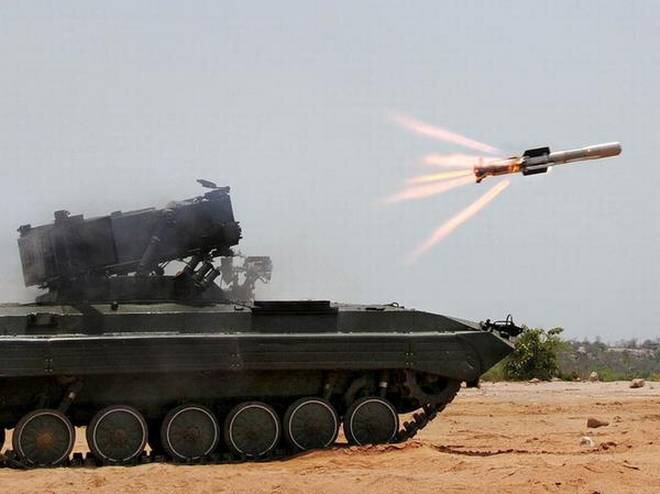
HELINA / Dhruvastra – Helicopter-launched ATGMs that enable precision strikes against armored targets from aerial platforms, enhancing mobility and battlefield reach.
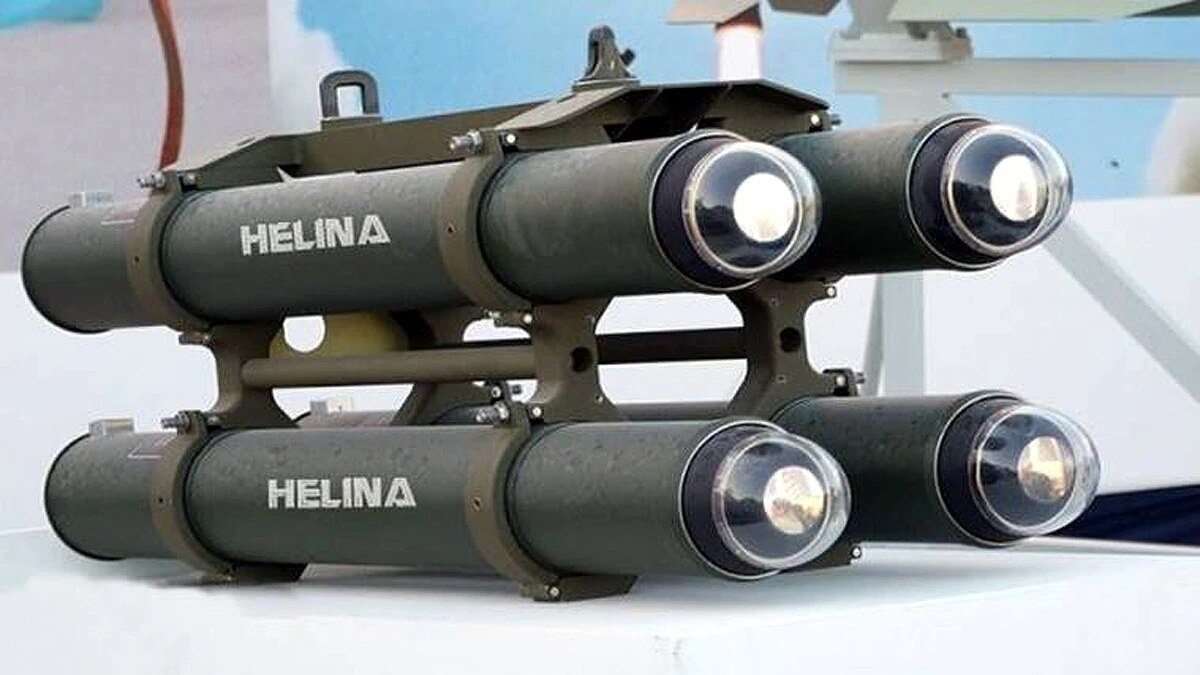
SANT (Stand-off Anti-Tank Missile) – A long-range, air-launched missile designed to engage heavily armored targets from extended stand-off distances, significantly improving helicopter survivability in high-threat environments.
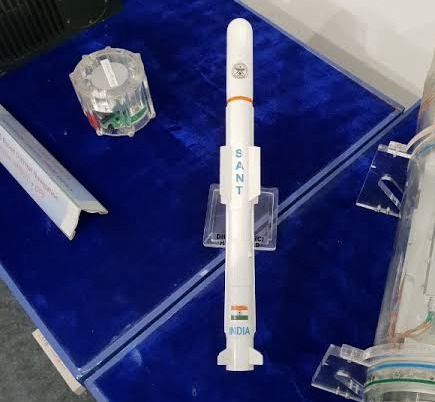
Together, these systems form a robust, indigenous anti-armor warfare architecture, strengthening India’s battlefield effectiveness, operational flexibility, and defence self-reliance.
Anti-tank missiles allow infantry and light forces to counter heavily armored formations, preventing tanks from dominating the battlefield and ensuring a balanced force structure.
They provide an effective and cost-efficient response to modern main battle tanks, enabling smaller or technologically asymmetric forces to neutralize superior armored units.
Integrated with surveillance, drones, and command-and-control networks, anti-tank missiles enhance real-time targeting, coordinated strikes, and joint battlefield operations.
Indigenous development and production of anti-tank missiles reduce dependence on foreign suppliers, strengthen domestic defence industries, and support long-term strategic autonomy.
Anti-tank missiles are specifically engineered to penetrate advanced armor and Explosive Reactive Armor (ERA), making them extremely effective against modern main battle tanks and armored fighting vehicles.
Compared to the high cost of tanks, ATGMs offer a relatively economical means to neutralize heavily armored platforms, providing an efficient balance between cost and combat effectiveness.
ATGMs can be launched from infantry teams, armored vehicles, helicopters, and naval platforms, enabling versatile use across diverse combat environments.
By equipping infantry and light forces with potent anti-armor capabilities, ATGMs lessen reliance on tanks or air strikes to counter armored threats of enemy.
The precision and lethality of anti-tank missiles allow small, well-trained units to ambush and defeat numerically superior armored formations, enhancing tactical asymmetry.
Many anti-tank missiles—especially man-portable variants—have shorter effective ranges, requiring operators to engage armored targets at relatively close distances, which can increase battlefield risk.
Successful engagement relies on precise target detection, identification, and lock-on, which can be affected by poor visibility, terrain masking, smoke, dust, or electronic countermeasures.
Infantry teams, vehicles, and helicopters carrying ATGMs can be exposed to enemy fire, particularly in contested airspace or high-intensity combat environments, reducing survivability.
Modern tanks equipped with Active Protection Systems can detect, intercept, or deflect incoming missiles, potentially reducing the effectiveness of traditional ATGM attacks
Anti-Tank Missiles have become indispensable assets in modern warfare, offering a highly precise, lethal, and adaptable response to increasingly sophisticated armored threats. Advances in seeker technology, fire-and-forget guidance, top-attack profiles, and extended stand-off ranges have fundamentally transformed both infantry-based and aerial anti-armor operations, significantly improving survivability and battlefield effectiveness. As main battle tanks continue to evolve with advanced armor and active protection systems, anti-tank missiles will remain a decisive force multiplier, playing a critical role in shaping battlefield outcomes and ensuring dominance in high-intensity and conventional conflicts. For more information about missiles visit Education Masters.
सरकारी नौकरियों, जीके अपडेट्स और करेंट अफेयर्स की ताज़ा जानकारी सबसे पहले पाने के लिए:





.jpg)
.jpg)
.png)
.jpg)