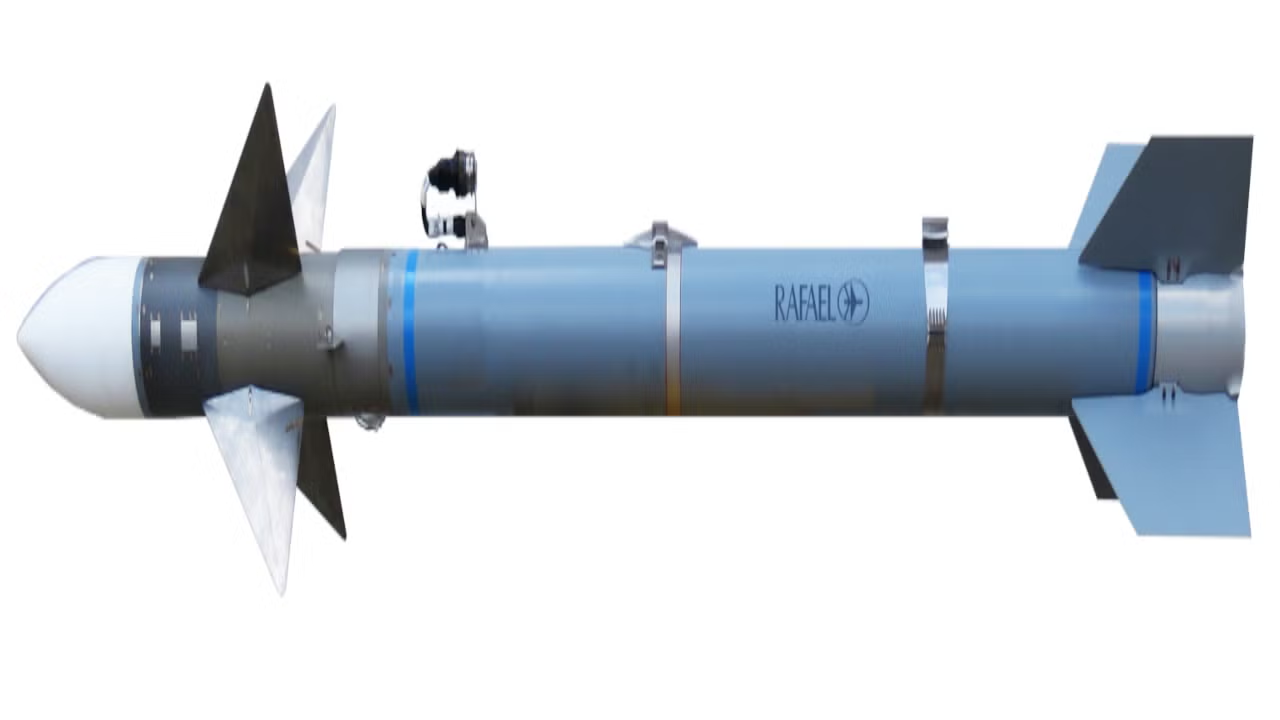
The Derby ER (Extended Range) missile is a next-generation beyond visual range (BVR) Air to air missile developed to give modern fighter aircraft a decisive advantage in long-distance aerial combat. Built around an advanced active radar homing seeker, improved propulsion system, and secure data-link connectivity, the Derby ER enables pilots to engage, track, and neutralize hostile aircraft well before visual contact, even in heavily contested airspace.
Designed for high kill probability and electronic warfare resilience, the Derby ER missile supports fire-and-forget capability, mid-course target updates, and strong resistance against radar jamming and countermeasures. Its extended engagement range, combined with multi-platform compatibility, makes it a flexible and cost-effective solution for air forces seeking reliable BVR dominance. With its ability to operate seamlessly within network-centric warfare environments, the Derby ER stands out as a lethal and modern air-to-air weapon suited for today’s fast-evolving aerial threat landscape.
Overview of Derby-ER Missile
|
Category
|
Details
|
|
Missile Name
|
Derby-ER
|
|
Type
|
Medium Range Air to Air Missile
|
|
Role
|
BVR air combat
|
|
Developed By
|
IAI (Israel Aerospace Industries)
|
|
Guidance System
|
INS + Mid-Course Datalink + Active Radar Homing
|
|
Fire and Forget
|
Yes
|
|
Engagement Range
|
80–100+ km
|
|
Primary Targets
|
Fighter aircraft, UAVs, bombers
|
|
Seeker Type
|
Active Radar (RF)
|
|
Propulsion
|
Solid rocket motor
|
|
IAF Platform
|
Tejas Mk-1A
|
|
Operational Capability
|
All weather,night and day
|
|
Key Strength
|
Extended range, strong ECCM, high BVR kill probability
|
|
Operational Status (India)
|
Induction / in service
|
Development Background of the Derby Missile
The Derby ER (Extended Range) missile was developed by Rafael Advanced Defence Systems, Israel, as an advanced evolution of the original Derby air-to-air missile to address the growing demands of modern beyond-visual-range (BVR) aerial combat. Unveiled in the mid-2010s, the ER variant was designed to significantly increase engagement range while building on the combat-proven architecture of the Derby family. Its development aimed to provide air forces with a reliable, long-range missile capable of engaging multiple types of aerial threats in complex combat environments.
To achieve this, the Derby ER incorporates a dual-pulse solid rocket motor for extended reach and better energy management during flight, along with an advanced active radar homing seeker. The missile also features mid-course data-link guidance and strong electronic counter-countermeasures (ECCM), allowing it to remain effective against maneuvering and electronically protected targets. Designed for integration with modern multirole fighter aircraft and adaptable for surface-launched air defense systems, the Derby ER enhances air superiority and long-range interception capabilities.
Operational Roles Of The Derby-ER Missile
The Derby ER missile is designed for beyond visual range (BVR) air combat, enabling early detection and engagement of enemy aircraft before visual contact. It supports air superiority, first-shot interception, and multi-target engagements, while remaining effective in electronic warfare and all-weather conditions. Integrated with network-centric systems and optimized for fighters like the Tejas Mk-1A, Derby ER strengthens air defense and quick reaction missions with high reliability.
-
Beyond Visual Range Air Combat
Used to engage enemy aircraft at extended ranges before visual contact, providing early kill capability.
-
Air Superiority Missions
Supports fighter aircraft in establishing and maintaining control of contested airspace.
-
First-Shot Interception Role
Enables fighters to detect, lock, and engage targets early, improving first-shot, first-kill advantage.
-
Multi-Target BVR Engagement
Fire-and-forget capability allows pilots to engage multiple threats during a single mission.
-
Air Defense Operations
Employed to intercept hostile fighters, bombers, and UAVs threatening protected airspace.
-
Operations in Electronic Warfare Environments
Designed to function in ECM-heavy airspace with resistance to jamming and countermeasures.
-
All-Weather, Day-Night Missions
Effective in poor visibility, clouds, rain, fog, and darkness, ensuring continuous operational readiness.
-
Network-Centric Warfare Role
Works with AESA radars, AWACS, and data-linked sensors to engage targets beyond onboard radar range.
-
Light and Medium Fighter Integration
Optimized for platforms like Tejas Mk-1A, enabling high BVR effectiveness without heavy performance penalties.
-
Deterrence and Quick Reaction Alert (QRA)
Used in rapid response missions to deter or neutralize intruding or hostile aircraft quickly.
Advantages of Derby-ER Missile
The Derby-ER (Extended Range) is an advanced medium-range beyond visual range (BVR) air-to-air missile that significantly enhances the Indian Air Force’s combat capability, especially on the Tejas Mk-1A. Compared to the standard Derby, the ER variant offers longer reach, better energy management, and improved end-game performance, making it a strong force multiplier in modern air warfare.
-
Extended BVR Engagement Range
Derby-ER offers significantly longer range than standard Derby, enabling engagement well before visual contact and improving standoff distance, pilot safety, and first-shot capability.
-
Active Radar Homing Seeker
Equipped with an active radar seeker, Derby-ER provides true fire-and-forget capability and reliable performance against maneuvering targets.
-
Fire-and-Forget Flexibility
After launch, pilots can maneuver or engage additional targets, supporting multi-target BVR combat while reducing exposure to enemy missiles.
-
Improved No-Escape Zone (NEZ)
Enhanced propulsion and energy retention give Derby-ER a larger NEZ, increasing lethality against fast or retreating targets at longer ranges.
-
Strong ECCM and Anti-Jamming
Designed for high-threat electronic warfare environments, Derby-ER resists jamming and chaff while maintaining seeker lock under ECM conditions.
-
All-Weather, Day-Night Capability
Radar guidance enables effective operation in clouds, rain, fog, darkness, and poor visibility, supporting continuous air defense missions.
-
High Accuracy Against Agile Targets
Optimized for high-speed fighters, Derby-ER maintains guidance during evasive maneuvers and delivers a high probability of kill in BVR combat.
-
Integration with Tejas Mk-1A
Fully integrated with Tejas Mk-1A, Derby-ER is compatible with AESA radar, sensor fusion, and India’s network-centric warfare doctrine.
-
Lightweight and Compact Design
Despite extended range, Derby-ER remains compact, allowing multiple missile carriage with minimal impact on aircraft performance.
-
Combat-Proven Lineage
Built on the proven Derby family, Derby-ER is an operationally mature and reliable BVR missile with a well-understood performance envelope.
Limitations of Derby-ER Missile
Despite its extended range and improved performance over the standard Derby, the Derby-ER has operational and technological limitations that require it to be used as part of a layered BVR missile strategy.
-
Still Outranged by Next-Generation BVR Missiles
Even with extended range, Derby-ER is outranged by advanced missiles such as Meteor, PL-15, and Astra Mk-2, reducing long-distance standoff advantage and requiring fighters to operate closer to contested airspace.
-
Single-Pulse Rocket Motor Limitation
Derby-ER uses a single-pulse solid rocket motor, leading to energy loss in the terminal phase, a smaller no-escape zone than ramjet missiles, and reduced effectiveness against fast or retreating targets.
-
Radar-Dependent Guidance
The missile relies on fighter radar and sensor fusion for BVR engagements, showing reduced effectiveness against low-RCS or stealth targets until detection and increasing dependence on AWACS and networked sensors.
-
Vulnerability to Advanced Electronic Warfare
Despite ECCM features, sophisticated jamming and heavy electronic warfare environments can degrade seeker performance, reduce lock reliability, and lower overall kill probability.
-
Limited Growth Potential
As a mature design, Derby-ER lacks a clear upgrade path toward dual-pulse or ramjet propulsion, allowing next-generation BVR missiles to gradually outperform it.
-
Import Dependency
Being foreign-origin, Derby-ER creates reliance on external suppliers for production, spares, and upgrades, posing strategic risks during prolonged or high-intensity conflicts.
-
Higher Cost Than Indigenous Alternatives
Imported technology increases procurement and lifecycle costs, limiting large-scale stockpiling, while indigenous missiles like Astra Mk-1 offer better long-term cost control.
-
Not Optimized for Close-Range Combat
Designed purely for BVR engagements, Derby-ER is less effective inside visual range and must be supported by WVR infrared missiles for dogfight scenarios.
CONCLUSION
The Derby ER missile represents a significant enhancement in medium-range BVR air combat capability, particularly for platforms like the Tejas Mk-1A. With its active radar homing seeker, mid-course datalink guidance, extended engagement range, and robust electronic counter-countermeasures, the Derby ER enables air forces to achieve early engagement, higher kill probability. Its all-weather, day-night capability and compact design make it a practical and combat-ready solution for current-generation fighter fleets.
However, while the Derby ER is a highly capable and proven BVR missile, it is not a substitute for next-generation long-range systems such as Meteor, PL-15, or Astra Mk-2. Limitations in propulsion technology, growth potential, and import dependency mean it performs best as part of a layered air combat strategy, complemented by indigenous and longer-range missiles. Within this role, the Derby ER remains a reliable, lethal, and operationally mature air-to-air weapon, bridging the gap between legacy BVR systems and future advanced missile technologies. For more information about missiles you can visit our site Education Masters.
सरकारी नौकरियों, जीके अपडेट्स और करेंट अफेयर्स की ताज़ा जानकारी सबसे पहले पाने के लिए:





.png)
.png)
.png)
.jpg)
.jpg)