Hypersonic cruise missiles represent the cutting edge of modern missile technology, combining extreme speed, atmospheric manoeuvrability, and precision guidance to create a new class of weapons that can overwhelm even the most advanced air-defence systems. Unlike ballistic missiles, which follow predictable flight paths, hypersonic cruise missiles travel within the atmosphere at speeds exceeding Mach 5 while executing complex evasive manoeuvres, making them exceptionally difficult to detect, track, or intercept.
Powered by next-generation scramjet propulsion, these missiles are engineered for rapid, long-range strikes against high-value, time-sensitive, or heavily defended targets. Their unmatched velocity dramatically compresses enemy reaction time, delivering near-instantaneous strike capability over vast distances. As global military doctrines shift toward faster and more survivable precision weapons, hypersonic cruise missiles are emerging as a decisive factor in strategic deterrence, shaping the technological and geopolitical landscape of future warfare.
Hypersonic Cruise Missiles – Overview
|
Parameter
|
Details
|
|
Category
|
Hypersonic Cruise Missiles
|
|
Speed Range
|
Mach 5 and above (hypersonic speeds)
|
|
Propulsion
|
Scramjet (Supersonic Combustion Ramjet) + rocket booster for initial acceleration
|
|
Flight Domain
|
Atmospheric flight with sustained hypersonic speed
|
|
Key Characteristics
|
Extreme speed, high manoeuvrability, unpredictable flight path
|
|
Guidance System
|
INS + satellite navigation, advanced seekers resistant to high thermal environments
|
|
Primary Roles
|
Rapid strike, penetration of advanced air defences, engagement of high-value or time-sensitive targets
|
|
Advantages
|
Hard to intercept, minimal enemy reaction time, high kinetic impact, strong deterrence
|
|
Limitations
|
High development cost, thermal challenges, complex guidance at hypersonic speeds
|
|
Examples (India)
|
BrahMos-II (under development), supported by HSTDV technology
|
|
Strategic Importance
|
Transforms long-range strike capability, enhances deterrence, influences global power balance
|
Design Philosophy of Hypersonic Cruise Missiles
Hypersonic cruise missiles are built around three core principles:
1. Extreme Speed
They sustain speeds above Mach 5 to drastically cut enemy reaction time and deliver high-impact strikes within minutes.
2. High Manoeuvrability
By performing continuous atmospheric manoeuvres, these missiles avoid predictable trajectories and make interception extremely difficult.
3. Precision Strike Capability
Equipped with advanced seekers and navigation systems, hypersonic cruise missiles reliably engage strategic, hardened, or mobile targets with exceptional accuracy.
These missiles aim to break through advanced multi-layered defence systems and deliver fast, decisive impacts.
Guidance & Navigation
Hypersonic cruise missiles rely on:
-
INS + satellite navigation (GPS/GLONASS/NavIC)
-
Advanced seekers resistant to extreme temperatures
-
Real-time adaptive flight control algorithms
-
Sensors that survive hypersonic heat and pressure
Maintaining accuracy at Mach 5+ requires cutting-edge thermal and software engineering.
Propulsion System of Hypersonic Cruise Missiles
They primarily use:
1. Scramjet (Supersonic Combustion Ramjet) Engine
The core propulsion system is a scramjet, an air-breathing engine capable of maintaining combustion at hypersonic velocities. By using atmospheric oxygen instead of carrying oxidizers onboard, scramjets enable sustained flight at Mach 5 and above, offering high efficiency and prolonged high-speed performance.
2. Rocket Booster for Initial Acceleration
A solid-fuel rocket booster is used during launch to propel the missile to the high speeds required for scramjet ignition. Once the booster accelerates the missile to the necessary threshold, the scramjet takes over for continuous hypersonic cruise flight.
Scramjets enable sustained flight at Mach 5+ while maintaining atmospheric manoeuvrability.
Flight Characteristics of Hypersonic Cruise Missiles
-
Sustained Mach 5–10 speeds across long distances
-
High manoeuvrability, making interception extremely difficult
-
Low-altitude, high-speed atmospheric flight compared to ballistic arcs
-
Unpredictable flight paths to confuse radar and defence systems
-
Massive kinetic impact energy due to extreme velocity
High speed + manoeuvrability make hypersonic cruise missiles nearly impossible to intercept with current air defence systems.
Examples in the Indian Context
India is actively developing hypersonic technologies under programs such as:
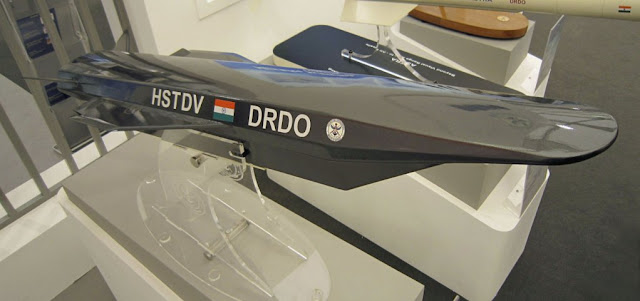
a) HSTDV (Hypersonic Technology Demonstrator Vehicle)
The Hypersonic Technology Demonstrator Vehicle (HSTDV) is a DRDO-developed test platform designed to prove India’s ability to fly at hypersonic speeds using an indigenous scramjet engine. It is not a weapon but a technology demonstrator that achieved successful hypersonic flight at Mach 6, validating key technologies such as high-temperature materials, hypersonic aerodynamics, and autonomous flight control.
HSTDV forms the foundation for India’s future hypersonic cruise missiles like BrahMos-II and potential reusable launch vehicles, positioning India among the few nations developing advanced hypersonic capabilities.
b) Hypersonic BrahMos-II (Under Development)
BrahMos-II is a next-generation hypersonic cruise missile under development by India and Russia, expected to reach speeds of Mach 7–9 using advanced scramjet propulsion. Designed to strike high-value land and sea targets with extreme speed and manoeuvrability, it will be far harder to detect or intercept than current weapons. Once operational, BrahMos-II will significantly boost India’s long-range precision strike and strategic deterrence capabilities.
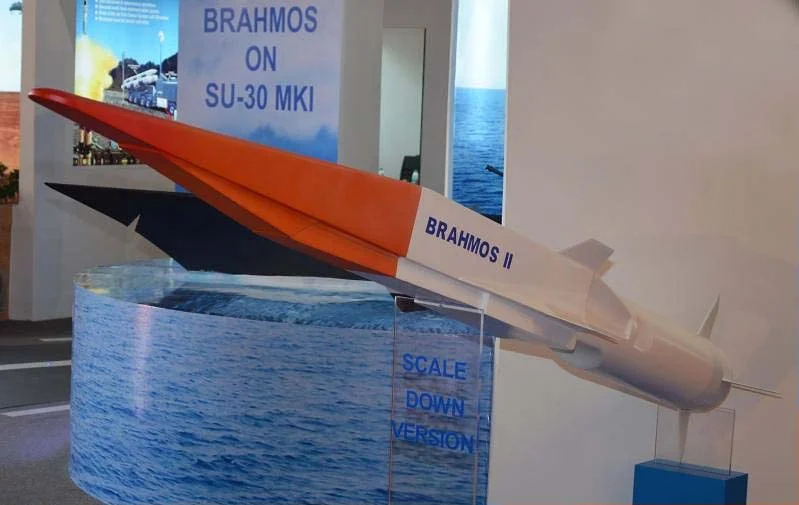
These systems, once operational, will position India among the few nations with hypersonic weapon capability.
Roles & Applications of Hypersonic Cruise Missiles
Hypersonic cruise missiles are suited for:
-
Neutralizing high-value strategic targets within minutes
-
Breaking through advanced air and missile defence systems
-
Targeting hardened or mobile threats
-
Rapid-response missions against time-sensitive targets
-
Long-range maritime superiority operations
They provide unmatched speed and precision in high-intensity conflict scenarios.
Importance in Modern Warfare
1. Extremely Hard to Intercept
Hypersonic cruise missiles travel at speeds exceeding Mach 5 and maneuver within the atmosphere, making them exceptionally difficult to track or intercept—even for advanced, multilayered air-defence systems.
2. Compress Enemy Decision-Making Time
Their blistering speed dramatically shortens the enemy’s detection and response window, allowing little time to react, reposition assets, or launch countermeasures.
3. Strengthen Strategic Deterrence
Possessing hypersonic capabilities serves as a powerful deterrent against technologically advanced adversaries, signaling the ability to penetrate sophisticated defences and deliver high-impact strikes.
4. Enhance Deep-Strike Capabilities
Hypersonic cruise missiles enable rapid engagement of strategic, hardened, or time-sensitive targets at long ranges, giving militaries a decisive advantage in offensive and defensive operations.
5. Shape the Future of Global Warfare
As a transformative technology, hypersonic weapons are redefining military power dynamics and becoming a critical factor in global strategic balance, influencing doctrine, alliances, and deterrence frameworks.
Hypersonic missiles represent a major leap in strike capability comparable to the advent of nuclear weapons in terms of strategic impact.
Limitations of Hypersonic Cruise Missiles
-
Extremely high development cost and technological complexity
-
Requires cutting-edge materials to withstand hypersonic heat
-
Limited operational deployment globally due to early development stage
-
Navigational challenges at high speeds due to plasma interference
-
Scramjet engines need extremely precise airflow and ignition conditions
Despite these challenges, nations are rapidly pursuing hypersonic capability due to its transformational potential.
Conclusion
Hypersonic cruise missiles represent a transformative leap in modern warfare, combining extreme speed, manoeuvrability, and precision to overcome even the most advanced air-defence systems. Their ability to strike strategic, time-sensitive, and heavily defended targets within minutes makes them a powerful tool for deterrence and rapid-response operations. As nations like India advance hypersonic technologies through programs such as HSTDV and BrahMos-II, hypersonic weapons are set to redefine global military balance, offering unparalleled strike capability and shaping the future of high-intensity conflict. To know more about missiles visit Education Masters.
सरकारी नौकरियों, जीके अपडेट्स और करेंट अफेयर्स की ताज़ा जानकारी सबसे पहले पाने के लिए:

.jpg)



.png)
.png)
.png)
.jpg)
.jpg)