Anti-radiation air-to-surface missiles are specialized precision-guided weapons designed to detect, track, and destroy enemy radar and air-defense systems. These missiles home in on electromagnetic emissions from hostile radars, making them a critical component of Suppression of Enemy Air Defenses (SEAD) missions. Launched from fighter jets and strike aircraft, anti-radiation missiles allow air forces to neutralize surface-to-air missile (SAM) sites, early-warning radars, and fire-control systems, thereby creating safer airspace for follow-on attacks. Their ability to automatically lock onto radar signals makes them highly effective even against mobile or well-protected air-defense networks.
From a modern warfare perspective, air-to-surface anti-radiation missiles play a vital role in achieving air superiority and electronic dominance. With advancements in seeker technology, range, and counter-countermeasures, today’s anti-radiation missiles can remember radar locations, switch targets, and strike even if the enemy radar shuts down mid-engagement. These capabilities make them indispensable in contemporary conflicts where layered air defenses and electronic warfare systems are common. As nations continue to upgrade their air forces, anti-radiation missiles remain a key strategic asset for disabling enemy defenses quickly and efficiently.
Overview of Anti-Radiation Air to Surface
|
Category
|
Details
|
|
Purpose
|
Suppression and destruction of enemy air-defense radars and SAM systems
|
|
Engagement Type
|
Air-to-Surface precision strike from fighter aircraft
|
|
Primary Guidance
|
Passive radar homing seeker (homes on enemy radar emissions)
|
|
Role in Combat
|
Enables SEAD/DEAD missions by blinding enemy air defenses
|
|
Key Strength
|
Forces radars to shut down or be destroyed, opening air corridors
|
|
Launch Platforms
|
Fighter and strike aircraft
|
|
Platforms Equipped
|
Su-30MKI (primary), future integration on other IAF fighters
|
|
Core Missiles in Service
|
Rudram-1, Kh-31P
|
|
Attack Mode
|
Radar-homing strike; memory mode (can hit even if radar switches off)
|
|
Targeting Ability
|
SAM radars, fire-control radars, early-warning radars
|
Key Features of Anti-Radiation Air to Surface Missiles
India’s Anti-Radiation Air-to-Surface Missiles are advanced precision weapons designed to locate, track, and destroy enemy radar-based air-defense systems. Built for modern SEAD and DEAD operations, these missiles combine smart guidance, stand-off capability, and electronic resilience, making them essential for achieving air superiority and protecting strike aircraft in high-threat environments.
1. Radar-Homing Guidance System
Uses passive seekers to detect and lock onto hostile radar emissions with high accuracy.
2. Fire-and-Forget Capability
Allows the launch aircraft to disengage immediately after firing, enhancing pilot safety and combat flexibility.
3. Multi-Frequency Target Engagement
Capable of attacking a wide range of enemy radars operating across different frequency bands.
4. Stand-Off Attack Capability
Engages targets from outside enemy air-defense envelopes, reducing exposure to SAM threats.
5. High Precision Strike Accuracy
Designed to destroy radar antennas, fire-control units, and associated air-defense infrastructure.
6. Resistance to Electronic Countermeasures
Advanced signal processing ensures reliable performance in heavy jamming and electronic warfare environments.
Development of Anti-Radiation Air to Surface Missiles
India’s anti-radiation air-to-surface missile development was driven by the need to counter advanced enemy air-defense and radar systems in modern warfare. Earlier, the Indian Air Force depended largely on imported solutions like the Russian Kh-31P for Suppression of Enemy Air Defenses (SEAD) missions. While effective, foreign dependence limited flexibility and long-term strategic autonomy. Evolving regional threats and lessons from contemporary conflicts highlighted the importance of an indigenous anti-radiation missile capable of neutralizing radar-guided surface-to-air missile systems during the opening phase of air operations.
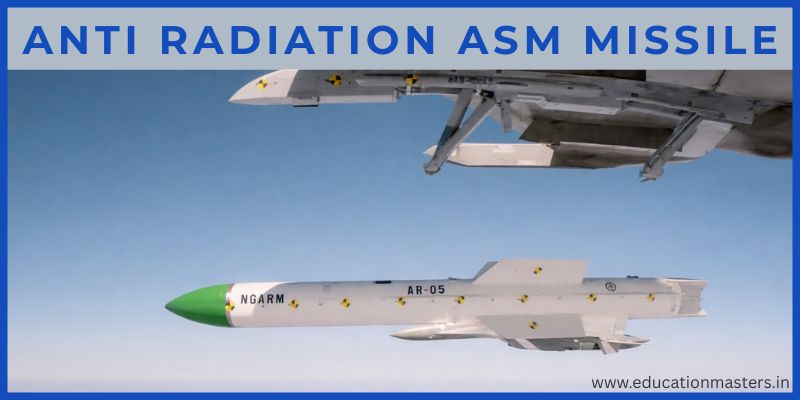
To meet this requirement, the Defence Research and Development Organisation developed Rudram-1, India’s first indigenous anti-radiation missile. Rudram-1 features passive radar homing, memory-based targeting, and stand-off strike capability, allowing it to destroy or suppress enemy radars even if they shut down. Integrated with platforms like the Su-30MKI, the missile significantly enhances India’s SEAD and DEAD capabilities, improves pilot survivability, and strengthens self-reliance in critical air warfare technologies.
Operational Roles of Anti-Radiation Air to Surface Missile
India’s Anti-Radiation Air to Surface Missile (ARM) is purpose-built for Suppression and Destruction of Enemy Air Defences (SEAD/DEAD). It enables fighter aircraft to detect, track, and destroy hostile radar emitters from long stand-off ranges, degrading enemy air-defense networks and creating safe corridors for follow-on air operations. Designed for modern electronic warfare environments, the missile ensures high survivability, rapid response, and precision neutralization of radar-based threats.
1. Suppression of Enemy Air Defenses (SEAD)
Disables enemy surveillance and fire-control radars to reduce immediate air-defense threats.
2. Destruction of Enemy Air Defenses (DEAD)
Destroys radar sites, SAM systems, and command units to permanently cripple air-defense networks.
3. Radar Emission Detection and Homing
Automatically detects and homes in on hostile radar emissions, even from mobile or relocatable systems.
4. Air Superiority Enablement
Blinds enemy detection capability, allowing friendly fighter aircraft to dominate contested airspace.
5. Protection of Strike Aircraft
Enhances survivability of fighter jets during deep-penetration, ground-attack, and precision-strike missions.
6. Neutralization of Integrated Air Defense Systems (IADS)
Targets interconnected radar and missile networks, weakening layered and multi-tiered air defenses.
7. First-Wave Strike Weapon
Used in the opening phase of conflict to collapse enemy air-defense coverage before follow-on attacks.
8. Support to Electronic Warfare Operations
Works alongside jamming and electronic attack platforms to overwhelm enemy radar operators.
9. Creation of Safe Air Corridors
Clears paths for follow-up aircraft, UAVs, and surveillance platforms to operate safely.
10. Strategic Deterrence Impact
Forces adversaries to limit radar usage, reducing situational awareness and overall defensive effectiveness.
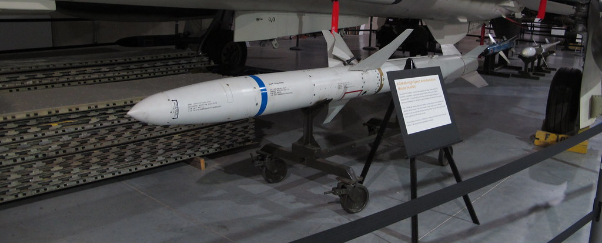
Types of Anti-Radiation Air-to-Surface Missiles
|
Missile
|
Type
|
Notes
|
|
Rudram-1
|
Indigenous Anti-Radiation ASM
|
India’s first indigenous ARM; passive radar homing seeker; memory-based targeting; optimized for SEAD missions; integrated on Su-30MKI
|
|
Rudram-2
|
Extended-range Anti-Radiation ASM
|
Under development; longer stand-off range than Rudram-1; improved seeker sensitivity; designed for deep SEAD/DEAD operations
|
|
Rudram-3
|
Long-range / Hypersonic-class ARM (Planned)
|
Concept/advanced development stage; expected very long range and high speed; intended to defeat heavily defended integrated air-defense systems
|
|
Kh-31P
|
Imported Anti-Radiation ASM
|
Russian-origin missile; supersonic speed; earlier SEAD capability of the Indian Air Force; used prior to indigenous Rudram series
|
Advantages of Anti-Radiation Air to Surface Missiles
India’s Anti-Radiation Air-to-Surface Missiles provide a decisive technological and tactical edge in modern aerial warfare. Designed to detect, track, and destroy enemy radar emissions, these missiles significantly weaken hostile air-defense networks while enhancing the survivability and effectiveness of Indian Air Force combat aircraft. By combining precision guidance, stand-off range, and electronic resilience, anti-radiation ASMs strengthen India’s SEAD/DEAD capabilities and reinforce air dominance in high-threat environments.
1. High Effectiveness Against Radar-Based Threats
Directly targets enemy surveillance, tracking, and fire-control radars, neutralizing the backbone of air-defense systems.
2. Enhanced Aircraft Survivability
Allows fighter aircraft to engage air-defense systems from stand-off distances, reducing exposure to SAM and AAA threats.
3. Fire-and-Forget Engagement Capability
Enables pilots to launch the missile and immediately maneuver away, improving mission safety and combat flexibility.
4. Strong Resistance to Electronic Countermeasures
Advanced seekers and signal processing ensure reliable performance even in dense electronic warfare environments.
5. Rapid SEAD and DEAD Mission Execution
Quickly suppresses or destroys enemy air defenses, accelerating the tempo of air operations.
6. Capability Against Mobile and Relocatable Radars
Effectively engages mobile radar systems that frequently change position to evade detection.
7. Force Multiplier for Air Operations
Multiplies the effectiveness of strike, reconnaissance, and electronic warfare aircraft by reducing air-defense pressure.
8. Reduced Dependence on Continuous Jamming
Physically destroys radar emitters, lowering reliance on prolonged electronic jamming missions.
9. Psychological and Tactical Pressure on Adversary
Forces enemy radar operators to switch off systems, degrading situational awareness and command effectiveness.
10. Strategic Deterrence Value
Acts as a credible deterrent by threatening the survivability of enemy air-defense infrastructure in the early stages of conflict.
Limitations of Anti-Radiation Air to Surface Missiles
Despite their critical role in modern air warfare, India’s Anti-Radiation Air-to-Surface Missiles have certain operational and technological limitations. These constraints arise from the nature of radar-homing guidance, evolving enemy countermeasures, and the complexity of integrated air-defense environments. Understanding these limitations is essential for realistic mission planning and balanced SEAD/DEAD operations.
1. Dependence on Enemy Radar Emissions
Anti-radiation missiles require active radar emissions; if the enemy switches off radars, target acquisition becomes difficult.
2. Reduced Effectiveness Against Passive Air Defenses
Cannot directly engage optical, infrared, or passive sensor-based air-defense systems.
3. Vulnerability to Radar Shutdown Tactics
Enemy operators may temporarily shut down radars to break missile lock and avoid destruction.
4. Limited Use Against Hardened or Deeply Buried Targets
Primarily optimized for radar systems, not heavily fortified bunkers or underground command centers.
5. High Cost per Missile
Advanced seekers and electronics make anti-radiation ASMs expensive, limiting large-scale use.
6. Requirement for Accurate Pre-Mission Intelligence
Effectiveness depends on up-to-date intelligence about enemy radar types, frequencies, and locations.
7. Susceptibility to Advanced Decoys and False Emitters
Modern air defenses may deploy decoy radars to mislead missile seekers.
8. Platform Integration Constraints
Requires compatible avionics, sensors, and mission systems on launch aircraft for optimal performance.
9. Limited Standalone Strike Capability
More effective when used in coordination with electronic warfare, jamming, and conventional strike assets.
10. Evolving Enemy Counter-Countermeasures
Adversaries continuously upgrade radar systems and emission control techniques, challenging long-term effectiveness.
CONCLUSION
India’s indigenous anti-radiation air-to-surface missile capability represents a major advancement in its modern air combat doctrine. With adversaries deploying increasingly sophisticated radar-based air-defense systems, the ability to suppress and destroy enemy air defenses has become critical for achieving air superiority. Operated by the Indian Air Force, anti-radiation missiles play a key role in SEAD and DEAD missions by neutralizing hostile radars, surface-to-air missile fire-control systems, and surveillance networks. The induction of Rudram-1 provides India with a reliable stand-off precision strike option, significantly reducing risks to pilots and enabling safer penetration of contested airspace during the opening phase of an air campaign.
From a strategic perspective, the indigenous development of anti-radiation missiles by the Defence Research and Development Organisation strengthens self-reliance and long-term operational flexibility. By reducing dependence on imported systems such as the Kh-31P, India gains greater control over upgrades, integration, and future enhancements. As newer variants in the Rudram series mature, with improved range, seeker sensitivity, and electronic counter-countermeasures, anti-radiation air-to-surface missiles will remain a cornerstone of India’s air power, ensuring battlefield dominance, effective deep strikes, and credible deterrence against modern air-defense networks. If you want to know more about missiles you can visit our site Education Masters.
सरकारी नौकरियों, जीके अपडेट्स और करेंट अफेयर्स की ताज़ा जानकारी सबसे पहले पाने के लिए:




.png)
.png)
.png)
.jpg)
.jpg)