Intercontinental Ballistic Missiles (ICBMs) are the longest-range ballistic missiles in the world, designed to deliver nuclear or conventional warheads across continents. Their ranges typically exceed 5,500 km, allowing them to strike strategic targets located thousands of kilometres away. ICBMs follow a ballistic trajectory: after a brief powered boost phase, they travel through space in a mid-course phase and re-enter the atmosphere at extremely high speeds before hitting the target.
Modern ICBMs are equipped with advanced inertial navigation, satellite guidance, and sometimes MIRVs (Multiple Independently Targetable Re-entry Vehicles), allowing a single missile to strike the multiple targets. They can be launched from silos, road-mobile launchers, rail systems, and submarines, making them highly survivable and central to a country’s nuclear deterrent plan and extremely resilient.
Overview: Intercontinental Ballistic Missiles (ICBMs)
|
Feature
|
Details
|
|
Category
|
Ballistic missiles with a strategic, long-range capability
|
|
Range
|
5,500 km to 16,000+ km
|
|
Primary Purpose
|
Long-range nuclear deterrence and strategic strike capability
|
|
Launch Platforms
|
Fixed silos, mobile TELs, submarines (SLBMs), rail launchers
|
|
Guidance System
|
Inertial navigation, satellite updates, astro-correction
|
|
Flight Phases
|
Boost phase → Midcourse (space) → Terminal re-entry
|
|
Speed
|
Re-entry speed can exceed Mach 20–25
|
|
Warhead Type
|
Nuclear; some variants can carry conventional warheads
|
|
Warhead Options
|
Single warhead or MIRVs (multiple re-entry vehicles)
|
|
Accuracy
|
High accuracy, improved with modern guidance (low CEP)
|
|
Operators (Examples)
|
USA, Russia, China, India (Agni-5 Missile), North Korea, France (SLBM focus)
|
|
Strategic Role
|
Maintains a trustworthy minimum deterrence and capability of second-strike
|
|
Survivability Features
|
Hardened silos, mobile platforms, decoys, and penetration aids
|
Development Background of ICBMs
ICBMs were first developed during the Cold War by the U.S. and the Soviet Union to establish long-range nuclear strike capability. Over time, technology evolved from bulky liquid-fuel missiles to compact, highly mobile, solid-fuel systems with greater accuracy and survivability.
Launch Platforms
Numerous platforms are capable of launching ICBMs, such as:
-
Silo-based launchers (protected underground)
-
TELs (Transporter Erector Launchers) that may be moved by Road
-
Rail-mobile launchers (Soviet heritage)
-
Submarines (SLBMs) – technically separate but similar in concept
ICBMs Flight Trajectory
ICBMs follow a highly predictable three-phase trajectory:
-
Boost Phase – Powered ascent into space.
-
Midcourse Phase – Coasting through space along a ballistic arc.
-
Terminal Phase – Re-entry into Earth’s atmosphere at hypersonic speeds toward the target.
Guidance and Accuracy of ICBMs
Modern ICBMs use a combination of:
-
Inertial Navigation System
-
Satellite navigation (GPS,BeiDou,GLONASS)
-
Star-tracking or astro-correction
These improvements allow for very low Circular Error Probable (CEP), enabling precise strikes.
Survivability and Countermeasures of ICBMs
Nations improve the survivability of ICBMs using:
-
Hardened silos
-
Mobile platforms that are not easily seen
-
Decoy, chaff, and penetration aids
-
Vehicles that can re-enter Maneuverable (MaRVs)
These help counter advanced missile defense systems.
Types of Intercontinental Ballistic Missiles (ICBMs) in India
|
Missile Name
|
Range
|
Type / Class
|
Launch Platform
|
Fuel Type
|
Details and Key Features
|
|
Agni-5 missile
|
5,500–5,700+ km
|
ICBM-class
|
Canister zed, road-mobile
|
Solid-fuelled
|
India’s first ICBM-class missile; high accuracy; three-stage missile; advanced navigation & guidance
|
|
Agni-6 Missile (open-source / under development)
|
8,000–10,000 km (estimated)
|
Next-Gen ICBM
|
Canister zed (expected)
|
Solid-fuelled
|
Expected MIRV capability; long-range strategic deterrence; details are speculative and not officially confirmed
|
Agni-5 missile
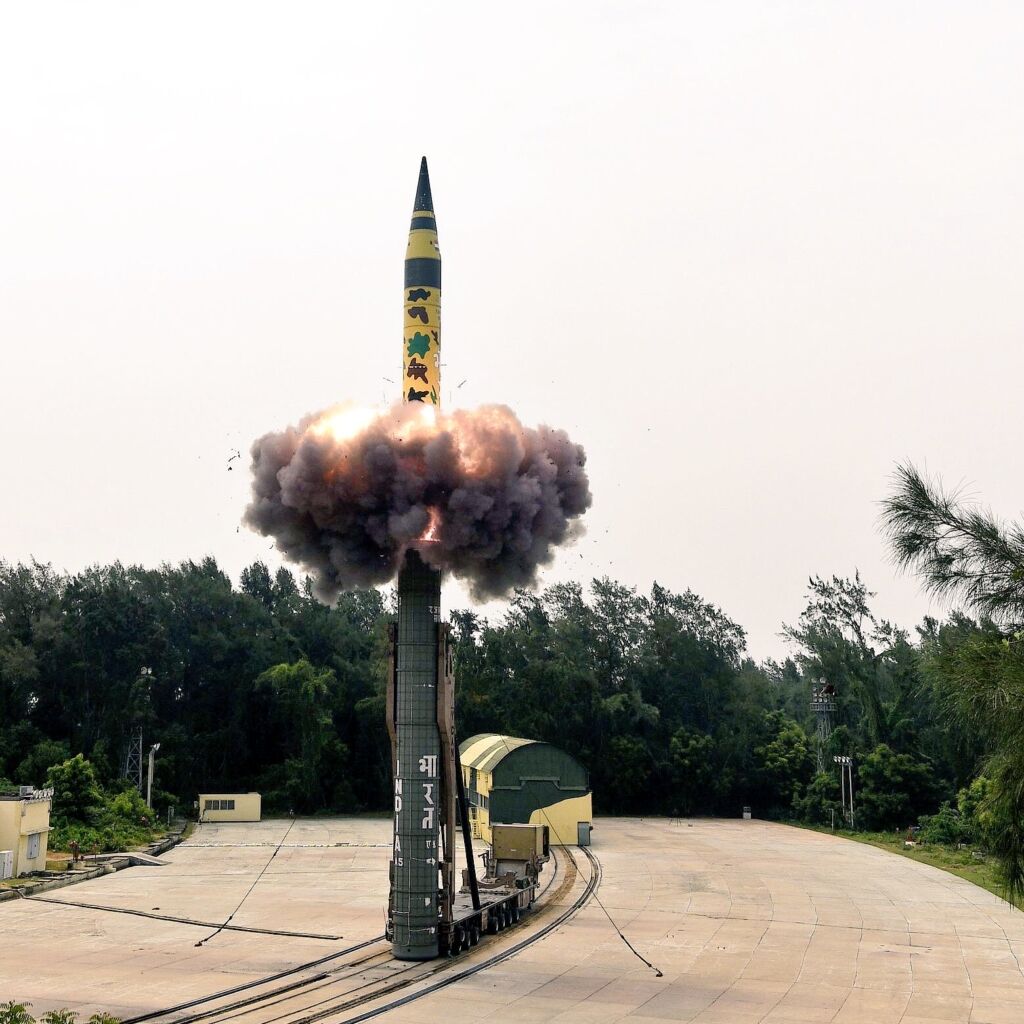
Agni-5 is India’s most advanced long-range ballistic missile, with a range of over 5,000 km. It is a three-stage, solid-fuel missile featuring cutting-edge composite materials, high-precision navigation, and the capability to carry nuclear or conventional warheads. Agni-5 is also designed with MIRV potential, enhancing its strike flexibility. As part of India’s strategic arsenal, it significantly strengthens long-range deterrence and ensures robust second-strike capability.
Agni-6 Missile
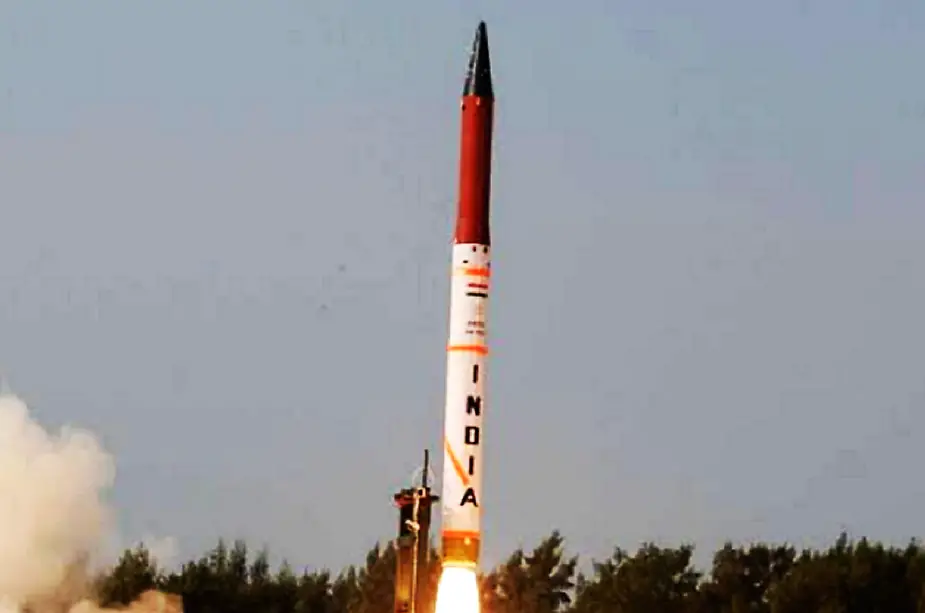
Agni-6 is an advanced intercontinental ballistic missile (ICBM) reportedly under development by India. Although not officially confirmed, it is expected to have a range between 6,000–10,000 km, surpassing Agni-5. The missile may feature multiple independently targetable re-entry vehicles (MIRVs), improved accuracy, and higher payload capacity. Agni-6 is envisioned to significantly enhance India’s long-range deterrence and strengthen its strategic strike capability.
Importance to National Security of ICBMs
ICBMs ensure:
They form a vital part of the nuclear triad along with SLBMs and strategic bombers.
Conclusion
Intercontinental Ballistic Missiles stand at the core of modern strategic deterrence, representing the pinnacle of long-range strike capability and technological sophistication. Their ability to deliver nuclear or high-value payloads across continents within minutes gives nations a decisive second-strike assurance—an essential element in preventing nuclear escalation or coercion.With continuous advancements in guidance precision, multi-stage solid propulsion, MIRV technology, and survivability features, ICBMs have evolved into highly reliable and formidable strategic assets. Their deployment through diverse platforms—hardened silos, mobile launchers, and submarine-based systems—ensures flexibility, resilience, and covert operational readiness, strengthening national defense in an unpredictable security landscape.
Ultimately, ICBMs play an indispensable role in preserving global strategic balance, deterring large-scale conflicts, and reinforcing the doctrine of credible minimum deterrence. Their presence remains a powerful reminder of the importance of preparedness, stability, and responsible defense capability in a complex and fast-changing world. For more information about missiles visit Education Masters
सरकारी नौकरियों, जीके अपडेट्स और करेंट अफेयर्स की ताज़ा जानकारी सबसे पहले पाने के लिए:

.jpg)



.png)
.png)
.png)
.jpg)
.jpg)