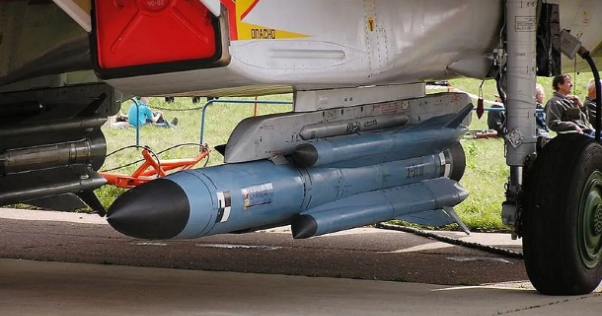
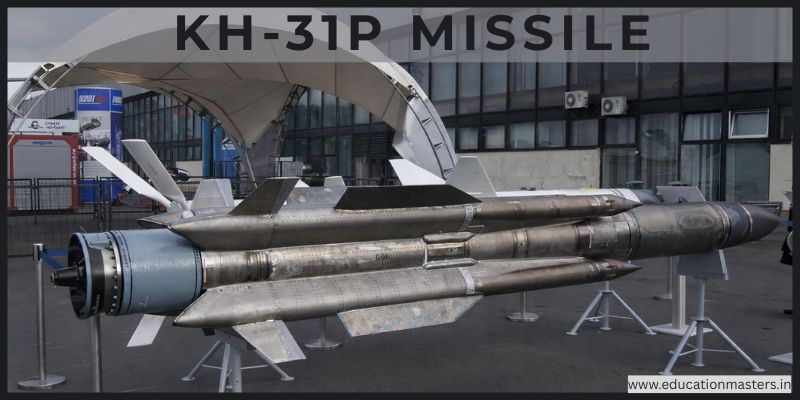
The Kh-31P missile is a high-speed, air-launched anti-radiation missile operated by India for Suppression and Destruction of Enemy Air Defenses (SEAD/DEAD) missions. Designed to detect, lock onto, and destroy enemy radar emissions, the Kh-31P plays a crucial role in neutralizing hostile surveillance radars, fire-control radars, and surface-to-air missile (SAM) systems. With its supersonic speed and radar-homing seeker, the missile significantly reduces enemy reaction time, making it an effective stand-off weapon in contested airspace.
In Indian service, the Kh-31P missile is operated by the Indian Air Force and is integrated with frontline fighter aircraft to enhance India’s air-power and strike capability. The missile enables Indian combat aircraft to engage high-value enemy air-defense targets from safe distances, reducing pilot risk while opening air corridors for follow-on strike, reconnaissance, and air-superiority missions. As part of India’s broader air-defense suppression strategy, the Kh-31P complements indigenous systems and continues to contribute to India’s operational readiness, deterrence posture, and dominance in modern aerial combat environments.
Overview of Kh-31P Missile of India
|
Category
|
Details
|
|
Missile Name
|
Kh-31P
|
|
Missile Type
|
Supersonic Anti-Radiation Air-to-Surface Missile (ARM / ASM)
|
|
Primary Role
|
Suppression & Destruction of Enemy Air Defenses (SEAD / DEAD)
|
|
Purpose
|
Detect and destroy enemy radar and SAM fire-control systems
|
|
Country of Origin
|
Russia
|
|
Operator (India)
|
Indian Air Force
|
|
Launch Mode
|
Air-launched
|
|
Launch Platforms (India)
|
Su-30MKI fighter aircraft
|
|
Guidance System
|
Passive radar homing seeker
|
|
Attack Capability
|
Homes on radar emissions; memory mode if radar shuts down
|
|
Engagement Type
|
Stand-off air-to-surface precision strike
|
|
Target Types
|
Surveillance radars, fire-control radars, SAM systems
|
|
Speed Class
|
Supersonic (Mach 3+)
|
|
Operational Range
|
Medium-range stand-off (classified / estimated)
|
|
Countermeasure Resistance
|
Designed to operate in heavy electronic warfare environments
|
|
Combat Advantage
|
Reduces pilot risk; opens safe air corridors
|
|
Operational Role
|
First-day-of-war air-defense suppression
|
|
Strategic Importance
|
Strengthens India’s SEAD and strike capability
|
|
Status in India
|
Operational
|
Key Features of Kh-31P Missile
The Kh-31P is a Russian-designed supersonic anti-radiation air-to-surface missile developed to suppress and destroy enemy radar-based air-defense systems. It is optimized for SEAD/DEAD missions, combining very high speed, standoff launch capability, and specialized seekers to target surveillance and fire-control radars that form the backbone of Integrated Air Defense Systems (IADS).
1. Supersonic speed capability
Travels at very high supersonic speed, significantly reducing enemy reaction and interception time.
2. Anti-radiation guidance system
Detects and homes in on hostile radar emissions, especially fire-control and tracking radars.
3. Multiple seeker variants
Uses different seeker heads optimized for various radar frequency bands, increasing mission flexibility.
4. Standoff launch capability
Allows launch aircraft to engage enemy air defenses without entering dense SAM threat zones.
5. Designed for SEAD/DEAD missions
Purpose-built to suppress or destroy enemy air-defense radars during early combat phases.
6. High-speed terminal attack profile
Maintains speed in the terminal phase, making interception by point defenses difficult.
Development Background of Kh-31P
The Kh-31P missile was developed by Russia as a high-speed anti-radiation weapon to counter modern enemy air-defense systems during the Cold War and post-Cold War period. Designed specifically for Suppression and Destruction of Enemy Air Defenses (SEAD/DEAD) missions, the missile was created to detect and destroy radar emissions from surveillance radars, fire-control radars, and surface-to-air missile systems. Its supersonic speed and passive radar-homing seeker made it a highly effective stand-off weapon against integrated air-defense networks.
India inducted the Kh-31P missile into service to strengthen the Indian Air Force’s SEAD capability and improve first-day-of-war effectiveness. Integrated primarily with Su-30MKI fighter aircraft, the missile enabled Indian pilots to neutralize enemy air-defense radars from safe distances, reducing operational risk. The Kh-31P continues to serve as a proven air-defense suppression weapon in India’s arsenal while complementing the transition toward newer indigenous anti-radiation missile systems.
Operational Roles of Kh-31P Missile
The Kh-31P plays a vital operational role in modern air warfare by enabling air forces to suppress and disrupt enemy radar-based air-defense systems. Designed primarily for SEAD and DEAD missions, it is employed during the early stages of conflict to reduce radar coverage, degrade tracking capability, and weaken Integrated Air Defense Systems (IADS), thereby improving the survivability and effectiveness of follow-on air operations.
1. Suppression of Enemy Air Defenses (SEAD)
Suppresses active enemy surveillance and fire-control radars, temporarily degrading air-defense effectiveness.
2. Destruction of Enemy Air Defenses (DEAD)
Physically destroys radar installations and associated air-defense elements to permanently reduce enemy capability.
3. First-wave strike weapon
Deployed in the opening phase of combat to weaken enemy air defenses before conventional strike missions.
4. Neutralization of fire-control radars
Targets radars that guide surface-to-air missile systems, reducing SAM engagement accuracy.
5. Disruption of Integrated Air Defense Systems (IADS)
Breaks the sensor–shooter–command link by eliminating key radar nodes.
6. Enabling safe penetration of hostile airspace
Creates safer corridors for strike aircraft and support platforms to operate.
7. Tactical pressure on radar operators
Forces adversaries to shut down or limit radar emissions, reducing battlefield awareness.
8. Support to electronic warfare operations
Works alongside jamming and electronic attack assets to overwhelm enemy defenses.
Advantages of Kh-31P Missile
The Kh-31P offers several operational advantages in SEAD/DEAD missions due to its high speed, proven design, and specialized anti-radiation role. These advantages make it an effective weapon for suppressing radar-based air-defense systems and improving the survivability of strike aircraft in contested airspace.
1. Very high supersonic speed
Significantly reduces enemy reaction time and makes interception by air-defense systems difficult.
2. Effective anti-radiation guidance
Accurately homes in on hostile radar emissions, especially fire-control and tracking radars.
3. Strong SEAD/DEAD capability
Purpose-built to suppress or destroy enemy air-defense radars during early combat phases.
4. Standoff engagement advantage
Allows launch aircraft to strike radar targets without entering dense SAM threat zones.
5. Pressure on enemy radar operators
Forces adversaries to shut down or limit radar emissions, degrading situational awareness.
6. Capability against mobile radar systems
Effective against vehicle-mounted and relocatable radar units.
7. Reduced risk to strike aircraft
Neutralizing radar threats lowers exposure of fighters and bombers to radar-guided SAMs.
8. Proven and mature design
Operationally tested with established reliability and performance record.
9. Multiple seeker options
Different seeker variants allow engagement across various radar frequency bands.
10. High-speed terminal attack profile
Maintains speed in the terminal phase, reducing point-defense interception chances.
Limitations of Kh-31P Missile
Despite its effectiveness in SEAD missions, the Kh-31P has several operational and technological limitations that affect its performance against modern, highly adaptive air-defense environments.
1. Dependence on active radar emissions
Primary effectiveness requires enemy radars to be emitting; silent or emission-controlled systems reduce targeting opportunities.
2. Vulnerability to radar shutdown tactics
Enemy operators can switch off radars to break lock, forcing reliance on last-known location with reduced accuracy.
3. Limited effectiveness against passive sensors
Cannot directly target passive detection systems that do not emit radar signals.
4. Older-generation guidance technology
Less capable against modern low-probability-of-intercept (LPI) and highly agile radar systems.
5. Shorter range compared to newer ARMs
Requires launch aircraft to operate closer to hostile airspace than modern standoff missiles.
6. Susceptibility to decoys and false emitters
Enemy use of radar decoys can divert the missile away from real targets.
7. Limited flexibility after launch
Once committed to a target frequency band, dynamic retargeting options are constrained.
8. Platform integration restrictions
Primarily compatible with Soviet/Russian-origin aircraft and avionics.
9. High-speed but non-hypersonic
While fast, it remains more interceptable than newer hypersonic anti-radiation missiles.
10. Finite seeker frequency coverage
Different radar bands require specific seeker variants, complicating mission planning.
CONCLUSION
The Kh-31P missile has been a critical component of India’s Suppression and Destruction of Enemy Air Defenses (SEAD/DEAD) capability, providing the Indian Air Force with a proven, high-speed anti-radiation weapon to counter hostile radar and air-defense networks. Designed to home in on radar emissions, the missile enables Indian combat aircraft to target surveillance radars, fire-control radars, and surface-to-air missile systems with high precision while maintaining a safe stand-off distance. Its supersonic speed significantly reduces enemy reaction time, increasing survivability in heavily defended airspace and enhancing first-day-of-war strike effectiveness.
Operated by the Indian Air Force, the Kh-31P has strengthened India’s air-power and deterrence posture by ensuring the ability to rapidly degrade enemy air defenses at the outset of conflict. While India continues to advance toward indigenous anti-radiation and next-generation SEAD systems, the Kh-31P remains an important operational asset that bridges legacy and modern capabilities. Its continued relevance highlights the importance of air-defense suppression in modern warfare and reinforces India’s commitment to maintaining air superiority, operational flexibility, and national security in evolving threat environments. For more information about missiles you can visit our site Education Masters.
सरकारी नौकरियों, जीके अपडेट्स और करेंट अफेयर्स की ताज़ा जानकारी सबसे पहले पाने के लिए:



.png)
.png)
.png)
.jpg)
.jpg)