India’s Long-Range Air to air Missiles (LRAAMs) represent the highest level of aerial combat capability, designed to destroy enemy aircraft at extreme distances ranging from 200 km to over 400 km. Unlike short-range or standard BVR missiles, LRAAMs are optimized to neutralize high-value airborne targets such as AWACS, refueling tankers, electronic warfare aircraft, ISR platforms, and long-range fighters. By eliminating these assets early, the Indian Air Force gains decisive first-detect and first-strike superiority, severely degrading an adversary’s air operations before combat escalates.
For India, LRAAMs are a strategic requirement against advanced regional air forces. The IAF combines world-class imported systems like the Meteor missile on Rafale with indigenous programs such as Astra Mk-3 (SFDR) and the upcoming NG-LRAAM. Using ramjet and solid-fuel ducted ramjet propulsion, these missiles maintain high speed throughout flight, delivering long range, strong terminal energy, and a larger No-Escape Zone. Integrated with active radar seekers, datalink guidance, ECCM resistance, and high-G maneuverability, India’s LRAAMs form the backbone of future air dominance across the Indo-Pacific.
Overview of Long-Range Air to air Missiles (LRAAMs)
|
Topic
|
Overview (Short Explanation)
|
|
Definition
|
Missiles designed to engage aircraft beyond 200 km–400 km.
|
|
Primary Purpose
|
Destroy high-value airborne assets (AWACS, tankers, bombers).
|
|
Range
|
200 km – 400+ km depending on system.
|
|
Speed
|
Mach 4 to Mach 6 (varies by missile).
|
|
Guidance
|
Inertial + Mid-course Datalink + Active Radar Homing.
|
|
Propulsion
|
Ramjet, SFDR, high-energy dual-pulse motors.
|
|
Seeker
|
Advanced ARH / dual-mode radar seekers.
|
|
Platforms
|
Su-30MKI, Rafale, AMCA (future).
|
|
Importance
|
Eliminates enemy AWACS & tankers → controls the entire theater.
|
|
Examples (India)
|
Astra Mk-3 (SFDR), NG-LRAAM, Meteor (on Rafale).
|
Key Features of Long-Range Air to air missiles of India
1. Extended Strike Range (200–400+ km) –
Enables beyond-visual-range (BVR) and ultra-long-range engagements, giving the Indian Air Force decisive stand-off capability.
2. High-Value Aerial Target Engagement –
Specifically designed to neutralize AWACS, aerial refueling tankers, electronic warfare aircraft, ISR platforms, and long-range fighters, crippling enemy air operations.
3. Advanced Ramjet & SFDR Propulsion –
Uses ramjet and solid-fuel ducted ramjet (SFDR) engines to sustain high supersonic speed throughout flight, unlike traditional rocket motors.
4. Expanded No-Escape Zone (NEZ) –
Maintains strong terminal energy, increasing kill probability against maneuvering and evasive targets.
5. Active Radar Homing Seeker –
Provides autonomous terminal guidance with true fire-and-forget capability in all-weather conditions.
6. Mid-Course Datalink Guidance –
Supports real-time target updates from fighter aircraft, AWACS, or ground-based radar networks, improving hit accuracy at long ranges.
7. Electronic Counter-Countermeasures (ECCM) –
High resistance to radar jamming, decoys, and electronic warfare systems used by advanced adversaries.
8. Lofted High-Altitude Flight Profile –
Optimized trajectory maximizes missile range, speed retention, and engagement envelope.
9. High-G Endgame Maneuverability –
Capable of intercepting fast, evasive, and high-altitude aerial threats during the terminal phase.
10. Network-Centric Warfare Integration –
Fully integrated with India’s sensor fusion, data-link, and battlefield management systems.
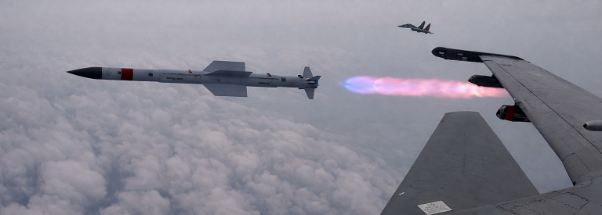
Types of Long-Range Air to air missiles of India
|
Missile Name
|
Type / Guidance
|
Notes
|
|
Astra Mk-3
|
Active Radar Homing (ARH) with SFDR Ramjet
|
India’s first ramjet-powered LRAAM; very long range with sustained supersonic speed; large No-Escape Zone; designed to rival Meteor; under development for Su-30MKI, Tejas Mk-2, AMCA
|
|
NG-LRAAM (India)
|
Active Radar Homing (ARH) + Network-Centric Guidance
|
Next-generation ultra-long-range AAM (200–400+ km class); optimized for AWACS, tankers, ISR aircraft; relies on off-board targeting and datalink; under development
|
|
Meteor (IAF)
|
Ramjet-Powered Active Radar Homing
|
In service with IAF Rafale; world-class LRAAM with sustained high speed, massive NEZ, and strong ECCM; primary long-range air-dominance missile of the IAF
|
Importance of Long-Range Air to air missiles of India
Long-Range Air-to-Air Missiles (LRAAMs) of India represent the highest tier of aerial combat capability, designed to dominate the air battle far beyond conventional BVR ranges. Unlike medium-range missiles used primarily against enemy fighters, LRAAMs are built to strike critical high-value airborne assets—such as AWACS, aerial refueling tankers, electronic warfare aircraft, and long-range strike platforms—at distances of 200 km to 400+ km.
1. Neutralizing Enemy Force Multipliers
LRAAMs enable India to destroy AWACS, tankers, and ISR aircraft, which are the backbone of modern air operations. Eliminating these assets blinds and cripples enemy air forces at the very start of conflict.
2. Extreme Stand-Off Engagement Capability
With engagement ranges extending beyond 200 km, LRAAMs allow Indian fighters to attack from well outside enemy missile and radar coverage, ensuring maximum safety and dominance.
3. Strategic First-Detect, First-Shoot Advantage
LRAAMs capitalize on early detection through AWACS and networked sensors, allowing Indian pilots to fire before the enemy even knows.
4. Backbone of Future Air Superiority
Advanced platforms like Rafale, Su-30MKI (upgraded), Tejas Mk-2, and AMCA rely on LRAAMs to maintain air dominance against next-generation adversaries.
5. High Survivability in Contested Airspace
By engaging from extreme range, pilots avoid:
-
enemy fighters
-
dense air defenses
This greatly increases aircraft and pilot survivability.
6. Network-Centric Warfare Dominance
Indian LRAAMs receive targeting data from:
-
AWACS
-
ground-based radars
-
other fighters
This enables off-board targeting beyond the launch aircraft’s radar limits.
7. Multi-Front Conflict Superiority
In a two-front scenario involving China and Pakistan, LRAAMs allow the IAF to control vast airspaces with fewer aircraft, multiplying combat effectiveness.
8. Strategic Deterrence and Psychological Impact
The presence of missiles like Meteor, Astra Mk-3 (SFDR), and future NG-LRAAM makes enemy air operations riskier, forcing adversaries to fly farther back or abandon support aircraft entirely.
Advantages of Long-Range Air to Air Missiles of India
India’s Long-Range Air to air missiles (LRAAMs) give the Indian Air Force a decisive edge by enabling very long-range stand-off attacks and early destruction of high-value targets like AWACS and tankers. With advanced propulsion, active radar seekers, datalink guidance, and strong ECCM, they ensure a large No-Escape Zone, high survivability, and clear first-detect, first-shoot air dominance.
1. Extreme Engagement Range
LRAAMs can strike targets at 200 km to 400+ km, allowing Indian fighters to engage enemies far beyond conventional BVR limits.
2. Destruction of High-Value Air Assets
These missiles are optimized to destroy AWACS, aerial refueling tankers, electronic warfare aircraft, and ISR platforms, crippling enemy air operations.
3. Large No-Escape Zone (NEZ)
Advanced propulsion such as ramjet and SFDR ensures high terminal energy, making evasive maneuvers ineffective.
4. First-Detect, First-Shoot Advantage
Networked sensors allow Indian aircraft to launch LRAAMs before enemy fighters can detect or respond, deciding battles early.
5. Enhanced Pilot and Aircraft Survivability
Long stand-off engagement keeps pilots outside enemy missile envelopes and hostile airspace.
6. Sustained High-Speed Performance
Ramjet-powered LRAAMs maintain supersonic speed throughout flight, unlike conventional rocket-powered missiles.
7. Network-Centric Warfare Capability
LRAAMs receive mid-course updates from AWACS, ground radars, and other fighters, enabling off-board targeting.
8. Effective in Heavily Contested Airspace
Strong ECCM and anti-jamming features ensure reliable performance against modern electronic warfare systems.
9. Multi-Front Combat Advantage
In a two-front scenario, LRAAMs allow the Indian Air Force to control vast airspaces with fewer aircraft.
10. Strategic Deterrence
Missiles like Meteor, Astra Mk-3 (SFDR), and NG-LRAAM raise the cost of enemy air operations, acting as a powerful deterrent.
Limitations of Long-Range Air to Air Missiles of India
India’s Long-Range Air-to-Air Missiles (LRAAMs) are highly capable but have limitations. They are costly and available in limited numbers, rely heavily on AWACS and networked sensors for maximum effectiveness, and are large and heavy, reducing payload flexibility. LRAAMs are also not suited for close-range combat, and their performance can be affected by advanced enemy electronic warfare and operational constraints.
1. High Cost per Missile
LRAAMs are extremely expensive due to advanced seekers, datalinks, and propulsion systems, limiting the number that can be carried or fired in combat.
2. Dependence on External Sensors
Maximum range performance requires AWACS, ground radars, or networked fighters; without off-board targeting, effectiveness drops significantly.
3. Limited Availability
Indigenous LRAAMs like Astra Mk-3 and NG-LRAAM are still under development, while imported systems like Meteor are available in limited numbers.
4. Not Ideal for Fighter-to-Fighter Dogfights
LRAAMs are optimized for high-value targets, not agile close-range combat where WVR missiles are more effective.
5. Weight and Large Size
LRAAMs are heavier and larger than MR AAMs, reducing aircraft payload flexibility and increasing radar signature.
6. Susceptible to Advanced Countermeasures
Despite strong ECCM, modern adversaries use stealth, decoys, and coordinated EW to reduce long-range engagement effectiveness.
7. Rules of Engagement Constraints
Long-range shots require positive target identification, which can limit use in politically sensitive or crowded airspaces.
8. Reduced Effectiveness Without Air Superiority
If the enemy controls the airspace or suppresses Indian sensors, LRAAM employment becomes difficult.
9. Maintenance and Logistics Complexity
Advanced propulsion and guidance systems require specialized maintenance, increasing operational complexity.
10. Risk of Overkill
Using a high-value LRAAM against low-value targets (like basic UAVs) is inefficient and economically unsustainable.
CONCLUSION
India’s Long-Range Air to air missiles (LRAAMs) form the core of modern Indian air dominance, enabling the Indian Air Force to conduct stand-off, beyond-visual-range, and ultra-long-range engagements against technologically advanced adversaries. With operational systems like the Meteor missile on Rafale and indigenous developments such as Astra Mk-3 (SFDR) and the upcoming NG-LRAAM, India is steadily building a lethal and self-reliant LRAAM ecosystem. These missiles provide the ability to neutralize high-value airborne assets, expand the No-Escape Zone, and dominate contested airspace through network-centric warfare and advanced ECCM.
Despite limitations such as high cost, sensor dependence, and limited inventory, LRAAMs remain indispensable due to their strategic deterrence value and battlefield-shaping impact. As next-generation fighter platforms like Tejas Mk-2 and AMCA become operational, LRAAMs will continue to serve as the backbone of India’s first-detect, first-shoot air combat doctrine, ensuring sustained air superiority across the Indo-Pacific region. If you want to know more about missiles you can vist our site Education Masters.
सरकारी नौकरियों, जीके अपडेट्स और करेंट अफेयर्स की ताज़ा जानकारी सबसे पहले पाने के लिए:

.jpg)




.png)
.png)
.png)
.jpg)
.jpg)