Medium-Range Surface-to-Air Missiles (MR-SAMs) are advanced air-defence systems designed to detect, track, and intercept aerial threats at medium distances, operating beyond the reach of short-range systems while complementing long-range strategic air-defence assets. They form the central layer of modern, layered air-defence architecture, providing reliable area defence for large geographic regions, including military bases, cities, industrial complexes, ports, airfields, and other high-value strategic assets.
MR-SAMs are specifically optimized to counter a wide spectrum of threats such as fighter aircraft, bombers, UAVs and drone swarms, cruise missiles, and precision-guided munitions operating at low to medium altitudes. Equipped with advanced multi-function radars, integrated command-and-control (C2) networks, and high-speed, highly maneuverable interceptor missiles, these systems deliver an effective balance of range, accuracy, reaction speed, and coverage. Their ability to engage multiple targets simultaneously and integrate seamlessly with short- and long-range air-defence systems makes MR-SAMs indispensable for maintaining airspace security in peacetime and ensuring robust protection during high-intensity wartime operations.
Overview of Medium-Range Surface-to-Air Missiles (MR-SAMs)
|
Aspect
|
Details
|
|
System Type
|
Medium-Range Surface-to-Air Missile (MR-SAM)
|
|
Primary Role
|
Area air defence of cities, bases, and strategic assets
|
|
Typical Engagement Range
|
30–70+ km
|
|
Engagement Altitude
|
Low to medium altitude
|
|
Main Targets
|
Aircraft, bombers, UAVs/drones, cruise missiles, PGMs
|
|
Guidance Methods
|
Active radar, semi-active radar, command guidance
|
|
Radar Systems
|
Long-range surveillance & fire-control radars
|
|
Command & Control
|
Integrated network-centric C2 systems
|
|
Deployment
|
Mobile or semi-mobile (vehicle-mounted)
|
|
Reaction Time
|
Fast, suitable for multi-target engagement
|
|
Coverage Type
|
Area defence (not just point defence)
|
|
Operational Capability
|
All-weather, day & night
|
|
Role in Layered AD
|
Core layer between SR-SAMs and LR-SAMs
|
|
Strategic Importance
|
Backbone of modern integrated air defence
|
How Medium-Range Surface-to-Air Missiles (MR-SAMs) Work
MR-SAMs detect threats early, track and identify them accurately, decide the best response through automated C2 systems, and rapidly launch guided missiles to intercept and neutralize aerial threats before they can reach protected areas.
-
Surveillance & Detection: Advanced long-range surveillance radars continuously scan the airspace to detect incoming aerial threats such as aircraft, UAVs, and cruise missiles at extended distances, providing early warning.
-
Tracking & Identification: Once a target is detected, fire-control and tracking radars lock onto it to determine speed, altitude, direction, and trajectory. Identification Friend or Foe (IFF) systems are used to distinguish hostile targets from friendly or neutral aircraft.
-
Threat Evaluation & Prioritization: Integrated Command and Control (C2) systems analyze multiple targets simultaneously, prioritizing them based on threat level, intent, proximity, and potential damage, ensuring the most dangerous threats are engaged first.
-
Missile Launch: After target assignment, high-speed interceptor missiles are launched from mobile or fixed launchers toward the selected threats, often in coordinated salvos to improve interception probability.
-
Guidance & Interception: The interceptor missiles are guided toward the target using radar-based guidance (active, semi-active, or command guidance). In the terminal phase, the missile detonates a proximity-fused high-explosive warhead, destroying or disabling the target with a high kill probability.
Operational Role of Medium-Range Surface-to-Air Missiles (MR-SAMs)
Medium-Range Surface-to-Air Missiles (MR-SAMs) play a vital operational role by providing area air defence to cities, airbases, ports, and critical infrastructure. They protect strategic and military assets from aircraft and cruise missiles while forming the core layer of layered air-defence systems, working alongside short- and long-range SAMs to shield population centers and key economic assets from aerial threats.
-
Area air defence of large regions, including cities, airbases, ports, industrial hubs, and key transportation nodes, against sustained aerial threats.
-
Protection of strategic and military installations, such as command centers, radar sites, power plants, and defence infrastructure.
-
Counter-aircraft and counter–cruise missile defence, effectively engaging fighter aircraft, bombers, UAVs, and low-flying cruise missiles.
-
Layered air-defence support, operating in coordination with Short-Range SAMs (SR-SAMs) and Long-Range SAMs (LR-SAMs) to ensure continuous, multi-tier protection.
-
Shielding population centers and economic assets, reducing the impact of aerial attacks and maintaining national security and stability during conflict.
Advantages of Medium-Range Surface-to-Air Missiles (MR-SAMs)
-
Wider coverage area compared to short-range air-defence systems, enabling protection of large regions such as cities, airbases, ports, and industrial zones.
-
High interception accuracy, achieved through advanced surveillance radars, fire-control radars, and modern missile seekers.
-
Effective against a wide range of threat types, including fighter aircraft, bombers, UAVs, drones, cruise missiles, and precision-guided munitions.
-
Multi-target engagement capability, allowing simultaneous tracking and interception of multiple incoming threats.
-
Integral to integrated and network-centric air-defence systems, seamlessly coordinating with short- and long-range SAMs for layered protection.
India’s MR-SAMs
|
System Name
|
Developer / Origin
|
Primary User
|
Role / Range
|
Key Capabilities
|
|
MRSAM
|
DRDO + IAI
|
Indian Army, IAF
|
Medium-range (70 km)
|
Area defence, 360° coverage, multi-target
|
|
Barak-8 (MR-SAM)
|
DRDO + IAI
|
Army, IAF, Navy
|
Medium-long range (70–100 km)
|
Multi-domain air defence
|
|
Akash-NG
|
DRDO
|
Indian Army, IAF
|
Extended MR (est. 30–80 km)
|
Enhanced range & accuracy
|
MRSAM (Medium-Range Surface-to-Air Missile)
MRSAM (Medium-Range Surface-to-Air Missile) is a modern air-defence missile system jointly developed by Defence Research and Development Organisation (DRDO) and Israel Aerospace Industries (IAI). It is designed to provide area air defence to the Indian Army and Indian Air Force against threats such as fighter aircraft, helicopters, UAVs/drones, cruise missiles, and precision-guided munitions.
MRSAM features active radar guidance, 360-degree engagement capability, and multi-target interception, with an effective range of around 70 km. As the core layer of India’s layered air-defence architecture, MRSAM plays a crucial role in protecting cities, airbases, and strategic installations while strengthening national airspace security.
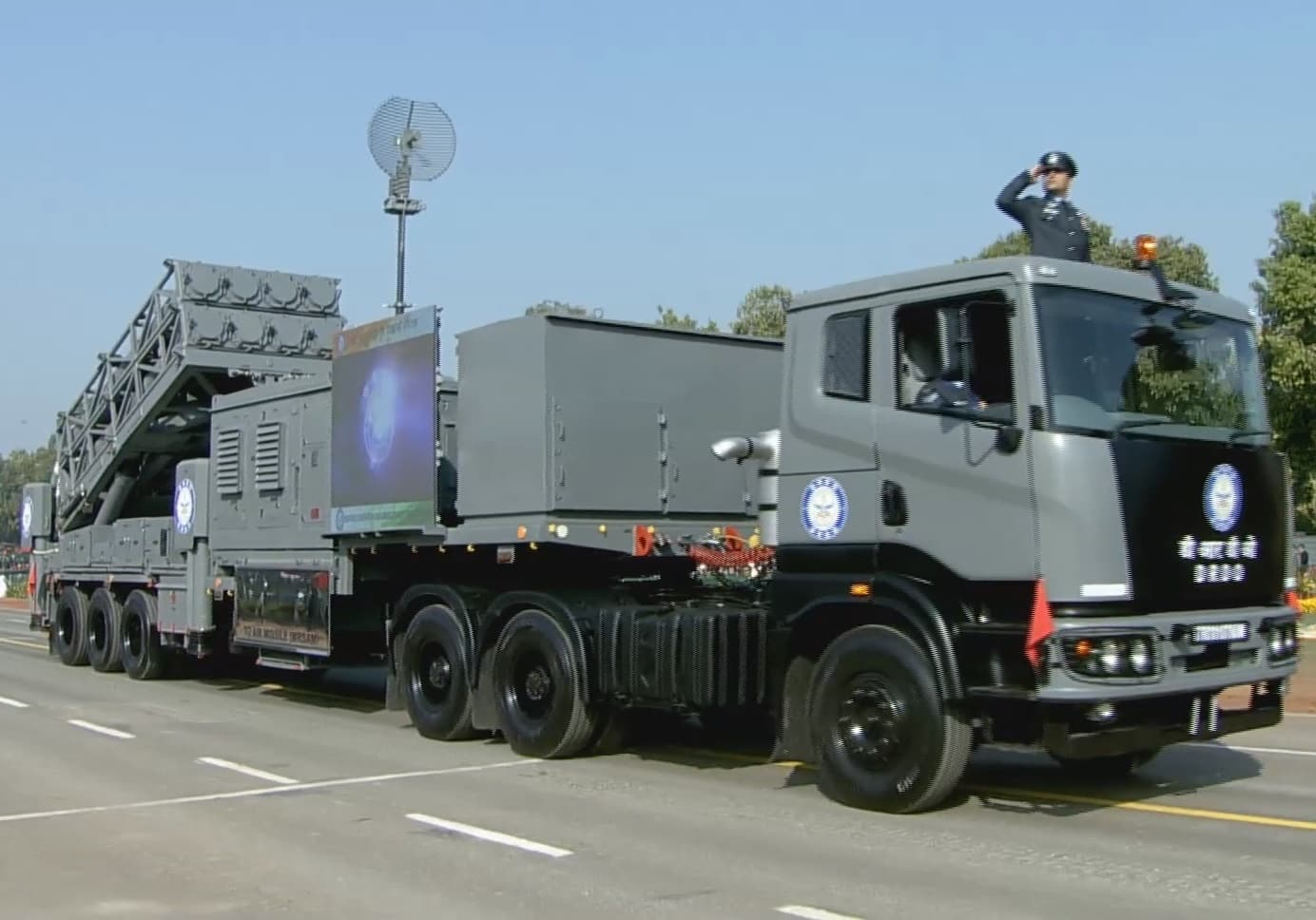
Barak-8 (MR-SAM)
Barak-8 (MR-SAM) is a modern medium-range surface-to-air missile system jointly developed by India and Israel to provide reliable area air defence. It is designed to intercept fighter aircraft, helicopters, UAVs/drones, and cruise missiles at low to medium altitudes. Equipped with an active radar homing seeker and 360-degree engagement capability via vertical launch, Barak-8 can engage multiple targets simultaneously. It serves as a key middle layer in India’s layered air-defence architecture, protecting strategic assets and enhancing overall airspace security.
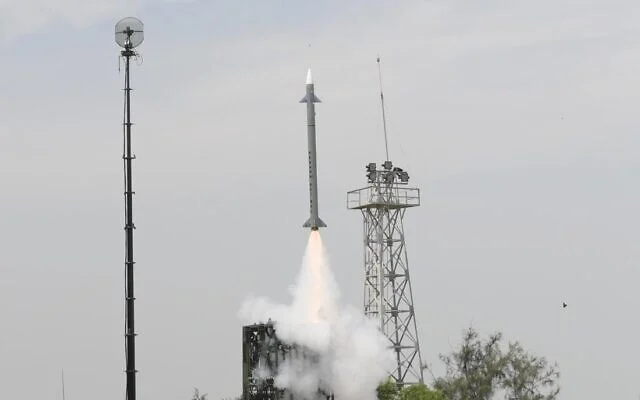
Akash-NG (Next Generation)
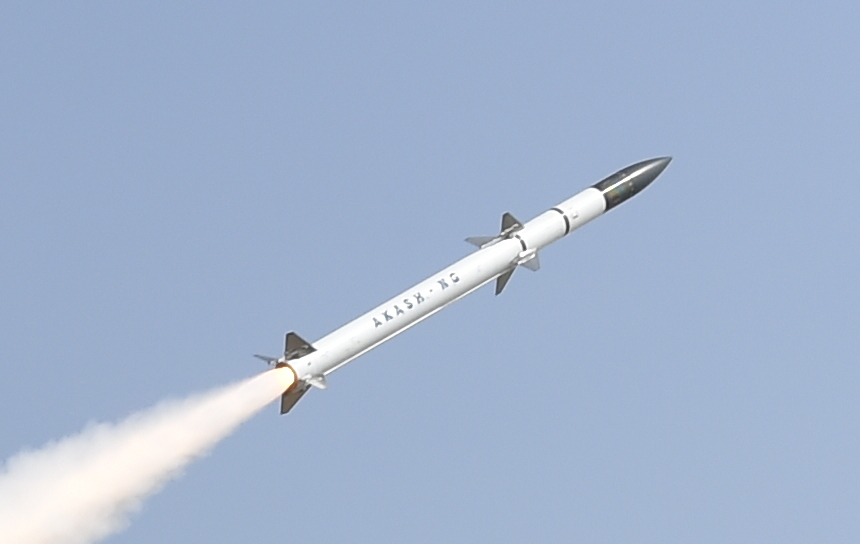
Akash-NG (Next Generation) is an advanced, indigenous surface-to-air missile system developed to significantly enhance India’s medium-range air-defence capability. Designed as an upgraded successor to the Akash system, Akash-NG features improved range, higher speed, greater accuracy, and faster reaction time, along with a new active radar seeker and lighter airframe. It is optimized to counter fighter aircraft, UAVs/drones, cruise missiles, and precision-guided munitions at low to medium altitudes. With modern radars, network-centric command and control, and all-weather, day-and-night capability, Akash-NG strengthens India’s layered air-defence architecture while supporting the goal of Atmanirbhar Bharat through indigenous development.
Limitations of Medium-Range Surface-to-Air Missiles (MR-SAMs)
-
Limited Engagement Envelope: MR-SAMs have a fixed effective range and altitude band, making them less effective against targets flying extremely low (terrain-hugging) or at very high altitudes.
-
High System Cost: Advanced radars, command-and-control units, and interceptor missiles make MR-SAM systems expensive to procure, deploy, and maintain.
-
Dependence on Sensor Network: Their effectiveness relies heavily on integrated radars and data links; degradation or jamming of sensors can reduce interception capability.
-
Saturation Vulnerability: Large-scale or coordinated attacks using multiple missiles, drones, or decoys can overwhelm the system’s engagement capacity.
-
Mobility Constraints: While some MR-SAM systems are mobile, rapid redeployment can be challenging compared to short-range air-defence systems.
-
Reaction Time vs. Hypersonic Threats: MR-SAMs may struggle against very high-speed or hypersonic targets due to limited reaction time and interceptor speed.
-
Limited Point Defence Role: They are optimized for area defence; protecting individual high-value assets against close-in threats often requires complementary short-range systems.
-
Training & Integration Complexity: Effective operation demands well-trained crews and seamless integration with other air-defence layers, increasing operational complexity.
Importance of MR-SAMs
-
Critical Layer in Air Defence: MR-SAMs form the middle layer of a layered air-defence network, bridging the gap between short-range and long-range air-defence systems.
-
Protection of Strategic Assets: They are vital for defending airbases, cities, ports, industrial hubs, command centers, and military formations from aerial threats.
-
Effective Against Multiple Threats: MR-SAMs can engage fighter aircraft, helicopters, UAVs, cruise missiles, and precision-guided munitions, enhancing overall airspace security.
-
Area Defence Capability: Unlike point-defence systems, MR-SAMs provide wide-area coverage, safeguarding large regions rather than a single target.
-
Rapid Reaction & High Accuracy: Modern MR-SAMs feature advanced radars, network-centric operations, and high-precision interceptors, enabling quick response to sudden attacks.
-
Force Multiplier: By denying enemy air superiority, MR-SAMs significantly increase survivability of ground forces and critical infrastructure.
-
Deterrence Value: Their presence acts as a strong deterrent, discouraging adversaries from conducting air strikes or reconnaissance missions.
-
Interoperability in Joint Operations: MR-SAMs integrate seamlessly with fighter aircraft, AWACS, and other air-defence systems, strengthening joint and combined operations.
-
Cost-Effective Defence Solution: Compared to long-range systems, MR-SAMs offer a balanced mix of range, capability, and cost, making them suitable for large-scale deployment.
Conclusion
Medium-Range Surface-to-Air Missiles (MR-SAMs) are a crucial pillar of modern layered air-defence architecture, offering an optimal balance of range, accuracy, reaction speed, and area coverage. Positioned between short-range and long-range air-defence systems, MR-SAMs form the core defensive layer that ensures seamless and continuous protection over large geographic areas. They play a decisive role in denying hostile aircraft, drones, and cruise missiles access to defended airspace, thereby safeguarding cities, military bases, industrial hubs, ports, and other strategic assets.
By combining advanced radar networks, integrated command-and-control systems, and high-speed interceptor missiles, MR-SAMs enable early detection, precise tracking, and reliable interception of multiple threats simultaneously. Their ability to counter a diverse range of aerial threats significantly enhances national security, asset protection, and battlefield survivability. In both peacetime airspace control and high-intensity wartime scenarios, MR-SAMs act as a force multiplier, strengthening deterrence and making them truly indispensable in contemporary air warfare. For more information about missiles visit Education Masters.
सरकारी नौकरियों, जीके अपडेट्स और करेंट अफेयर्स की ताज़ा जानकारी सबसे पहले पाने के लिए:

.jpg)





.png)
.png)
.png)
.jpg)
.jpg)