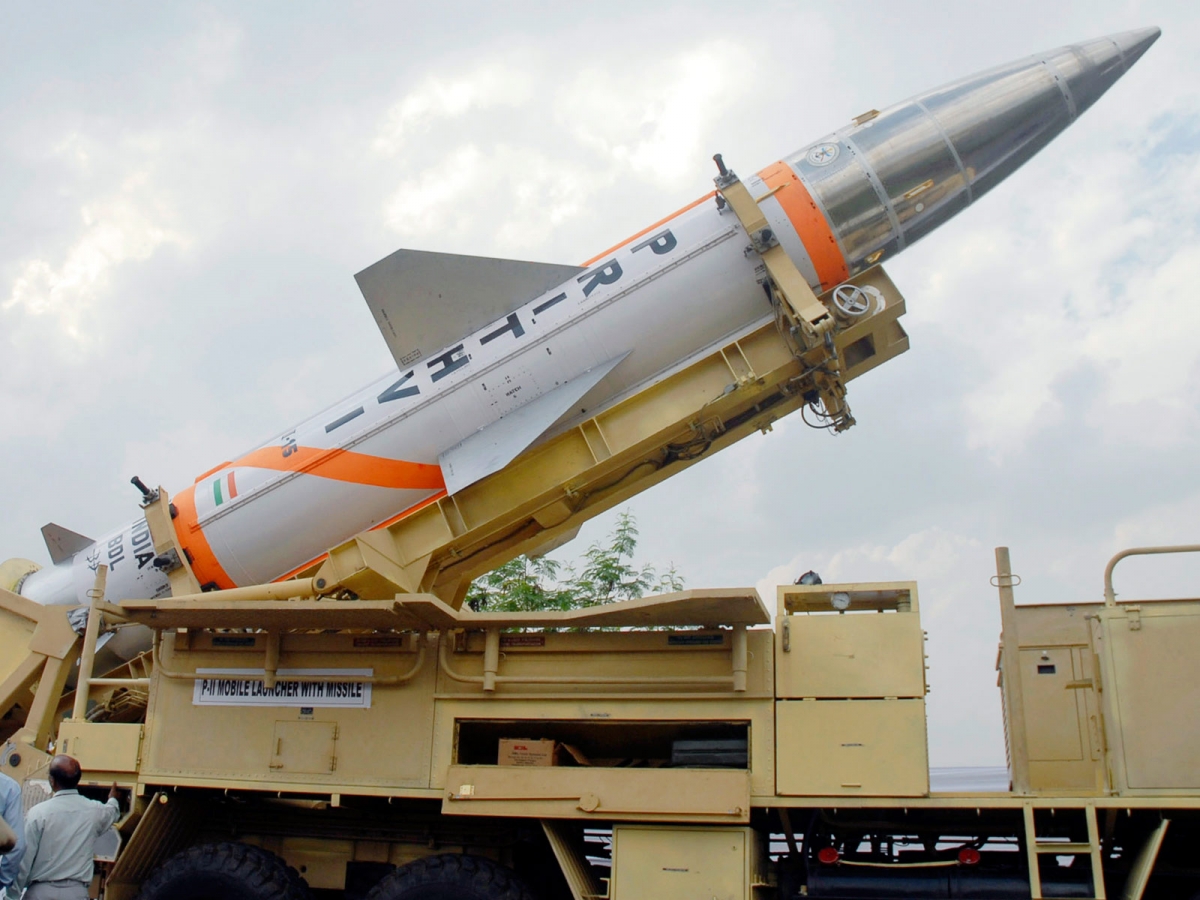
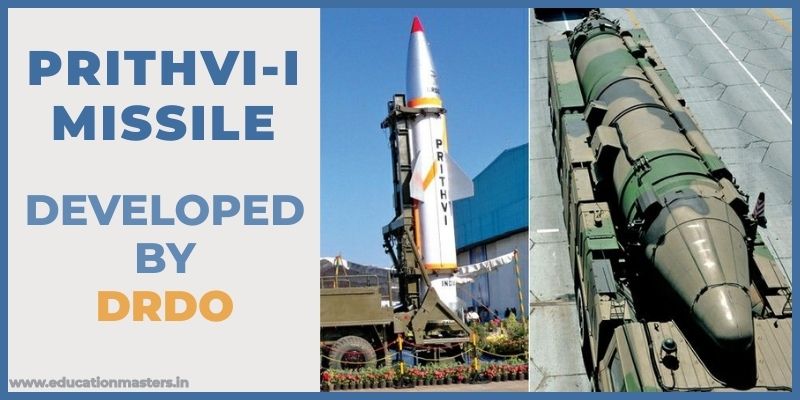
Prithvi 1 Missile is a short-range, surface-to-surface ballistic missile (SRBM) developed by the Defence Research and Development Organisation (DRDO) as part of India’s pioneering Integrated Guided Missile Development Programme (IGMDP). As the first missile to emerge from the IGMDP, it represents a landmark achievement in India’s journey toward indigenous missile technology and strategic self-reliance.
Engineered for the Indian Army’s tactical strike missions, Prithvi 1 Missile is designed to deliver high-accuracy, quick-reaction firepower against critical enemy assets such as command canters, ammunition depots, and troop formations. Its robust mobile launch system, combined with a capable guidance mechanism and substantial payload capacity, enables the missile to perform precision strikes in dynamic battlefield environments. With its proven reliability and operational flexibility, Prithvi 1 Missile continues to play a significant role in strengthening India's short-range deterrence and battlefield readiness.
Key Specifications of Prithvi 1 Missile
|
Parameter
|
Details
|
|
Type
|
Short-Range Ballistic Missile (SRBM)
|
|
Developer
|
DRDO
|
|
Service
|
Indian Army
|
|
Range
|
150 km
|
|
Propulsion
|
Single-stage, liquid-fuelled
|
|
Warhead Capacity
|
1,000 kg
|
|
Warhead Types
|
Conventional (high-explosive, fragmentation)
|
|
Guidance System
|
Inertial guidance
|
|
Accuracy (CEP)
|
50 meters (approx.)
|
|
Launch Platform
|
Mobile transporter-erector-launcher (TEL)
|
|
Length
|
9 meter
|
|
Diameter
|
1 meter
|
|
Launch Weight
|
4,000–4,500 kg
|
|
Speed
|
Mach 3+ (approx.)
|
|
First Inducted
|
1994
|
|
Status
|
Operational (progressively replaced by Prahaar/Pralay variants in some roles)
|
Development Background
Prithvi-1 was developed by the Defence Research and Development Organisation (DRDO) under India’s Integrated Guided Missile Development Programme (IGMDP). It was among India’s first indigenously built ballistic missiles and marked a major step toward self-reliance in missile technology.
Role & Usage of Prithvi-1 Missile
-
Tactical Battlefield Strike: Prithvi-1 is primarily designed for short-range tactical operations, enabling precision strikes against enemy troop concentrations, command centers, logistics depots, and forward military installations.
-
Rapid Reaction and Quick Deployment: As a mobile, road-launched missile system, Prithvi-1 can be rapidly deployed and launched with minimal preparation time, making it effective for time-sensitive missions during active conflict.
-
Deterrence at the Tactical Level: The missile serves as a credible deterrent by providing the capability to deliver high-impact payloads against adversary targets within short ranges, thereby strengthening battlefield dominance.
-
Support for Conventional and Strategic Operations: Prithvi-1 can be armed with conventional or nuclear warheads, allowing flexibility in mission planning depending on strategic requirements and escalation control.
-
Foundation for Missile Force Development: Operational use of Prithvi-1 contributed significantly to India’s early missile force readiness and provided valuable experience in ballistic missile deployment, command, and control.
Features of Prithvi 1 Missile
High-Precision Tactical Strike Capability: Prithvi-1 is designed as a highly accurate short-range ballistic missile, capable of delivering precision strikes against critical battlefield targets such as enemy bases, logistics hubs, and troop concentrations.
Mobile and Rapid-Response System: Mounted on a mobile transporter-erector-launcher (TEL), the missile can be deployed and launched quickly, enhancing survivability and enabling rapid reaction during high-intensity combat situations.
Heavy Payload Capacity: Despite its short range, Prithvi-1 can carry a large payload, including conventional or nuclear warheads, making it effective for delivering high-impact strikes against fortified or high-value targets.
Integral to India’s Missile Development Program: Developed under the Integrated Guided Missile Development Programme (IGMDP), Prithvi-1 played a foundational role in India’s indigenous missile modernization and helped establish core ballistic missile technologies for future systems.
Operational Role of Prithvi-I Missile
-
Designed for tactical battlefield operations.
-
Used to strike enemy troop concentrations, forward bases, ammunition depots, and logistics hubs.
-
Provides quick-reaction, short-range strike capability in high-intensity conflict zones.
-
Strengthens tactical deterrence at the battlefield level.
Advantages of Prithvi-1 Missile
-
High Impact Tactical Strike Capability
Prithvi-1 is capable of delivering powerful strikes against battlefield targets such as enemy bases, logistics hubs, and troop concentrations, ensuring effective tactical dominance.
-
Heavy Payload Capacity
The missile can carry a large payload of up to 1,000 kg, enabling the delivery of conventional or nuclear warheads for maximum damage against fortified or high-value targets.
-
Mobile Launch Platform
Mounted on a road-mobile transporter-erector-launcher (TEL), Prithvi-1 offers flexibility, quick deployment, and improved survivability by reducing vulnerability to pre-emptive strikes.
-
High Speed and Short Reaction Time
Its ballistic trajectory allows it to travel at very high speeds, giving enemy defences minimal reaction time and increasing strike effectiveness.
-
Indigenous Development
Developed by DRDO under the Integrated Guided Missile Development Programme (IGMDP), Prithvi-1 strengthened India’s self-reliance in missile technology.
-
Operational Simplicity for Tactical Use
Designed for short-range missions, Prithvi-1 can be effectively employed in battlefield scenarios with relatively straightforward command and control requirements.
-
Foundation for Advanced Missile Systems
Operational experience with Prithvi-1 contributed significantly to the development of more advanced Indian missile systems such as the Agni series.
Limitations of Prithvi-1 Missile
-
Short Operational Range
Prithvi-1 has a limited range of around 150 km, restricting its use to tactical battlefield targets and preventing deep-strike missions.
-
Liquid-Fuel Propulsion
The missile uses liquid fuel, which requires longer preparation and fueling time, reducing rapid launch capability compared to modern solid-fuel missiles.
-
Lower Accuracy by Modern Standards
While accurate for its time, Prithvi-1’s inertial guidance system offers less precision than newer missiles equipped with GPS/INS or terminal guidance.
-
High Detectability
Its ballistic trajectory makes it easily detectable by enemy radar and early-warning systems, increasing the risk of interception.
-
Limited Survivability
Prithvi-1 lacks manoeuvrability and advanced countermeasures, making it vulnerable to modern air and missile defence systems.
-
Operational Complexity
Handling and storage of liquid fuel require trained crews and careful logistics, complicating battlefield deployment.
-
Technology Obsolescence
As a first-generation missile developed under IGMDP, Prithvi-1 has been largely replaced by more advanced and efficient missile systems.
Conclusion
Prithvi-1 stands as a landmark achievement in India’s indigenous missile development journey. As a short-range tactical ballistic missile, it provided the Indian Army with a reliable and high-impact battlefield strike capability during the early stages of India’s missile modernization. Despite its limitations in range, guidance technology, and liquid-fuel propulsion, Prithvi-1 offered significant advantages such as heavy payload capacity, rapid tactical deployment, and high-speed strike potential. More importantly, it laid the technological and operational foundation for advanced missile systems developed later under the Integrated Guided Missile Development Programme. Prithvi-1’s legacy lies not only in its operational role but also in its contribution to strengthening India’s self-reliance, deterrence posture, and long-term strategic missile capabilities.For more information about missiles visit Education Masters.
सरकारी नौकरियों, जीके अपडेट्स और करेंट अफेयर्स की ताज़ा जानकारी सबसे पहले पाने के लिए:







.jpg)
.jpg)