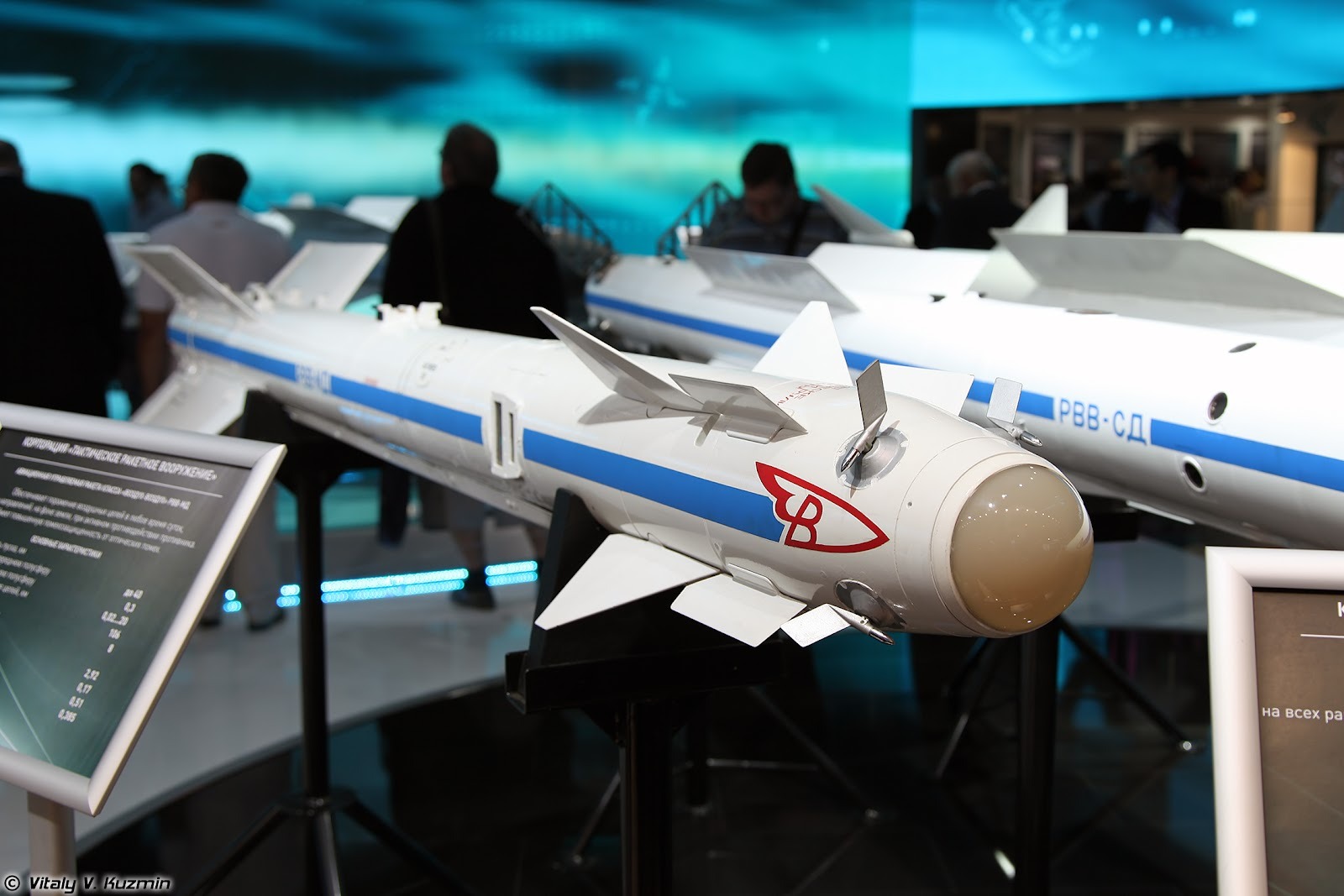
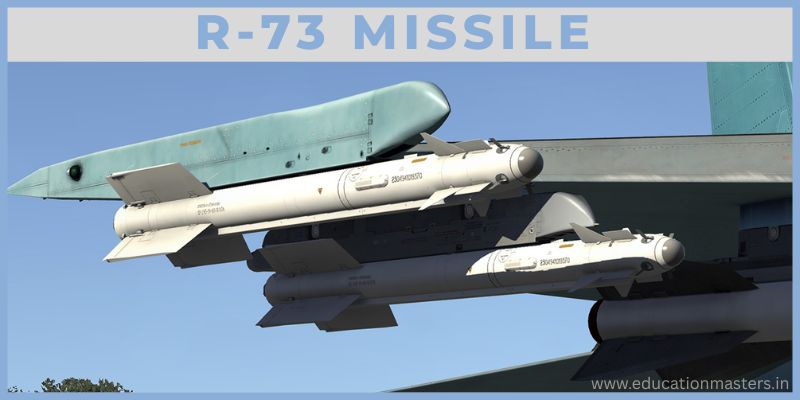
The R-73, known by NATO as AA-11 Archer, is a Short range, infrared-guided Air to air missile (AAMs) developed by Russia for close-combat dogfighting. Entering service in the early 1980s, it quickly gained a reputation as one of the most agile within-visual-range (WVR) missiles of its generation.
Designed for high-intensity dogfights, the R-73 can lock onto the heat signature of enemy aircraft with impressive precision and can engage targets even when they are not directly in front of the aircraft, thanks to its high off-boresight capability. It is also compatible with helmet-mounted sights, allowing pilots to simply look toward a target to lock and fire, giving a major advantage in rapid aerial engagements.
Widely used around the world, including by the Indian Air Force on platforms like the Su-30MKI, MiG-29, and MiG-21 Bison, the R-73 remains a cornerstone of Short range air combat capability. Though newer missiles are gradually replacing it, the R-73 remains respected for its responsiveness, accuracy, and dogfight dominance.
Overview of R-73 Missile:
|
Parameter
|
Details
|
|
Name
|
R-73 (Archer)
|
|
Developer
|
Russia, Vympel Design Bureau
|
|
Category
|
Short-Range Air to Air Missiles
|
|
Type
|
Infrared heat-seeking dogfight missile
|
|
Range
|
20–30 km (altitude dependent)
|
|
Launch Platform
|
Su-30MKI, MiG-29, MiG-21 Bison (IAF)
|
|
Fuel Type
|
Solid propellant, rocket motor
|
|
Guidance System
|
Passive Infrared Seeker + Helmet-Mounted Sight support
|
|
Off Boresight Capability
|
~40°–60° (version dependent)
|
|
Speed
|
Mach 2.5
|
|
Warhead Capacity
|
High-explosive fragmentation warhead (≈ 7–8 kg)
|
|
Maneuverability
|
40+ G capability for tight dogfights
|
|
Purpose / Role
|
Close-combat aerial engagements & rapid lock-on kills
|
|
Status
|
Operational in IAF; gradually being replaced by ASRAAM
|
Key Features of R-73 Missile
The R-73 is a highly agile Short range air to air missile used by the Indian Air Force, known for its powerful infrared heat-seeking guidance and fire-and-forget capability. It can lock onto targets even when they are not directly in front of the aircraft, especially when paired with a helmet-mounted sight for “look-and-shoot” attacks. With thrust-vector control and the ability to perform 40+ G turns, the R-73 excels in fast dogfights. Its high speed, strong flare resistance, and proven performance on fighters like the Su-30MKI and MiG-29 make it one of the most effective close-combat missiles in India’s arsenal.
-
Dogfire Short-range Missile
Designed for close combat air battles.
-
Heat-Seeking Guidance
Locks onto the enemy jet by tracking engine heat.
-
Fire-and-Forget
After launch, no pilot control was needed.
-
High Off Boresight Target
Can lock onto targets without pointing the aircraft nose.
-
Helmet Mounted Sight Compatible
Pilots can look at the target → missile locks instantly.
-
Extreme Maneuverability (TVC)
Thrust vector control allows very sharp turns to chase agile jets.
-
360° Engagement Capability
Can hit from front, side, or rear angles.
-
Strong Counter-Countermeasure Resistance
Better tracking even if the enemy uses flares or evasive turns.
-
Combat-Proven
Highly respected worldwide for dogfight performance.
Advantages of R-73 Missile
The R-73 offers India exceptional dogfight performance with its powerful heat-seeking guidance and fire-and-forget capability. Its biggest advantage is its high off-boresight ability, allowing pilots to lock onto targets simply by looking at them through a helmet-mounted sight, giving a massive edge in fast, close-range combat. The missile’s thrust-vector control enables extreme 40+ G maneuverability, allowing it to chase highly agile enemy aircraft. It also features all-aspect engagement, strong flare resistance, and proven reliability on IAF fighters like the Su-30MKI and MiG-29, making it one of the most effective and dependable Short range missiles in India’s arsenal.
1. Extreme High Off-Bore-Sight Capability
-
Can lock onto a target even if it is not directly in front of the aircraft.
-
Helmet-mounted sight cueing allows the pilot to look, lock, and fire.
-
Useful in dogfights when angles change rapidly.
2. High Maneuverability
-
Uses thrust-vectoring for sharp turns.
-
Can hit targets performing 9G+ maneuvers.
-
Makes it extremely lethal in close-range dogfight scenarios.
3. Strong IR Seeker & All-Aspect Targeting
-
Infrared seeker can lock from front, side, or rear.
-
Not limited to chasing the target from behind.
-
Good against afterburning fighters, drones, and helicopters.
4. Short Minimum Range
5. High Kill Probability in WVR
-
Designed specifically for Within Visual Range supremacy.
-
In close dogfights, it’s considered one of the deadliest IR missiles ever made.
6. Combat Proven
7. Compatible with Many Fighters
Works on:
This makes it a versatile and export-friendly system.
8. Cost-Effective vs. Western Alternatives
Compared to AIM-9X, IRIS-T, etc.:
-
Cheaper to maintain
-
Easier integration
Limitations of R-73 (AA-11 Archer)
The R-73, despite its strong dogfight performance, has several limitations. Its short range (20–30 km) makes it ineffective in long-distance or BVR combat. The older infrared seeker in early variants is more vulnerable to flares, IR jamming, and modern countermeasures, reducing accuracy against advanced fighters. It also depends heavily on helmet-mounted sights to use full off-boresight capability; without it, performance drops. The missile’s design is Cold War–era, meaning it lacks the advanced imaging seekers and electronic protection found in newer missiles like AIM-9X or ASRAAM. Additionally, it is less effective against stealth aircraft and can reveal the launcher's position due to slight smoke trails.
1. Short Range
-
Primarily a WVR (Within Visual Range) weapon.
-
Effective range around 20–30 km max, often less in real combat.
-
Cannot compete with BVR missiles once distance increases.
2. Older Seeker Technology (in baseline versions)
3. Requires Close Dogfight Positioning
-
Even though it has high off-boresight, you still need:
-
Visual ID
-
Close angle advantage
-
If the enemy avoids dogfight and stays BVR, R-73 won’t matter.
4. Helmet Sight Dependency
-
To use full off-axis capability, the pilot needs HMS.
-
Without helmet cueing → missile becomes much less lethal.
5. Smoke Signature
6. Limited Counter-Counter Measures
7. Aging Base Platform
8. Not Ideal Against Stealth Jets
CONCLUSION
The R-73 (AA-11 Archer) remains one of the most respected Short range air to air missiles ever built, known for its agility, high off-boresight capability, and deadly accuracy in close-combat situations. For the Indian Air Force, it has served as a dependable WVR weapon across multiple fighter platforms MiG-21 Bison, MiG-29, and Su-30MKI—providing unmatched dogfighting strength for decades. While newer imaging-infrared missiles and advanced Western systems now surpass it in seeker technology and countermeasure resistance, the R-73 continues to hold its place due to its proven performance, reliability, and cost-effectiveness. As India gradually transitions to modern systems like ASRAAM and indigenous WVR missiles, the R-73 will remain an important milestone in the evolution of the IAF’s close-range combat capability. It stands as a reminder of how a well-designed missile can shape aerial warfare and continue to serve effectively even as technology advances. To know more about missiles visit our site Education Masters.
सरकारी नौकरियों, जीके अपडेट्स और करेंट अफेयर्स की ताज़ा जानकारी सबसे पहले पाने के लिए:





.png)
.jpg)
.jpg)