
KD
I’m Kiran, a content creator at Education Masters. I write and share informative articles on jobs, education updates, and career opportunities to help students and aspirants stay informed and succeed in their goals.
.jpg)
Launched from ground or sea platforms, guided weapons called Surface to surface missiles (SSMs) hit targets resting on the Earth's surface. Modern defence depends on them because they offer long-range striking capability, strategic deterrence, and battlefield accuracy. Surface to surface missiles (SSMs) are often divided into cruise missiles and ballistic missiles. Cruise missiles fly like low-altitude airplanes with great precision powered by jet engines, whereas ballistic missiles are powered just in the initial phase before following a high-arc trajectory.
Beginning with the German V-2 rocket of World War II, the development of SSMs grew swiftly throughout the Cold War. Advances in materials, navigation, guidance, and propulsion have made these missiles much more dependable and accurate now. Surface to Surface Missiles SSMs aim precisely with technology including inertial navigation, satellite guidance, and sophisticated seekers.They could be tactical, short-range, medium-range, intermediate-range, or intercontinental depending on range. Strategic deterrence, deep-strike abilities, destruction of opponent infrastructure, and support for ground operations all fall under their responsibilities. Though costly and strategically risky, Surface to surface missiles SSMs are still essential tools of national security and world military equilibrium.
|
Category |
Details |
|---|---|
|
Definition |
Surface to Surface Missiles are guided weapons launched from land or sea platforms to hit ground-based targets. |
|
Main Types |
|
|
Trajectory |
|
|
Range |
Varies from a few kilometres (tactical) to thousands of kilometres (strategic/ICBM). |
|
Propulsion |
|
|
Guidance Systems |
Inertial Navigation, Satellite Navigation (GPS/GLONASS), TERCOM, Radar/IR seekers (terminal phase). |
|
Purpose |
Battlefield support, deep strike, destroying enemy infrastructure, strategic deterrence. |
|
Advantages |
High accuracy, long-range capability, rapid strike ability, strong deterrence value. |
|
Limitations |
High development cost, risk of escalation, technological complexity. |
|
Examples |
|
Surface to surface missiles (SSMs) can be launched from:
Land-based platforms
o TEL vehicles, also known as Transporter-Erector-Launcher
o Fixed silos
o Portable launching devices (Mobile launchers)
Sea-based platforms
o Surface ships
o Submarines (though these are often classified separately as SLBMs)
Ballistic missiles are missiles that follow a ballistic trajectory, meaning it is powered only during the initial launch phase and then travels through space in a curved path before descending onto its target. These missiles are used for delivering warheads over short to extremely long distances.
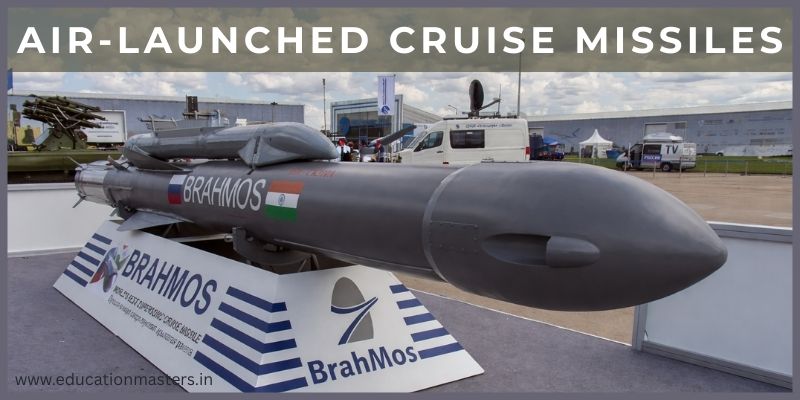
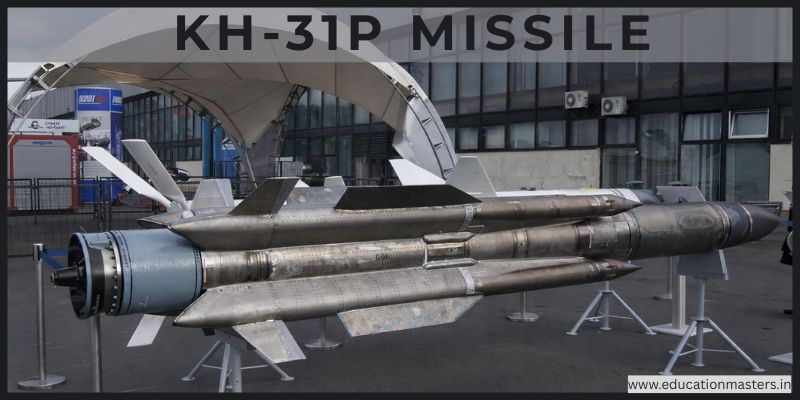
A cruise missile is a guided missile designed to fly at low altitudes, high precision, and constant aerodynamic flight like an aircraft. Unlike ballistic missiles, cruise missiles stay within the atmosphere and are powered throughout their flight.
Tactical missiles are short-range, battlefield-use missiles designed to strike targets within a limited area of operations. They are used to support ground, air, and naval forces during combat and are not meant for long-range strategic missions.
Surface to Surface Missiles (SSMs) have become indispensable components of modern military capability, combining advanced technology with strategic significance. Whether in the form of ballistic missiles, cruise missiles, or tactical missiles, surface to surface missiles (SSMs) enable nations to conduct precise, rapid, and long-range strikes from land or sea platforms. From early ballistic rockets to incredibly precise, terrain-hugging cruise missiles, their development mirrors ongoing advances in propulsion, guidance, navigation, and aerodynamics.
These systems serve two goals: by providing short-range tactical support, they enhance battlefield effectiveness; by long-range strategic deterrence, they reinforce national security. Although their deployment and development involve substantial cost and responsibility, Surface to surface missiles (SSMs) continue to be vital instruments for maintaining defence readiness and geopolitical stability. The investigation of SSMs finally provides insightful understanding of how countries project might, protect boundaries, and react to changing security threats in the current world. For more information about missiles visit Education Masters.
सरकारी नौकरियों, जीके अपडेट्स और करेंट अफेयर्स की ताज़ा जानकारी सबसे पहले पाने के लिए:



.png)
.jpg)
.jpg)