Tactical Cruise Missiles are advanced precision-guided weapon systems developed for short- to medium-range missions in conventional warfare. They are specifically designed to engage high-value battlefield and operational targets with exceptional accuracy while significantly reducing collateral damage. Unlike ballistic missiles, tactical cruise missiles operate entirely within the Earth’s atmosphere, using aerodynamic lift and continuous propulsion to maintain controlled, sustained flight. This allows them to follow complex, terrain-hugging and highly flexible flight paths. Their ability to fly at very low altitudes, combined with in-flight maneuverability and advanced guidance systems, greatly enhances survivability by evading radar detection and countering modern air defence networks.
Overview of Tactical Cruise Missiles
|
Aspect
|
Details
|
|
Type
|
Tactical Cruise Missile
|
|
Mission Range
|
From Short to medium range
|
|
Primary Role
|
Precision strike against battlefield and operational targets
|
|
Flight Environment
|
Atmospheric (uses aerodynamic lift)
|
|
Propulsion
|
Continuous propulsion using turbojet or turbofan engines
|
|
Flight Profile
|
Low-altitude, terrain-hugging, highly maneuverable
|
|
Guidance Systems
|
INS, GPS/IRNSS, TERCOM, DSMAC
|
|
Accuracy
|
Very high (precision-guided)
|
|
Survivability
|
High due to low radar visibility and evasive flight paths
|
|
Launch Platforms
|
Land-based launchers, naval ships, submarines, aircraft
|
|
Warhead Type
|
Conventional (some variants capable of nuclear payloads)
|
|
Operational Use
|
SEAD, strikes on command centers, airbases, logistics hubs
|
|
Key Advantage
|
High accuracy with controlled escalation
|
|
Key Limitation
|
Compared to ballistic missiles its speed is slow
|
Key Characteristics of Tactical Cruise Missiles
Precision Strike Capability: Engineered to engage specific military targets with exceptional accuracy, tactical cruise missiles enable precise destruction of high-value assets while minimizing collateral damage and unintended impact.
Low-Altitude, Terrain-Hugging Flight: Designed to fly at very low altitudes by following natural terrain features, this flight profile significantly reduces radar visibility and lowers the probability of detection and interception by enemy air defence systems.
Flexible and Maneuverable Flight Path: Equipped with advanced guidance and navigation systems, tactical cruise missiles can change course mid-flight, avoid defended zones, and exploit gaps in enemy air defences to reach their targets effectively.
Optimized for Conventional Warfare: Primarily intended for tactical and operational-level missions, these missiles provide powerful strike options in conventional conflicts without serving as instruments of strategic nuclear deterrence.
System for Guidance and Navigation
Tactical cruise missiles use a combination of advanced guidance technologies to ensure accuracy and reliability:
-
For autonomous navigation Inertial Navigation System (INS)
-
Satellite Navigation (GPS / IRNSS / GLONASS) for course correction
-
Terrain Contour Matching (TERCOM) to follow terrain features
-
For terminal accuracy, use Digital Scene Matching Area Correlation (DSMAC)
These systems allow the missile to maintain precision even in GPS-denied or electronically contested environments.
Propulsion System of Tactical Cruise Missiles
Tactical cruise missiles typically use turbofan or turbojet engines, providing sustained thrust throughout the flight. Continuous propulsion allows them to maintain stable speed, low altitude, and controlled maneuvering. Depending on the design, they may operate at:
Tactical Cruise Missiles of India
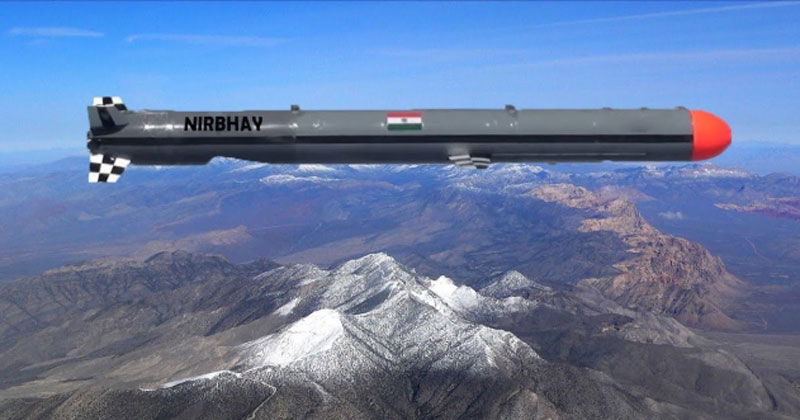
1. Nirbhay (Land Attack Cruise Missile – LACM)
-
Type: Subsonic Tactical Cruise Missile
-
Range: 1,000–1,500 kilometers
-
Speed: 0.7 Mach - Subsonic
-
Propulsion: Turbofan engine
-
Guidance: INS, GPS/IRNSS, TERCOM, DSMAC
-
Role: Precision strikes on enemy command centers, airbases, infrastructure, and logistics hubs
-
Significance: India’s first long-range indigenous land-attack cruise missile
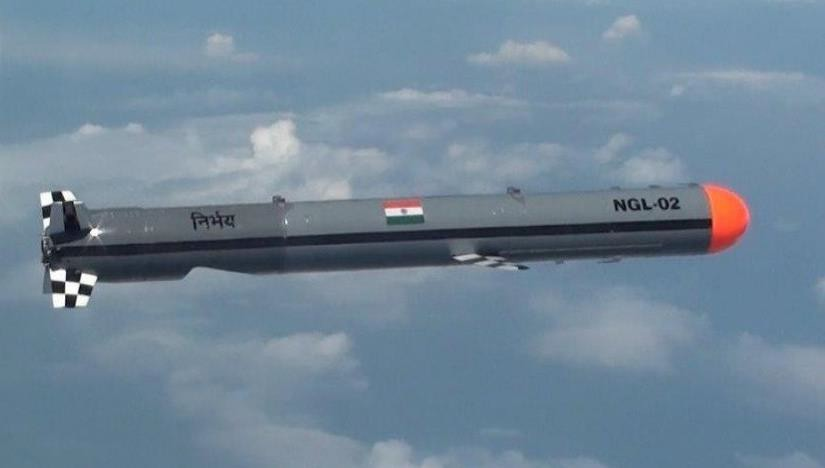
2. ITCM (Indigenous Technology Cruise Missile – Improved Nirbhay)
-
Type: Subsonic Tactical Cruise Missile
-
Range: 1,000 kilometers
-
Speed: Subsonic
-
Propulsion: Indigenous turbofan engine (Manik)
-
Guidance: Advanced INS + satellite navigation
-
Role: High-precision conventional strikes
-
Significance: Enhanced reliability and fully indigenous propulsion system
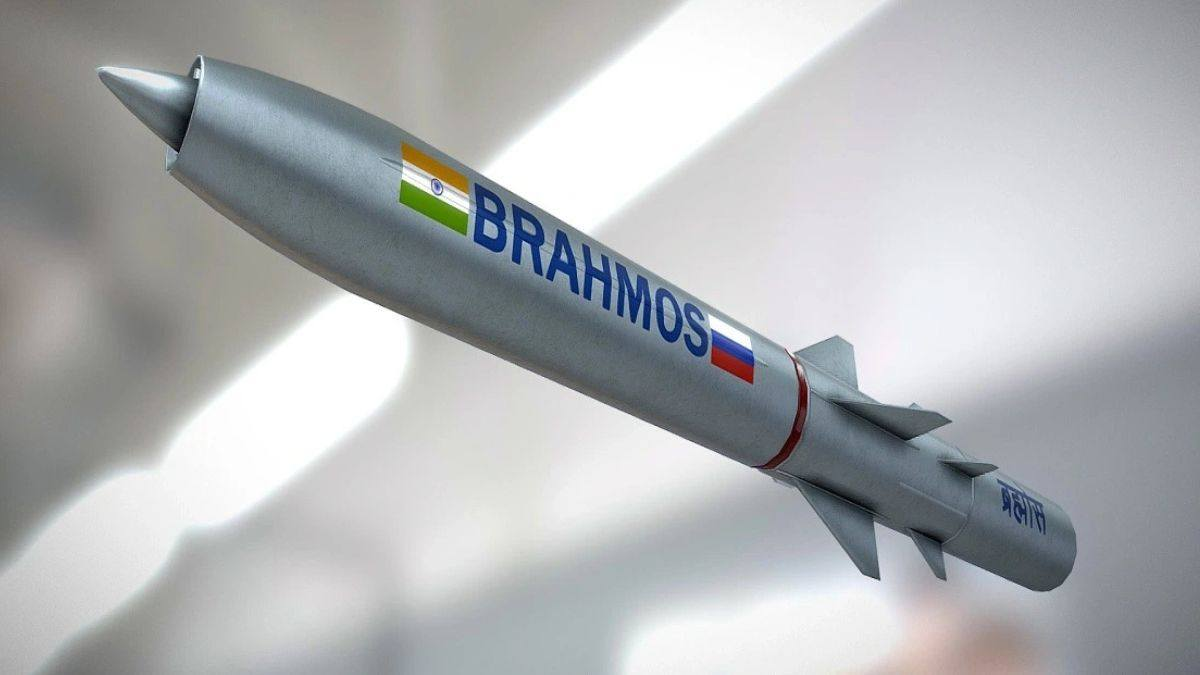
3. BrahMos (Tactical Variant)
-
Type: Supersonic Tactical Cruise Missile
-
Range: 290 to 450 km (variants)
-
Speed: Mach 2.8–3.0
-
Propulsion: Ramjet engine
-
Guidance: INS + active radar homing
-
Role: Precision strike against land and naval targets
-
Launch Platforms: Land, sea, submarine, and air (Su-30MKI)
-
Significance: One of the fastest operational cruise missiles in the world
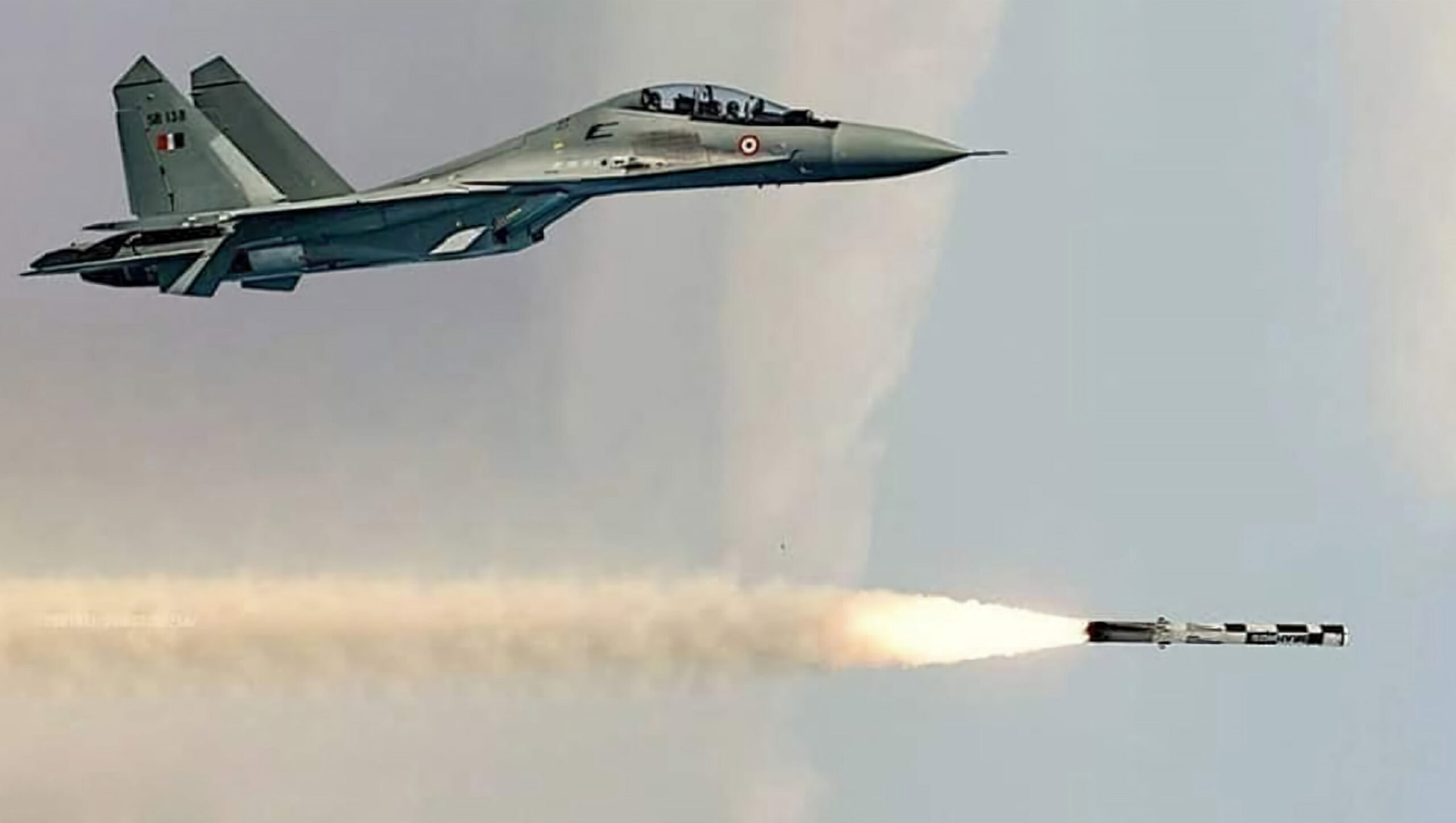
4. BrahMos-A (Air-Launched Variant)
-
Type: Air-launched supersonic tactical cruise missile
-
Range: 300–400 kilometers
-
Speed: Mach 2.8
-
Launch Platform: Su-30MKI fighter aircraft
-
Role: Deep precision strike with reduced reaction time
-
Significance: Enhances India’s air-delivered stand-off strike capability
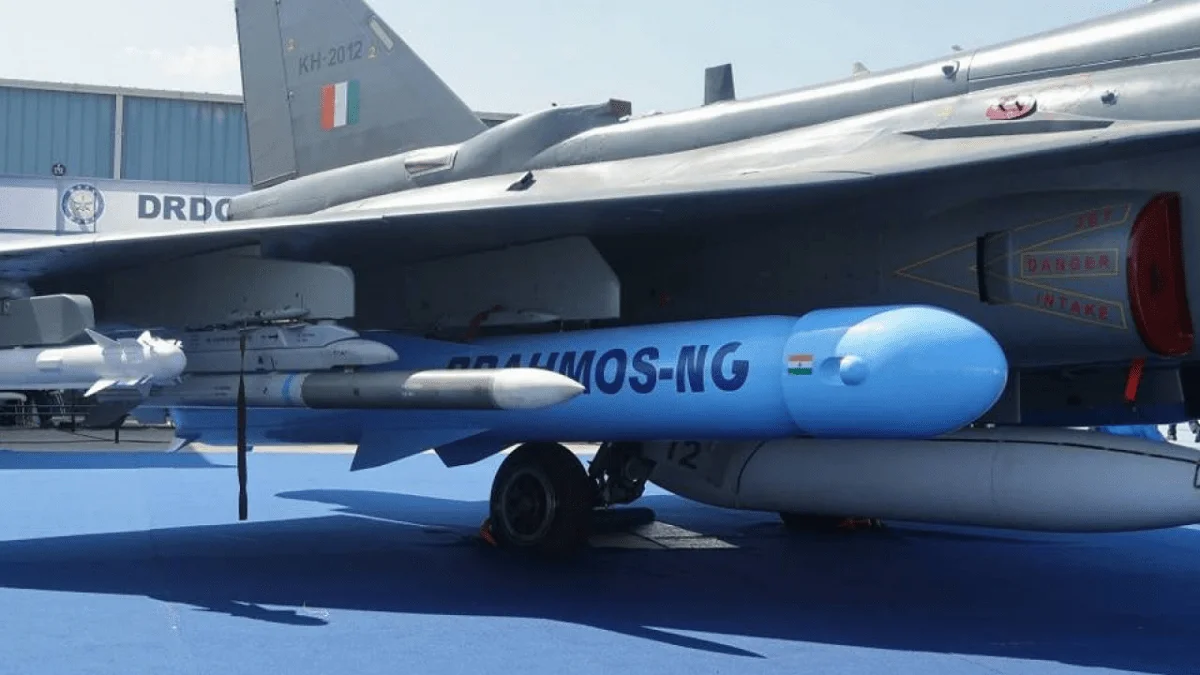
5. BrahMos-NG (Next Generation – Under Development
-
Type: Supersonic Tactical Cruise Missile
-
Range: 300 kilometers
-
Speed: Mach 3+
-
Features: Lighter, smaller, stealthier than current BrahMos
-
Role: Tactical precision strikes from multiple aircraft and platforms
-
Status: Under development
Operational Role of Tactical Cruise Missiles
-
Pinpoint attacks on Command and Control Centers:
Tactical cruise missiles are used to accurately neutralize enemy command, control, communication, and intelligence (C3I) nodes, disrupting decision-making processes and degrading operational coordination.
-
Enemy Air Defences Suppression (SEAD):
These missiles play a critical role in SEAD missions by targeting radar sites, surface-to-air missile batteries, and air defence command units, thereby opening corridors for follow-on air and ground operations.
-
Destruction of Logistics and Supply Infrastructure:
Tactical cruise missiles effectively destroy enemy logistics bases, fuel storage facilities, ammunition depots, and supply routes, severely limiting the adversary’s ability to sustain prolonged combat operations.
-
Attacks on Airbases, Radar Installations, and Communication Hubs:
By striking runways, hangars, radar stations, and communication networks, cruise missiles degrade enemy air power, surveillance capability, and battlefield awareness.
-
Military Operations joining support:
Tactical cruise missiles provide critical support to ground, naval, and air forces by delivering stand-off precision strikes, shaping the battlefield, and enabling coordinated joint-force operations with reduced risk to friendly assets.
Launch Platforms of Tactical Cruise Missiles
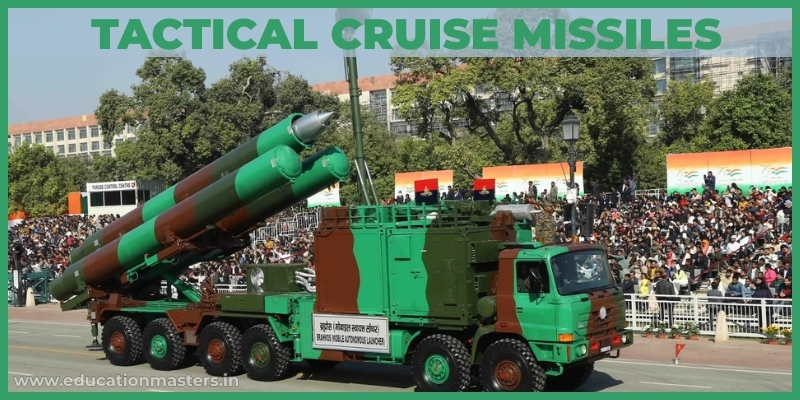
Tactical cruise missiles are highly versatile and can be launched from:
-
Mobile launchers based on land
-
Submarines launched and Naval ships
-
Aircraft (air-launched variants)
This multi-platform capability enhances flexibility, survivability, and operational reach.
Advantages of Tactical Cruise Missiles
-
Exceptional Accuracy and Target Selectivity:
Tactical cruise missiles are designed to strike specific high-value targets with pinpoint precision, enabling effective mission success while reducing unintended repercussions and collateral damage.
-
High Survivability and Low Radar Signature:
Their low-altitude, terrain-hugging flight profile and reduced radar cross-section significantly decrease detection probability, enhancing survivability against modern air and missile defence systems.
-
Greater Mission Flexibility:
Unlike ballistic missiles, tactical cruise missiles can maneuver during flight, adjust trajectories, and approach targets from multiple directions, enabling versatile mission planning and execution, unlike ballistic missiles.
-
Highly Effective in Conventional Conflicts:
These missiles are ideally suited for conventional warfare, providing powerful and precise strike options without the strategic implications associated with nuclear-capable missile systems.
-
Lower Risk of Escalation:
By offering controlled, precise, and non-strategic strike capability, tactical cruise missiles help maintain escalation control, reducing the risk of triggering broader or nuclear-level conflict.
Limitations of Tactical Cruise Missiles
-
Compared to Ballistic Missiles its speed is slower:
Tactical cruise missiles generally fly at subsonic or low supersonic speeds, giving adversaries comparatively more reaction time than against high-speed ballistic missile attacks.
-
Vulnerability to Advanced Air Defence Systems:
Although designed for low detectability, cruise missiles can be intercepted once detected, especially by modern integrated air defence systems equipped with advanced radars and interceptors.
-
Dependence on Accurate Intelligence and Targeting Data:
Successful employment relies heavily on precise, real-time intelligence, surveillance, and reconnaissance (ISR). Inaccurate target data can reduce mission effectiveness.
-
Limited Payload Capacity:
Compared to strategic missiles, tactical cruise missiles carry smaller warheads, which may limit their effectiveness against deeply hardened or heavily fortified targets.
Importance in Modern Warfare
Tactical cruise missiles represent the shift toward precision-centric warfare, where accuracy and control are prioritized over sheer destructive power. They allow military forces to neutralize critical enemy assets early in a conflict, degrade command structures, and shape the battlefield without triggering large-scale escalation.
Conclusion
Tactical Cruise Missiles are indispensable components of modern military strategy, offering unmatched precision, adaptability, and survivability in conventional warfare. Their ability to evade enemy defences through low-altitude flight, maneuverability, and advanced guidance makes them ideal for battlefield and regional strike missions. As military technology continues to advance, tactical cruise missiles are evolving with enhanced stealth features, improved navigation systems, and more efficient propulsion, ensuring their continued relevance and effectiveness in future conflict scenarios. For more information about missiles visit Education Masters.
सरकारी नौकरियों, जीके अपडेट्स और करेंट अफेयर्स की ताज़ा जानकारी सबसे पहले पाने के लिए:





.png)
.png)
.png)
.jpg)
.jpg)