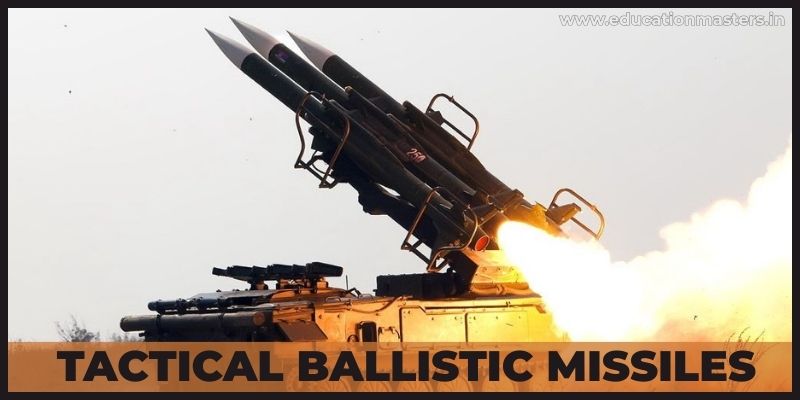
Tactical Ballistic Missiles (TBMs) are short- to medium-range ballistic weapons specifically developed for battlefield and theatre-level operations, where speed and precision are critical. They are designed to deliver rapid, high-impact strikes against key military targets such as enemy troop formations, airbases, radar installations, command and control centers, missile sites, and logistics hubs. Unlike strategic ballistic missiles, which focus on long-range nuclear deterrence, TBMs emphasize mobility, accuracy, and controlled escalation, enabling armed forces to achieve decisive operational effects while limiting the risk of broader conflict.
Tactical Ballistic Missiles (TBMs) – Overview
|
Parameter
|
Details
|
|
Category
|
Tactical Ballistic Missiles (TBMs)
|
|
Operational Level
|
Battlefield and theatre-level operations
|
|
Typical Range
|
50–500 km
|
|
Primary Purpose
|
Rapid, high-impact strikes against military targets
|
|
Target Types
|
Troops, airbases, radar sites, command centers, missile bases, logistics hubs
|
|
Trajectory Type
|
Ballistic or quasi-ballistic
|
|
Speed
|
Very high (often hypersonic in terminal phase)
|
|
Warhead Type
|
Primarily conventional (some nuclear-capable variants)
|
|
Guidance Systems
|
INS, satellite navigation (GPS/GLONASS/NavIC), terminal guidance
|
|
Launch Platforms
|
Road-mobile or rail-mobile launchers
|
|
Key Features
|
High speed, precision, mobility, rapid response
|
|
Operational Role
|
Battlefield dominance, SEAD, counter-force missions
|
|
Advantages
|
Minimal reaction time, high impact, quick deployment
|
|
Limitations
|
Less stealthy than cruise missiles, trackable trajectory
|
|
Indian Examples
|
Prahaar, Pralay, Prithvi-I
|
Design & Technology of TBMs
Propulsion
Guidance Systems
-
INS (Inertial Navigation System)
-
Satellite navigation (GPS/GLONASS/NavIC)
-
Terminal guidance and manoeuvring re-entry vehicles (MaRV) in advanced TBMs
Flight Profile
-
High-speed boost phase
-
Mid-course ballistic flight
-
High-velocity terminal descent, sometimes with manoeuvres to evade interception
Examples (India)
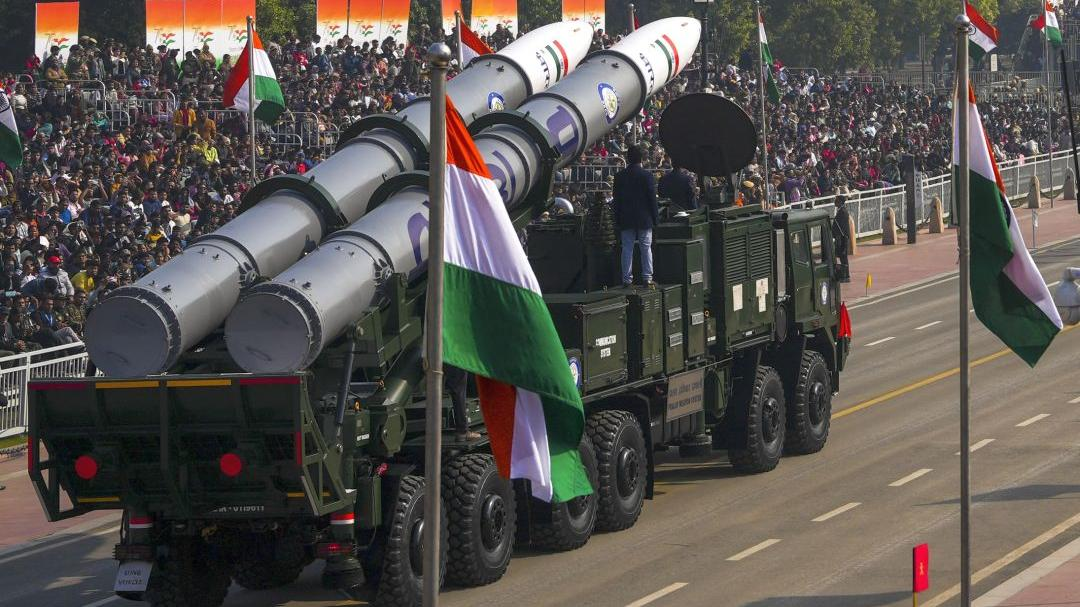
Operational Role of TBMs
• Rapid Battlefield Strike
Tactical ballistic missiles provide the ability to neutralize time-sensitive and high-value military targets within minutes, delivering overwhelming firepower before the enemy can react or reposition.
• Suppression of Enemy Air Defences (SEAD)
Their extreme speed and high-impact warheads make TBMs highly effective in destroying enemy radar systems, surface-to-air missile sites, and air-defence command nodes, paving the way for follow-on air and ground operations.
• Counter-Force Missions
TBMs are used to strike enemy military bases, logistics hubs, ammunition depots, and forward operating locations, degrading the adversary’s ability to sustain combat operations.
• Controlled Escalation Management
Designed primarily for conventional roles, TBMs allow forces to deliver decisive battlefield effects while avoiding the escalation associated with long-range strategic missile use.
• Support to Joint Operations
TBMs act as powerful force multipliers by complementing air strikes, artillery, and ground manoeuvres, enhancing coordination and effectiveness across joint military operations.
Importance of TBMs
• Rapid Battlefield Dominance
TBMs enable armed forces to strike critical enemy targets within minutes, allowing swift disruption of enemy operations and gaining early control of the battlefield.
• Deterrence at the Tactical Level
Their speed and destructive capability act as a strong deterrent against enemy troop mobilization, forward deployments, and aggressive manoeuvres near borders.
• Counter to Advanced Air Defences
Due to their extreme velocity and steep trajectories, TBMs are difficult to intercept, allowing them to penetrate sophisticated air and missile defence systems.
• Support to Modern Warfighting Doctrines
TBMs align with doctrines such as rapid response, integrated battle groups, and joint operations, providing commanders with fast and precise strike options.
• Escalation Control in Regional Conflicts
By offering powerful conventional strike capability without resorting to long-range strategic weapons, TBMs help manage escalation while still delivering decisive military effects.
• Force Multiplier Effect
When integrated with air, artillery, and ground forces, TBMs significantly enhance overall combat effectiveness and operational flexibility.
Advantages of TBMs
• Extremely High Speed
TBMs travel at very high velocities, often reaching hypersonic speeds during the terminal phase, leaving defenders with minimal reaction time and greatly reducing interception chances.
• High Survivability and Mobility
Mounted on road-mobile launchers, TBMs can be rapidly deployed, launched, and relocated, enhancing survivability against preemptive or counter-force strikes.
• Effectiveness Against Hardened Targets
Their steep ballistic trajectory and powerful warheads make TBMs highly effective against fortified structures, underground facilities, and well-defended military installations.
• Ideal for High-Intensity, Short-Duration Conflicts
TBMs are particularly suited for fast-paced conflicts where speed, impact, and decisive action are essential to achieve quick battlefield dominance.
Limitations of TBMs
• Lower Stealth Compared to Cruise Missiles
TBMs follow ballistic or quasi-ballistic trajectories and lack the low-altitude, terrain-hugging profiles of cruise missiles, making them more visible to radar and sensor networks.
• Trackable Ballistic Trajectory
Their high-arc flight path can be detected and tracked by early-warning radars and missile defence systems, providing defenders some opportunity for interception.
• Limited Range Relative to Strategic Missiles
TBMs are designed for battlefield use and therefore have a shorter range than strategic ballistic missiles, restricting their employment to theatre-level operations.
Conclusion
Tactical Ballistic Missiles are essential instruments of modern battlefield dominance, delivering unparalleled speed, precision, and rapid-response strike capability. By effectively bridging the gap between conventional artillery and long-range strategic missiles, TBMs enable militaries to neutralize critical enemy assets swiftly and decisively. Their ability to deliver powerful battlefield effects while maintaining control over escalation makes them indispensable in regional and high-intensity conflict scenarios. To know more about missiles visit Education Masters.
सरकारी नौकरियों, जीके अपडेट्स और करेंट अफेयर्स की ताज़ा जानकारी सबसे पहले पाने के लिए:






.png)
.jpg)
.jpg)