Air to surface missiles (ASM) are advanced precision guided weapons launched from military aircraft to engage ground and high accuracy of maritime targets. These missiles are a vital component of modern aerial warfare, allowing air forces to strike enemy infrastructure, armoured vehicles, radar systems, air-defense networks, command centers, and naval vessels from long stand-off ranges. By attacking targets without entering heavily defended airspace, air-to-surface missiles significantly improve aircraft survivability while delivering rapid and effective strike capability.
Modern air to surface missiles employ sophisticated guidance technologies such as GPS-aided inertial navigation systems, infrared imaging seekers, laser guidance, and radar-based targeting. This enables all-weather, day-and-night operational capability with minimal collateral damage. Designed for roles including deep-strike missions, close air support, suppression of enemy air defenses (SEAD), and anti-ship warfare, air-to-surface missiles enhance battlefield dominance, operational flexibility, and strategic deterrence, making them a cornerstone of contemporary air power.
Overview of Air to Surface Missiles
|
Category
|
Details
|
|
Weapon Type
|
Air-to-Surface Missile (ASM)
|
|
Definition
|
Guided missiles launched from aircraft to strike ground or maritime targets
|
|
Primary Role
|
Precision strike against surface targets
|
|
Typical Targets
|
Enemy infrastructure, armored vehicles, radar systems, air defenses, command centers, ships
|
|
Launch Platforms
|
Fighter aircraft, strike aircraft, bombers, attack helicopters, UAVs
|
|
Guidance Systems
|
GPS/INS, infrared (IR), laser guidance, active/passive radar
|
|
Strike Range
|
Short to long range (varies by missile type)
|
|
Warhead Types
|
High-explosive, penetration, fragmentation, specialized warheads
|
|
Operational Capability
|
Day/night, all-weather precision strike
|
|
Key Advantage
|
Stand-off attack capability and high accuracy
|
|
Combat Roles
|
Deep strike, close air support, SEAD, anti-ship warfare
|
|
Strategic Importance
|
Enhances air power, reduces aircraft risk, enables rapid response
|
Invention of Air-to-Surface Missiles
The invention of air-to-surface missiles dates back to World War II, when the need for precision strikes against well-defended ground and naval targets became critical. To reduce aircraft losses caused by close-range bombing, Germany developed the first air-launched guided weapons, such as the Hs 293 and Fritz X, using radio-control guidance. These early systems marked the beginning of modern air-to-surface missile technology.
During the Cold War, air-to-surface missiles rapidly evolved with the introduction of radar, infrared, inertial navigation, and GPS guidance systems. These advancements transformed them into highly accurate, long-range precision strike weapons. Today, air-to-surface missiles are a key component of modern air warfare, enabling aircraft to destroy high-value surface targets from safe stand-off distances.
Purpose of Air-to-Surface Missiles
The purpose of air-to-surface missiles is to provide aircraft with precise, long-range strike capability against ground and maritime targets. These missiles allow air forces to destroy enemy infrastructure, armored vehicles, air-defense systems, radar sites, command centers, and naval vessels from stand-off distances, reducing risk to pilots and aircraft while increasing mission success.
Air-to-surface missiles also support modern warfare by enabling all-weather, day-and-night operations with high accuracy and minimal collateral damage. Equipped with advanced guidance systems such as GPS, infrared, laser, and radar, they play a critical role in precision strikes, close air support, deep-strike missions, and suppression of enemy air defenses (SEAD).
Development of Air to Surface Missiles (ASMs)
The evolution of air-to-surface missiles has been driven by the need to strike ground and maritime targets with higher accuracy, longer range, and reduced risk to launch aircraft. Early systems relied on manual guidance and short engagement distances, forcing aircraft to operate within enemy air-defense zones. Over time, advances in guidance, propulsion, navigation, and survivability transformed air-to-surface missiles into long-range, precision strike weapons capable of engaging heavily defended and high-value targets. Modern ASMs now integrate autonomous guidance, networked targeting, and stand-off attack capability, making them essential to contemporary air warfare.
Early Development Phase – 1940s to 1950s
-
Initial air-launched weapons used manual or radio-command guidance
-
Limited accuracy and vulnerability to countermeasures
-
Required continuous operator input and visual tracking
-
Mainly designed for attacking ships and fixed ground targets
Guidance System Advancement – 1960s
-
Introduction of improved radio and early electro-optical guidance
-
Reduced pilot workload compared to manual control
-
Enhanced accuracy against stationary targets
-
Expanded use against fortified ground installations
Precision Strike Expansion – 1970s to 1980s
-
Adoption of laser guidance and radar-based targeting
-
Improved accuracy in adverse weather and low-visibility conditions
-
Enabled selective targeting of hardened and high-value assets
-
Reduced collateral damage compared to unguided munitions
Stand-Off Capability Growth – 1990s to 2000s
-
Integration of inertial navigation systems (INS) and GPS guidance
-
Significant increase in engagement range beyond enemy air defenses
-
Mid-course guidance allowed flexible targeting and improved hit probability
-
Enabled deep-strike missions without direct aircraft exposure
Modern Air-to-Surface Missile Era – Present
-
Advanced imaging infrared (IIR) and multi-mode seekers
-
Two-way data-link for in-flight updates and re-targeting
-
Low-observable flight profiles and electronic counter-countermeasures (ECCM)
-
High-efficiency propulsion for long-range precision strikes
-
Capable of engaging mobile targets, bunkers, air-defense systems, and naval assets
Technical Evolution of Air-to-Surface Missiles (ASM)
|
Era
|
Technology Jump
|
Guidance
|
Typical Range
|
Examples
|
|
World War II
|
First guided air-launched weapons
|
Radio command, manual visual control
|
Short range
|
Fritz X, Hs-293
|
|
1950s–1960s
|
Improved control & stabilization
|
Radio guidance, early EO control
|
Short range
|
AGM-12 Bullpup
|
|
1970s–1980s
|
Precision strike capability
|
Laser guidance, radar homing
|
Short to medium range
|
AGM-65 Maverick, AS-30
|
|
1990s–2000s
|
Stand-off strike revolution
|
INS + GPS guidance
|
Medium to long range
|
AGM-84 SLAM, Kh-59
|
|
2000s–2010s
|
Network-centric warfare
|
GPS/INS with data-link updates
|
Long range
|
AGM-158 JASSM, SCALP-EG
|
|
Modern Era
|
High survivability & smart targeting
|
Imaging IR, multi-mode seekers, ECCM
|
Long range
|
BrahMos-A, Storm Shadow, JASSM-ER
|
India’s Journey into Air-to-Surface Missiles (ASMs)
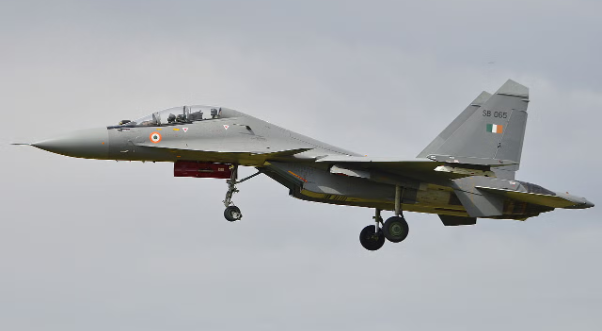
India did not begin as an indigenous air-to-surface missile–producing nation. In the early decades, the Indian Air Force relied heavily on imported strike weapons to meet its ground-attack and maritime strike requirements. Through operational use, joint integration programs, limited reverse-engineering exposure, and sustained research under DRDO, India gradually built the technical foundation required for indigenous air-to-surface missile development.
Initial Dependence on Foreign Air-to-Surface Missiles
Before developing its own systems, India operated and studied several foreign air-to-surface missiles, gaining critical understanding of guidance methods, propulsion, warhead design, and aircraft-missile integration:
-
Kh-59 (Soviet/Russian) – TV-guided stand-off strike missile
-
Kh-31A / Kh-31P – Anti-ship and anti-radiation variants
-
AS-30 (France) – Early precision strike missile
-
Popeye (Israel) – Long-range precision strike weapon
These systems helped India understand real-world strike profiles, seeker behavior, and electronic warfare challenges.
DRDO’s Indigenous Development Path
Rather than remaining dependent on imports, India pursued long-term self-reliance through DRDO by focusing on indigenous design, testing, and integration of air-to-surface missile technologies.
-
Conceptual planning for indigenous air-to-surface strike weapons began in the 1990s
-
Early work focused on guidance systems, navigation accuracy, and propulsion
-
Development of precision-guided munitions and stand-off weapons accelerated in the 2000s
Major Air-to-Surface Missiles of India
|
Missile Name
|
Type / Role
|
Guidance
|
Approx. Range
|
Platform / Notes
|
|
BrahMos-A
|
Supersonic cruise missile (land & anti-ship)
|
INS + GPS + Active radar seeker
|
~300 km
|
Air-launched from Su-30MKI; deep-strike & maritime attack
|
|
Rudram-1
|
Anti-radiation missile (SEAD)
|
INS + Passive radar seeker
|
~150 km
|
Targets enemy radars & SAM sites
|
|
Rudram-2
|
Extended-range anti-radiation missile
|
INS + Passive radar
|
200+ km
|
Improved range & seeker capability
|
|
Rudram-3
|
Long-range anti-radiation / strike missile
|
INS + Passive radar + GPS
|
300+ km (reported)
|
Under development; multi-role capability
|
|
HELINA (Air-launched)
|
Anti-tank guided missile
|
Imaging IR
|
~7 km
|
Helicopter-launched; precision armor kill
|
|
SANT
|
Air-launched anti-tank missile
|
Imaging IR
|
~15–20 km
|
Stand-off attack from helicopters
|
How Do Air to Surface Missiles (ASMs) Work?
Air-to-surface missiles (ASMs) are precision-guided weapons designed to strike ground and maritime targets from stand-off distances while minimizing risk to the launch aircraft. Their operational process integrates advanced sensors, navigation systems, and terminal guidance technologies to ensure high accuracy against both fixed and mobile targets in contested environments.
1. Target Detection, Identification, and Designation
The engagement begins with target detection using aircraft radar, electro-optical/infrared (EO/IR) sensors, targeting pods, or networked intelligence sources such as AWACS and satellites. The target is classified, prioritized, and designated, after which key parameters—location, movement, and threat type—are uploaded into the missile’s onboard guidance computer.
2. Missile Launch and Boost Phase
Once released from the aircraft, the missile’s rocket motor, turbojet, or ramjet propulsion system ignites. The missile rapidly accelerates and transitions into its programmed flight profile, which may include low-altitude terrain-hugging flight to avoid radar detection or high-altitude cruise for extended range.
3. Mid-Course Navigation and Control
During mid-course flight, the missile relies on:
-
Inertial Navigation System (INS)
-
GPS-aided guidance for improved accuracy
-
Onboard flight computers for trajectory correction
-
Two-way data-links (in advanced ASMs) for in-flight target updates
This phase enables long-range stand-off strikes while maintaining precise navigation toward the target area.
4. Terminal Seeker Activation and Target Homing
In the terminal phase, the missile activates its seeker and independently locks onto the target. Depending on the mission role, guidance may include:
-
Active or passive radar seekers (anti-ship and anti-radiation roles)
-
Infrared (IR) and Imaging Infrared (IIR) seekers for target recognition
-
Laser guidance for pinpoint precision against designated targets
Modern seekers are designed to resist electronic jamming, decoys, and camouflage, ensuring high probability of target destruction.
5. Terminal Maneuver and Impact
As the missile closes in, it performs terminal maneuvers to refine its attack angle and optimize warhead effectiveness. Target neutralization occurs through:
Warheads are mission-specific, including bunker-buster, blast-fragmentation, and anti-ship variants.
Importance of Air-to-Surface Missiles (ASMs)
Air-to-surface missiles are essential for precision strike warfare, enabling deep-strike missions, suppression of enemy air defenses (SEAD), close air support, and maritime strike operations. Their ability to deliver accurate, stand-off attacks with reduced collateral damage makes them a cornerstone of modern air power and strategic deterrence.
1. Precision Strike & Battlefield Dominance
-
Destroy high-value ground and maritime targets
-
Neutralize enemy infrastructure, bunkers, air-defense sites, and warships
-
Enable accurate strikes with minimal collateral damage
2. Stand-Off Attack & Aircraft Survivability
3. Strategic Self-Reliance
-
Indigenous systems like BrahMos-A, Rudram series, and Sudharshan reduce dependence on foreign suppliers
-
Prevent operational vulnerability during sanctions or wartime restrictions
4. Availability Advantage & Cost Efficiency
-
Imported air-to-surface missiles are costly and limited in supply
-
Indigenous missiles ensure continuous availability, faster upgrades, local maintenance, and lower lifecycle cost
5. Technology Leadership
Developing indigenous ASMs strengthens national capability in:
-
Multi-mode seekers (radar, IR, imaging IR, laser)
-
Long-range propulsion systems (supersonic / cruise missile technology)
-
Advanced electronic warfare resistance (ECCM)
-
Network-centric and data-link-enabled strike systems
CONCLUSION
Air-to-surface missiles have fundamentally reshaped modern air warfare by enabling long-range, precision strikes against ground and maritime targets while keeping launch aircraft beyond enemy air-defense coverage. From their early origins as manually guided weapons to today’s highly autonomous systems using GPS-aided navigation, imaging infrared seekers, data-links, and electronic counter-countermeasures, ASMs have evolved into decisive tools for deep-strike missions, suppression of enemy air defenses (SEAD), close air support, and anti-ship warfare.
India’s journey in air-to-surface missile development reflects a strategic transition from import dependence to indigenous strike dominance. The induction of advanced systems such as BrahMos-A, the Rudram anti-radiation missile series, and indigenous precision-guided munitions has significantly enhanced India’s stand-off attack capability, survivability, and deterrence posture. As future air-to-surface missiles integrate longer ranges, multi-mode seekers, network-centric targeting, and advanced electronic warfare resistance, they will remain a cornerstone of air power, battlefield superiority, and strategic stability in next-generation conflicts. For more information about missiles you can visit our site Education Masters.
सरकारी नौकरियों, जीके अपडेट्स और करेंट अफेयर्स की ताज़ा जानकारी सबसे पहले पाने के लिए:




.png)
.png)
.png)
.png)
.jpg)
.jpg)