Akashteer is built to meet the challenges of modern aerial warfare, where threats are fast, low-flying, stealthy, and often appear in large numbers, such as UAV and drone swarms. The system automates critical functions like threat detection, threat evaluation, weapon assignment, and engagement coordination, drastically reducing reaction time and dependence on manual decision-making. By ensuring seamless coordination between multiple air-defence units, Akashteer avoids duplication of fire, closes coverage gaps, and minimizes the risk of fratricide (friendly fire).
Designed for network-centric and joint warfare, Akashteer enhances battlefield survivability by allowing air-defence units to operate in a distributed yet synchronized manner. Its mobile and scalable architecture ensures effective deployment across plains, deserts, mountains, and high-altitude regions. With secure and resilient communication links, Akashteer supports all-weather, day-and-night operations, making it a critical enabler of India’s layered air-defence architecture and a major step towards Atmanirbhar Bharat in defence technology.
Detailed Overview of Akashteer (C2 for Air Defence)
|
Aspect
|
Details
|
|
System Type
|
Indigenous Command and Control (C2) system for Ground-Based Air Defence
|
|
Primary Role
|
Acts as the digital nerve centre integrating sensors, shooters, and commanders
|
|
End User
|
Army Air Defence units of India
|
|
Core Output
|
Real-time Common Air Picture (CAP)
|
|
Key Functions
|
Surveillance data fusion, threat evaluation, weapon assignment, engagement coordination
|
|
Sensors Integrated
|
Surveillance radars, low-level radars, electro-optical sensors, IFF systems
|
|
Shooter Integration
|
AD guns, VSHORAD/MANPADS, Short- & Medium-Range SAM systems
|
|
Automation Level
|
High – minimizes human intervention and reduces reaction time
|
|
Operational Coverage
|
Operational and Tactical levels of the battlefield
|
|
Threat Spectrum
|
Aircraft, cruise missiles, UAVs/drones, helicopters
|
|
Mobility
|
Mobile, networked, and scalable for dynamic battlefield conditions
|
|
Operational Capability
|
All-weather operations (day-and-night)
|
|
Key Advantages
|
Faster decision-making, coordinated fire, reduced fratricide, higher kill probability
|
|
Strategic Importance
|
Strengthens India’s layered air defence and supports network-centric warfare
|
Primary Objectives of Akashteer
The primary objective of Akashteer is to provide a seamless and automated command-and-control framework for all Indian Army air-defence assets. By creating a real-time Common Air Picture (CAP), the system enables faster decision-making, accurate target engagement, and effective coordination among multiple units. Akashteer significantly reduces reaction time and minimizes the risk of friendly fire, ensuring reliable and efficient defence against modern aerial threats.
-
Provide seamless, automated command and control by digitally integrating all Army air-defence assets into a unified, real-time operational network.
-
Generate a comprehensive Common Air Picture (CAP) by fusing data from multiple sensors and radars, enabling commanders to accurately identify, track, and assess aerial threats.
-
Enable rapid and precise engagement of hostile targets through automated threat evaluation and optimal weapon assignment, ensuring effective interception.
-
Significantly reduce reaction time against fast, low-flying, and time-critical aerial threats such as drones and cruise missiles.
-
Prevent fratricide (friendly fire) by ensuring reliable identification, coordination, and deconfliction between friendly aircraft and air-defence weapons.
-
Enhance coordination and situational awareness across all echelons of air-defence units for synchronized and efficient operations.
Core Functions of Akashteer (C2 for Air Defence)
The core functions of Akashteer are designed to deliver a fully automated, network-centric air-defence capability. By fusing sensor data into a real-time air picture, intelligently prioritizing threats, coordinating weapon engagements, and enabling seamless interoperability, Akashteer ensures rapid, accurate, and synchronized responses to complex aerial threats while maximizing operational efficiency and battlefield safety.
-
Airspace Surveillance & Situational Awareness: Continuously collects, correlates, and fuses data from multiple radars, sensors, and identification systems to generate a real-time, accurate Common Air Picture (CAP) across the defended airspace.
-
Threat Evaluation & Weapon Assignment (TEWA): Automatically analyzes incoming threats, prioritizes them based on speed, altitude, trajectory, and intent, and assigns the most effective weapon system for timely interception.
-
Fire Control Coordination: Synchronizes engagements across multiple air-defence units to prevent duplication of fire, eliminate coverage gaps, and ensure optimal use of available weapons.
-
Command & Control Automation: Reduces manual workload through high levels of automation, enabling faster decision-making, improved accuracy, and consistent responses under high-pressure combat conditions.
-
Interoperability: Seamlessly integrates with higher-level air-defence systems and joint command networks, supporting coordinated operations with other services and enabling a unified defence framework.
Key Components of Akashteer (C2 for Air Defence)
-
Sensors: Includes surveillance radars, low-level radars, electro-optical sensors, and Identification Friend or Foe (IFF) systems that detect, track, and identify aerial targets across varying ranges and altitudes.
-
C2 Nodes: Tactical and operational command posts equipped with secure data-processing systems that analyze sensor inputs, generate the Common Air Picture (CAP), and control air-defence operations.
-
Communication Network: Robust, encrypted, and resilient data links that ensure uninterrupted, real-time information exchange between sensors, command units, and weapon systems, even in electronic warfare environments.
-
Shooter Interfaces: Digital interfaces that integrate air-defence guns and missile systems, enabling coordinated and precise firing solutions based on centralized command decisions.
-
Decision Support Tools: Advanced automated algorithms that assist commanders in threat prioritization, weapon selection, and engagement planning, improving response speed and accuracy.
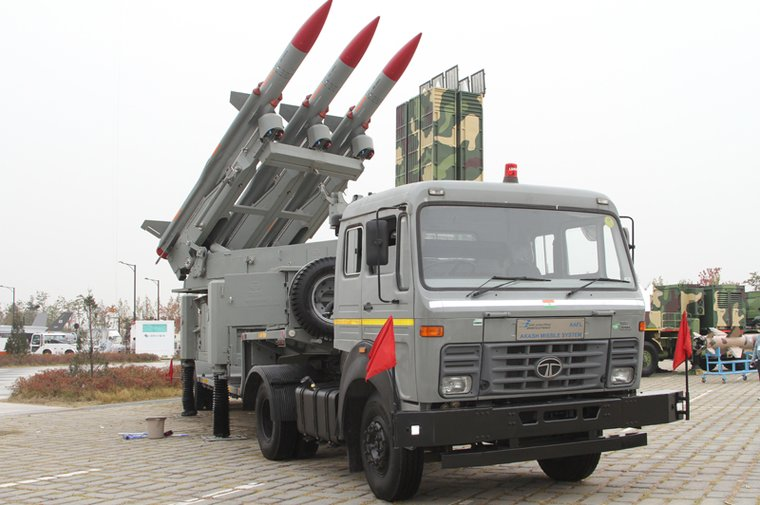
Integrated Weapon Systems
Akashteer can control and coordinate a wide range of Indian Army AD assets, including:
-
VSHORAD / MANPADS
-
Air Defence guns (towed/self-propelled)
-
Short-Range and Medium-Range SAM systems
-
Future indigenous AD weapons
Operational Advantages of Akashteer
-
Reduced reaction time against fast, low-flying threats such as UAVs, drones, and cruise missiles through automated detection and engagement.
-
Higher kill probability achieved by coordinated, layered engagements involving multiple air-defence assets.
-
Enhanced battlefield survivability due to mobile, distributed, and networked air-defence units that can rapidly reposition.
-
High scalability, allowing seamless integration of new sensors, radars, and weapon systems as they are inducted.
-
All-weather, day-and-night operational capability, ensuring continuous air-defence coverage in all conditions.
Role in Modern & Network-Centric Warfare
In modern warfare, Akashteer transforms air defence into a fully networked system, ensuring instant information sharing and synchronized engagements. This capability is essential for countering emerging threats such as drone swarms, low-altitude aircraft, and precision-guided weapons.
-
Enables a fully network-centric air-defence framework, where every sensor, command node, and shooter shares real-time data for instant situational awareness.
-
Provides effective defence against UAV and drone swarms through rapid threat prioritization and coordinated engagements.
-
Counters low-level penetration by helicopters and aircraft, which exploit terrain masking and short reaction windows.
-
Enhances protection against precision-guided munitions and cruise missiles by reducing sensor-to-shooter timelines and improving engagement accuracy.
Importance of Akashteer
-
Strengthens India’s layered air-defence architecture at both tactical and operational levels.
-
Enhances self-reliance (Atmanirbhar Bharat) by replacing legacy and imported command-and-control systems.
-
Improves jointness, enabling future integration with national air-defence grids and space-based surveillance systems.
Future Growth & Upgrades of Akashteer
-
AI-enabled threat analysis and decision-support systems for faster, smarter, and more autonomous engagement decisions.
-
Advanced counter-stealth and counter-UAV integration, including improved sensors and algorithms to detect low-observable targets.
-
Linkage with space-based sensors and national air-defence networks for early warning and extended situational awareness.
-
Cyber-hardened and electronic warfare (EW)-resilient communication systems, ensuring secure and reliable operations in highly contested environments.
Conclusion
Akashteer (C2 for Air Defence) represents a major leap in the evolution of the Indian Army’s air-defence capability, transforming it from traditional platform-centric operations to a fully network-centric, automated combat system. By seamlessly integrating sensors, shooters, and command elements into a single real-time framework, Akashteer enables faster decision-making, precise threat engagement, and highly coordinated responses across multiple air-defence units. Its ability to generate a common air picture, reduce reaction time, prevent fratricide, and counter modern threats such as UAV swarms, cruise missiles, and low-level aerial intrusions significantly enhances battlefield survivability and operational effectiveness. As an indigenous system aligned with Atmanirbhar Bharat, Akashteer not only reduces dependence on foreign technologies but also provides a scalable and future-ready foundation for integration with national and space-based air-defence networks. Overall, Akashteer stands as a cornerstone of India’s modern air-defence architecture, strengthening national security and ensuring preparedness for next-generation aerial warfare. For more information about missiles visit Education Masters.
सरकारी नौकरियों, जीके अपडेट्स और करेंट अफेयर्स की ताज़ा जानकारी सबसे पहले पाने के लिए:





.png)
.png)
.png)
.jpg)
.jpg)