Supersonic cruise missiles are high-speed, precision-guided weapons designed to travel at speeds faster than sound (above Mach 1) throughout most of their flight. Built to overcome modern air-defense systems, these missiles combine speed, maneuverability, and advanced guidance technologies to strike targets with minimal reaction time for the enemy. Their defining characteristic—sustained supersonic velocity—allows them to cover long distances quickly while maintaining stable, controlled flight close to the surface, often using sea-skimming or terrain-following profiles to reduce radar detection.
Powered typically by ramjet or solid-fuel rocket engines, supersonic cruise missiles deliver superior kinetic impact and accuracy, making them effective against high-value targets such as warships, command centers, and fortified installations. Many modern systems, such as India’s BrahMos, incorporate stealth design, smart seeker technology, and multi-platform launch capability, enabling deployment from land, air, sea, and sub-sea platforms. With their blend of speed, precision, and versatility, supersonic cruise missiles form a critical component of contemporary offensive strike and deterrence strategies.
Overview of Supersonic Cruise Missiles
|
Aspect
|
Details
|
|
Speed
|
Travel above Mach 1, reducing enemy reaction time
|
|
Propulsion
|
Usually powered by ramjet or solid-fuel rocket engines
|
|
Flight Profile
|
Sea-skimming or terrain-following for low detectability
|
|
Range
|
Typically 300–600 km, depending on the system
|
|
Accuracy
|
High precision using INS, GPS, active radar seekers
|
|
Warhead Capacity
|
Capable of carrying large conventional or specialized warheads
|
|
Launch Platforms
|
Land-based launchers, aircraft, warships, and submarines
|
|
Key Strengths
|
High speed, strong penetration ability, and effective against defended targets
|
|
Examples
|
BrahMos (India–Russia)
|
Design Philosophy of Supersonic Cruise Missile
Supersonic cruise missiles are designed for:
1. High-speed penetration to overwhelm air defences
By flying at speeds between Mach 1 and Mach 3, these missiles quickly breach enemy defensive layers. Their velocity reduces radar tracking time and makes interception extremely difficult.
2. Reduced reaction time for the enemy
Supersonic speed compresses the opponent’s decision-making and engagement window. Enemy ships, radars, and missile systems have only seconds to detect, track, and attempt an intercept—often too late.
3. High-precision targeting of land and sea targets
Equipped with advanced guidance systems, including GPS/INS and terminal radar seekers, these missiles maintain pinpoint accuracy even against moving naval targets or heavily defended land installations.
4. Survivability through speed and evasive manoeuvres
Speed acts as a defensive mechanism. Coupled with low-altitude sea-skimming or highly agile terminal manoeuvres, these missiles are designed to evade interception throughout their flight.
5. Strong strike capability with heavy warhead delivery
Supersonic cruise missiles often carry substantial warheads, combining high kinetic impact with explosive power. This enables them to destroy hardened structures, ships, and fortified command centers with devastating effectiveness.
They aim to defeat even advanced air-defence systems by minimizing detection-to-interception time.
Guidance & Navigation of Supersonic Cruise Missile
Supersonic cruise missiles rely on:
-
INS + GPS/NavIC for midcourse navigation
-
Active radar seeker / EO seeker for terminal guidance
-
Advanced control systems for stability at high speeds
Their high terminal accuracy makes them suitable for strategic and tactical missions.
Flight Characteristics of Supersonic Cruise Missile
-
Sustained Mach 2–3 speeds throughout flight
-
Sea-skimming or terrain-hugging trajectories to avoid radar
-
Terminal manoeuvring to evade interception
-
High kinetic-energy impact due to extreme speed
These characteristics make supersonic missiles difficult targets for surface-to-air and ship-based defence systems.
Propulsion System of Supersonic Missile
Supersonic cruise missiles typically use a two-stage propulsion setup:
• Ramjet engines for sustained high-speed flight
Ramjets keep the missile cruising at Mach 2–3, providing efficient, reliable propulsion once it reaches the required speed.
• Solid rocket boosters for initial acceleration
Boosters ignite at launch to rapidly accelerate the missile into the supersonic range, after which the ramjet takes over.
This combination enables fast launch, sustained supersonic speed, and high survivability in modern combat environments.
Supersonic Cruise Missiles of India
|
Missile Name
|
Type
|
Range
|
Speed
|
Launch Platform
|
Key Features
|
|
BrahMos – Land Attack Variant
|
Supersonic LACM
|
450–500 km
|
Mach 2.8–3.0
|
Mobile ground launcher
|
Ultra-fast, precision strike, low reaction time
|
|
BrahMos – Coastal Defence (ASCM)
|
Supersonic ASCM
|
290–450 km
|
Mach 2.8–3.0
|
Coastal/land launcher
|
Sea-skimming anti-ship capability
|
|
BrahMos-NG (Future)
|
Next-gen Supersonic (LACM/ASCM)
|
300+ km
|
Mach 3
|
Ground launcher (future)
|
Compact, lighter, multi-role
|
|
SMART (Supersonic Missile-Assisted Release of Torpedo)
|
Supersonic ASW Missile
|
643 km
|
Supersonic
|
Ground/coastal launcher
|
Long-range torpedo delivery for ASW
|
BrahMos – Land Attack Variant
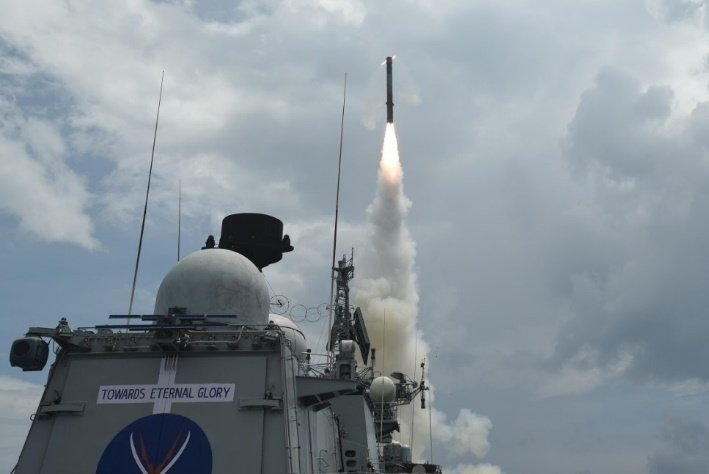
The BrahMos Land Attack Variant is a supersonic cruise missile designed for precision strikes against high-value land targets. Capable of flying at Mach 2.8 – 3, it uses terrain-hugging and sea-skimming flight paths to evade radar and penetrate deep into enemy territory. With a range of 450–500+ km, high accuracy, and powerful warhead delivery, it is ideal for destroying command centers, air bases, bunkers, logistics hubs, and other critical infrastructure. Operated by the Indian Armed Forces, it provides a fast, reliable, and highly survivable long-range strike capability.
BrahMos – Coastal Defence (ASCM) Variant
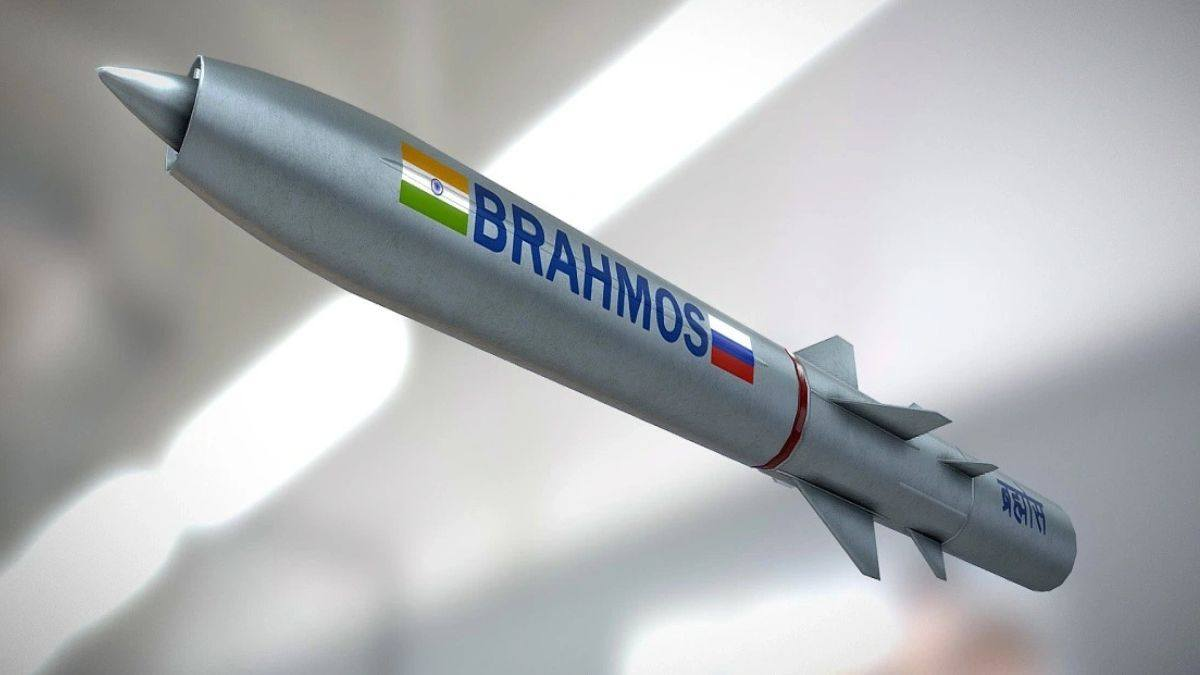
The BrahMos Coastal Defence Variant is a shore-based anti-ship cruise missile system designed to protect coastlines and deny enemy naval access. Firing the supersonic BrahMos missile at Mach 2.8 – 3, it can destroy hostile warships before they approach critical maritime zones. Deployed on mobile, road-based launchers, it offers rapid relocation, high survivability, and strong area-denial capability. With long range, pinpoint accuracy, and all-weather operation, this variant provides India with a powerful coastal shield and a major deterrent against enemy naval forces.
BrahMos-NG (Future) – Short Information
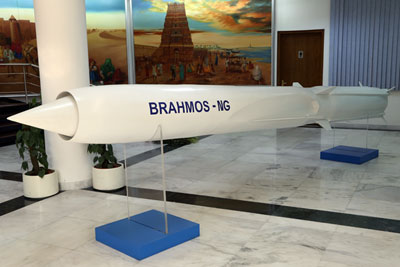
BrahMos-NG (Next Generation) is an upcoming, lighter, and more compact version of the BrahMos supersonic cruise missile, designed to offer the same high speed (Mach 3), accuracy, and multi-role capability in a smaller package. With reduced weight and size, BrahMos-NG can be integrated on a wider range of platforms—including fighter jets like Tejas and Su-30MKI, submarines, ships, and ground launchers.It is expected to feature improved stealth, faster deployment, and advanced seekers for precision engagement of land and sea targets. Once inducted, BrahMos-NG will significantly expand India’s strike flexibility by enabling more platforms to carry multiple missiles, enhancing saturation attack capability and overall combat power.
SMART (Supersonic Missile-Assisted Release of Torpedo)
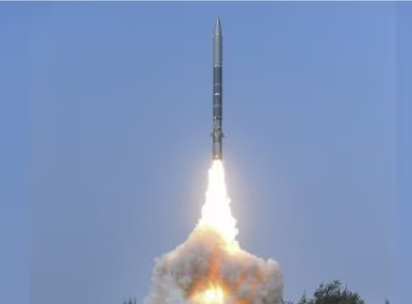
SMART is an advanced Indian anti-submarine warfare (ASW) system developed by DRDO that combines the speed of a supersonic missile with the precision of a lightweight torpedo. Designed to strike submarines well beyond the range of conventional ship-launched torpedoes, SMART can deliver a torpedo to distances of hundreds of kilometres within minutes.The missile flies at supersonic speed to the target area, where it releases a lightweight torpedo using a parachute system. After entering the water, the torpedo activates its sonar and autonomously hunts the enemy submarine. SMART greatly boosts India’s long-range ASW capability, enhances fleet protection, and provides a powerful standoff weapon against underwater threats.
Roles & Applications of Supersonic Cruise Missile
Supersonic cruise missiles excel in:
-
Rapid anti-ship warfare
-
Precision strikes on high-value land targets
-
Neutralizing heavily defended installations
-
Fast-response missions in contested zones
-
Standoff attacks where speed is critical
Their speed ensures they reach targets before the enemy can react.
Importance in Modern Warfare
-
Difficult to intercept due to high velocity
-
Ideal for naval dominance, especially in the Indo-Pacific
-
Acts as a strong deterrent against warships and strategic assets
-
Boosts India’s strike credibility across short and medium ranges
In the Indian context, BrahMos is a game-changer in maritime and land warfare.
Limitations of Supersonic Cruise Missile
-
Higher cost compared to subsonic cruise missiles
-
Shorter range due to higher fuel consumption
-
Heavier structure limits platform compatibility
-
Thermal stress and complex engineering challenges
Despite these, their combat value remains extremely high.
Conclusion
Supersonic cruise missiles are powerful modern strike weapons that combine high speed, precision, and strong penetration capability. Their Mach 2–3 velocity reduces enemy reaction time, making them highly effective against both land and naval targets. With advanced guidance, rapid response, and high survivability, they play a vital role in strengthening a nation’s deterrence and ensuring superior combat performance in high-threat environments. For more such information about missiles visit Education Masters.
सरकारी नौकरियों, जीके अपडेट्स और करेंट अफेयर्स की ताज़ा जानकारी सबसे पहले पाने के लिए:





.png)
.png)
.png)
.jpg)
.jpg)