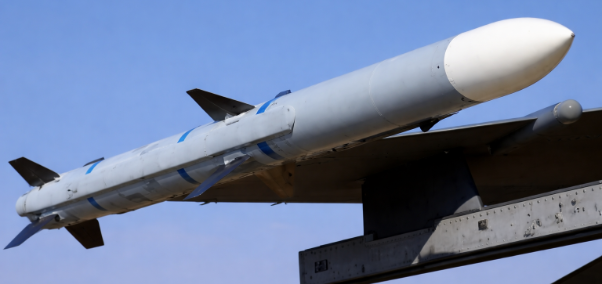
Air to air missiles often called AAMs are precision-guided weapons launched from fighter aircraft to track and destroy enemy aircraft during flight. They are one of the most significant technological milestones in modern aerial warfare, allowing nations to strike targets at high speed, at long distances, and under all weather conditions.To understand how advanced today’s Air to Air missiles have become especially those used by India it is important to look at where these weapons began, who created them, why they were needed, and how they evolved. From early experiments in World War II to Cold War innovations and modern beyond-visual-range systems, AAMs have constantly evolved to stay ahead of faster aircraft, stronger radars, and smarter countermeasures.
Today, countries like India not only operate some of the world’s most advanced Air to air missiles (AAMs) but also develop their own indigenous systems such as the Astra missile series, marking a major step toward technological independence and superior air defence capability.
Invention of Air to air missiles (AAMs)
The invention of Air to air missiles (AAMs) began during World War II, when aircraft became too fast and well-protected for traditional gun dogfights. As bombers gained altitude, armor, and defensive guns, nations urgently needed guided weapons that could destroy enemy aircraft from a distance. This shift transformed air combat forever and led to the birth of the first Air to air missiles (AAMs) prototypes.
Key Milestones in Air to air missiles (AAMs) Invention
Air to air missiles began with Germany’s WWII prototypes and became fully operational in the 1950s with the U.S. AIM-4 and AIM-9, and advanced further with the Soviet radar-guided K-5. The shift to BVR and fire-and-forget systems in the late 20th century set the stage for today’s ramjet-powered missiles like Meteor and Astra Mk-3, which offer extreme range and precision against modern airborne threats.
1. Germany's First Creation in (1943–45)
Germany was the true pioneer of Air to air missiles technology.
-
first guided AAM in history - Ruhrstahl X-4
-
early guided interceptor missile - Hs 298
-
SAM with AAM concept - Enzian
2. United States in (1956)
In U.S German technology accelerated missile programs. The U.S became the first country to deploy Air to air missiles in active service:
-
1st operational AAM in history - AIM-4 Falcon
-
revolutionized dogfighting, first heat seeking missile - AIM-9 Sidewinder
3. First Radar Guided System - Soviet Union in (1957)
The beginning of large scale Air to air missiles (AAMs) deployment in Cold War.
Purpose of Air to air missiles (AAMs)
Air-to-air missiles are highly advanced weapons systems designed to detect, track, and destroy enemy aircraft while both the launch platform and target are in flight. They form the backbone of modern aerial combat by enabling fighter pilots to engage hostile targets beyond visual range (BVR) and within visual range (WVR) with exceptional precision, speed, and lethality. Before the introduction of guided missiles, air combat relied heavily on machine guns and cannons, which required dangerous close-range dogfights and offered limited engagement opportunities.
Development of Air to air missiles (AAMs)-Technical Evolution
The development of Air to air missiles evolved from basic wire-guided weapons to highly advanced, long-range, anti-stealth systems. Early 1950s designs offered limited maneuverability, but the 1960s–70s infrared era introduced true fire-and-forget dogfighting. Radar-guided missiles of the 1970s–80s enabled beyond-visual-range engagements, and by the 1990s–2000s, systems like AMRAAM and R-77 achieved autonomous midcourse guidance. Today’s missiles use ramjets, imaging IR, and advanced anti-jamming technology to deliver 150–300+ km precision strikes against fighters, stealth platforms, UAVs, and cruise missiles.
Early Phase (1950s)
Era of IR Heat Seeker in (1960s)
Radar Guided in (1970s–80s)
BVR (1990s–2000s)
Modern Air to air missiles (AAMs)
-
Ramjet propulsion
-
Imaging IR + ECCM anti-jamming
-
150–300+ km range
-
Like: PL-15, Astra Mk-3, Meteor
Air to air missiles (AAMs) Technical Evolution
|
Era
|
Technology Jump
|
Guidance
|
Range
|
Examples
|
|
1950s
|
Basic control
|
Wire / beam-riding
|
Short
|
Early prototypes
|
|
1960s–70s
|
IR dogfight
|
Heat-seeking
|
Short–medium
|
AIM-9, R-60
|
|
1970s–80s
|
Radar intercept
|
Semi-active radar
|
Medium
|
Sparrow, R-23
|
|
1990s–2000s
|
BVR active strike
|
Active radar + midcourse link
|
50–100+ km
|
AIM-120, R-77
|
|
2000s–Now
|
Ramjet + ECCM
|
active seeker / Imaging IR
|
150–300+ km
|
Meteor, Astra Mk-3
|
India’s journey into Air to Air Missile (AAMs)
India was not missile producing nation. It first learned Air to air missiles (AAMs) technology through imports, joint programs, reverse engineering insights, and sustained R&D under DRDO.
Initially India was depended on foreign missiles
India first operated and studied multiple international Air to air missiles (AAMs), gaining insights into seekers, propulsion, radar integration, and combat behavior:
-
R-60 (1960s)
-
R-73 (1970s–80s)
-
MICA (France)
DRDO’s Journey
Rather than long-term dependence, India transitioned to in-house missile design and testing through DRDO to achieve strategic self-reliance in aerial weapon systems.
-
Basic planning for India’s own Air to air missiles (AAMs) in 1990s.
-
Astra prototypes testing in 2003-08
-
Successful trials in 2014-18
-
Astra Mk-2, Mk-3 in advanced development in 2025+
Major Air to air missiles of India (AAMs)
|
Missile Name
|
Type / Range Class
|
Guidance
|
Approx. Range
|
Platform / Notes
|
|
Astra Mk-1
|
BVRAAMs (Beyond Visual Range)
|
Active-Radar Homing
|
80–110 km
|
Used by Su-30MKI, Indigenous, Tejas
|
|
Astra Mk-2
|
BVRAAMs
|
Advanced ARH
|
150–160+ km
|
future deplopment
|
|
SFDR / Astra Mk-3 (under dev.)
|
Long-range BVRAAMs
|
SFDR + ARH
|
200+ km (expected)
|
For high-speed intercepts
|
|
R-77 (AA-12)
|
BVRAAMs
|
Active Radar
|
80–100 km
|
used on Su-30MKI , Russian
|
|
R-27 (AA-10)
|
BVRAAMs / SARH
|
Radar / IR
|
50–80 km
|
Semi active radar
|
|
R-73 (AA-11)
|
WVR (Dogfight)
|
IR Imaging
|
30–40 km
|
helmet cueing, Highly agile
|
|
ASRAAMs
|
WVR
|
Imaging Infrared
|
25+ km
|
future aircraft / Used on Jaguar
|
|
Python-5
|
WVR
|
Imaging IR
|
20–25 km
|
Very high agility
|
|
Derby ER and Derby
|
BVRAAMs
|
Active Radar
|
50–100+ km
|
Used with Tejas
|
How Do Air to air missiles (AAMs) Work
1. Target Detection
-
The aircraft identifies the hostile target using onboard radar or infrared sensors.
-
After securing a lock, target data is uploaded into the missile before firing.
2. Launch
3. Midcourse Guidance
4. Seeker Homing
5. Impact and Terminal Maneuver
Importance of (AAMs)
1. Border Security & Air Superiority
2. Self-Reliance
Like the Astra series reduce dependence on imports and prevent vulnerability during war.
3. Availability Advantage & Cost
-
Imported missiles are restricted and expensive
-
Indigenous missiles guarantee continuous supply, upgrades, replacement and maintenance.
5. Technology Leadership
Developing:
CONCLUSION
Air to air missiles (AAMs) have become one of the most decisive elements of modern aerial warfare, redefining how air superiority is achieved. From early heat-seeking weapons designed for close-range dogfights to today’s advanced beyond-visual-range missiles guided by sophisticated sensors and data-links, AAM technology has shifted air combat from purely maneuver-based engagements to precision-driven, technology-centric battles. Modern fighter aircraft now rely heavily on AAMs to detect, track, and neutralize enemy threats with speed, accuracy.
Looking ahead, the future of Air to air missiles will be shaped by innovations such as smarter seeker heads, improved resistance to electronic warfare, greater engagement ranges, and deeper integration with network-centric combat systems. These advancements will allow air forces to engage multiple targets more effectively in highly contested environments. As a result, AAMs will continue to play a critical role in air defense, deterrence, and offensive air operations, ensuring that dominance of the skies remains closely tied to the evolution of missile technology alongside pilot skill and aircraft capability. For more information about missiles visit Education Masters.
सरकारी नौकरियों, जीके अपडेट्स और करेंट अफेयर्स की ताज़ा जानकारी सबसे पहले पाने के लिए:

.jpg)


.png)
.png)
.png)
.jpg)
.jpg)